

Is Forex Arbitrage Still Profitable in 2026? Strategies That Work
Discover if forex arbitrage is profitable in 2026. Explore latency arbitrage, triangular arbitrage, best software, brokers that allow it, and infrastructure requirements.

You’re looking at your trading screens, watching price feeds from multiple brokers tick by, and you spot it: EUR/USD at 1.0823 on one platform, 1.0827 on another. Four pips. You’ve got maybe two seconds before the gap closes.
That’s forex arbitrage in 2026.
The short answer: Yes, forex arbitrage is still profitable—but only if you have the infrastructure to compete. You need sub-millisecond latency, specialized software, and access to brokers that won’t shut you down. The days of casual arbitrage from a home PC are over.
In this guide, we’ll break down what’s changed, which strategies still work, and exactly what you need to profit from arbitrage in 2026’s automated trading environment.
What Is Forex Arbitrage?
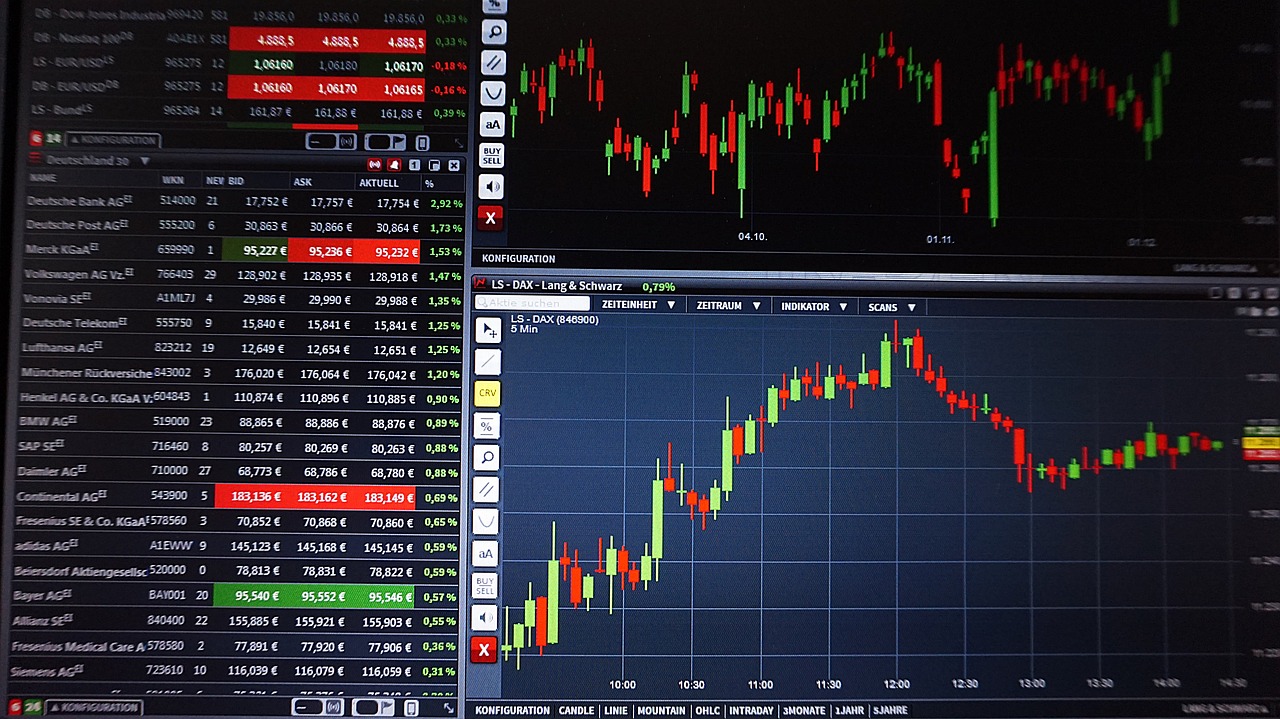
Forex arbitrage exploits price differences for the same currency pair across multiple brokers or markets by buying low in one location and selling high in another simultaneously.
Unlike directional trading, you’re not betting on price movement. You’re capitalizing on temporary pricing inefficiencies that exist for fractions of a second.
Why Price Discrepancies Exist
Even in 2026’s ultra-connected markets, prices aren’t perfectly synchronized because:
- Data feed delays: Brokers receive liquidity from different providers at different speeds
- Network latency: Physical distance between servers creates microsecond delays
- Broker execution models: Market makers vs ECN brokers quote different prices
- Liquidity fragmentation: Different venues have different depths and spreads
- News events: Major announcements create temporary chaos in pricing
These gaps are tiny—often 0.1 to 2 pips—and they close fast. That’s why arbitrage is now almost exclusively the domain of automated systems.
Types of Forex Arbitrage Overview
The main strategies include:
- Latency arbitrage: Exploiting time delays between fast and slow price feeds
- Triangular arbitrage: Finding mispricing across three currency pairs
- Cross-broker arbitrage: Trading price gaps between different brokers
- Statistical arbitrage: Using mean reversion and correlation models
We’ll dig into each strategy below, but first: the 2026 landscape.
Is Forex Arbitrage Still Profitable in 2026?
The forex market processes $7.5 trillion daily as of 2026. Here’s what’s changed:
The AI and HFT Takeover
Automated trading now accounts for 60-80% of forex volume. High-frequency trading firms operate with latency under 1 millisecond—sometimes in microseconds or even nanoseconds at the institutional level.
According to industry data, some HFT participants operate with latency of less than one millisecond, compared with 10-30 milliseconds for most upper-tier participants. Top-tier institutional setups using FPGA-based infrastructure can achieve single-digit microseconds wire-to-wire.
This means the market is faster and more efficient than ever. Price discrepancies that used to last seconds now vanish in milliseconds.
What This Means for Retail Traders
You’re competing against:
- Hedge funds with co-located servers in exchange data centers
- Proprietary trading firms with FPGA hardware hitting nanosecond execution
- Algorithmic systems scanning hundreds of pairs simultaneously
- AI-driven detection tools identifying and closing gaps instantly
But here’s the opportunity: Most retail traders aren’t equipped to compete. If you invest in proper infrastructure—ultra-low latency VPS, professional software, and strategic broker selection—you can still carve out consistent profits.
Opportunities That Remain in 2026
Arbitrage still works when you focus on:
- Tier-2 brokers: Smaller brokers with slower technology stacks
- Exotic pairs: Less liquid pairs have wider spreads and more opportunities
- News events: Volatility creates temporary pricing chaos
- Cross-asset opportunities: Forex vs crypto, spot vs futures
- Geographic arbitrage: Price differences between regions (Asian vs European sessions)
Bottom line: arbitrage isn’t dead. It’s evolved. Success now depends on infrastructure, not just strategy.

Forex Arbitrage Strategies That Work in 2026
1. Latency Arbitrage
Latency arbitrage is the most technical—and potentially most profitable—arbitrage strategy in 2026.
How It Works
You connect to two brokers:
- Fast broker: Receives real-time pricing via fast data feed (often institutional FIX API)
- Slow broker: Lags behind by milliseconds due to slower technology
When the fast feed shows a price move, you execute on the slow broker before they update. The slow broker fills you at the old price. You close when they catch up.
Example: EUR/USD moves from 1.0820 to 1.0825 on your fast feed. Your slow broker still shows 1.0820. You buy at 1.0820, then sell at 1.0825 when they update 50ms later. Profit: 5 pips.
Infrastructure Requirements
Latency arbitrage is unforgiving on infrastructure:
- VPS ping: Sub-1ms to 10ms maximum to both brokers
- Co-location: Your VPS must be in the same data center as broker servers (NY4, LD4, TY3)
- Connection type: FIX API preferred over MT4/MT5 for execution speed
- Software: Specialized latency arbitrage platforms (Westernpips, SharpTrader, HFT Arbitrage Platform)
At NYCServers NY4, our VPS delivers 1ms latency to major brokers. That’s the baseline for competitive latency arbitrage.
Profit Potential and Trade Frequency
With proper setup:
- Trade frequency: 50-200+ trades per day depending on pairs monitored
- Profit per trade: 0.5-3 pips typically
- Win rate: 70-85% with good filtering
- Monthly return: 10-30% on capital (highly variable)
The challenge: Most brokers actively detect and ban latency arbitrage. You need brokers that explicitly allow it.
2. Triangular Arbitrage
Triangular arbitrage exploits pricing discrepancies across three currency pairs through a closed loop of conversions.
How It Works
You execute three simultaneous trades to profit from mispriced cross rates.
Mathematical Example
Suppose you have these rates:
- EUR/USD: 1.1325
- EUR/GBP: 0.7805
- GBP/USD: 1.4528
Starting with €10,000:
- Trade 1: Convert €10,000 to USD at 1.1325 = $11,325
- Trade 2: Convert €10,000 to GBP at 0.7805 = £7,805
- Trade 3: Convert £7,805 to USD at 1.4528 = $11,339
You started with the equivalent of $11,325 and ended with $11,339. Profit: $14.
In reality, you’d execute all three legs simultaneously using automated software to lock in the arbitrage.
Liquidity Requirements
Triangular arbitrage needs:
- Deep liquidity: Major pairs only (EUR/USD, GBP/USD, USD/JPY, etc.)
- Tight spreads: Wide spreads eat into slim arbitrage profits
- Fast execution: All three legs must execute within milliseconds
- Sufficient capital: Small margins require large position sizes
Best Currency Pairs
Focus on highly liquid triangles:
- EUR/USD, GBP/USD, EUR/GBP
- USD/JPY, EUR/JPY, EUR/USD
- AUD/USD, NZD/USD, AUD/NZD
- USD/CHF, EUR/USD, EUR/CHF
Research shows that although arbitrage opportunities appeared for as many as 100 seconds in some cases, 95% lasted 5 seconds or less, and 60% lasted just 1 second or less. Automation is mandatory.
3. Cross-Broker Arbitrage
Cross-broker arbitrage monitors multiple brokers simultaneously for price gaps, then executes long/short positions when spreads exceed thresholds.
How It Works
- Monitor the same currency pair across 2-5 brokers
- When Broker A quotes EUR/USD at 1.0820 and Broker B quotes 1.0827 (7 pip gap), execute:
- Buy on Broker A at 1.0820
- Sell on Broker B at 1.0827
- Close both positions when prices converge
Broker Selection Criteria
Choose brokers with:
- Different liquidity providers: Increases chance of price gaps
- Arbitrage-friendly policies: Many brokers prohibit this explicitly
- Fast execution: No requotes, minimal slippage
- Reasonable spreads: Wide spreads kill profitability
Risk of Detection
Cross-broker arbitrage is easier to detect than latency arbitrage because you’re holding positions for longer (seconds to minutes vs milliseconds).
Brokers use plugins and algorithms to identify mirror trades across accounts. If detected, expect:
- Account restrictions or closure
- Profit clawbacks
- Trade cancellations
- Blacklisting from future accounts
Only use brokers that explicitly permit arbitrage (see section below).
4. Statistical Arbitrage
Statistical arbitrage (stat arb) uses quantitative models to exploit mean reversion and correlation between currency pairs.
Mean Reversion Strategy
Pairs that historically correlate will temporarily diverge, then revert to their mean relationship.
Example: EUR/USD and GBP/USD typically have a correlation of 0.85. When the spread between them exceeds 2 standard deviations from the historical mean:
- Go long the underperforming pair
- Go short the outperforming pair
- Close when the spread returns to the mean
Correlation-Based Strategies
Common pairs for stat arb:
- EUR/USD vs GBP/USD: High positive correlation
- AUD/USD vs NZD/USD: Commodity currency correlation
- USD/CHF vs EUR/USD: Inverse correlation
Tools Required
- Programming skills: Python or R for backtesting
- Historical data: Tick-level data for accurate modeling
- Statistical knowledge: Z-scores, standard deviations, cointegration
- Execution platform: API-based trading (FIX, REST APIs)
Stat arb is less about speed and more about modeling. You can run it on standard VPS (under 50ms latency is fine). Learn more about algorithmic trading strategies to build your own systems.
Forex Arbitrage Software & Tools
Arbitrage is impossible to execute manually. You need specialized software.

1. Westernpips Private 7
Best for: Established traders with capital
- Strategies: Classic arbitrage, hedge arbitrage, latency arbitrage, triangular arbitrage
- Pricing: $2,500-$3,750/month (Classic/Hedge at $2,500, Gold package at $3,750)
- Pros: 15+ years in the market, comprehensive platform, all strategies in one software
- Cons: Expensive, no refund policy, steep learning curve
- Platforms: Standalone software, connects to MT4/MT5 and FIX API

2. SharpTrader Pro (BJF Trading Group)
Best for: Professional traders and developers
- Strategies: 11 integrated strategies including latency, hedge, triangular, lock, and statistical arbitrage
- Pricing: Platform + single-leg arbitrage $3,494, full package $6,294 (frequent sales available)
- Pros: 64-bit architecture, connects to 65 FIX API brokers and 40 crypto exchanges, C# coding module for custom bots, rated 9.8/10 by independent reviewers
- Cons: Higher price point, complex setup
- Platforms: Standalone 64-bit terminal, FIX API, cTrader, Interactive Brokers, Rithmic
BJF Trading Group has been in business since 2005, making them one of the most established arbitrage software providers.

3. HFT Arbitrage Platform
Best for: Budget-conscious traders
- Strategies: Latency arbitrage, hedge arbitrage
- Pricing: $2,605 one-time payment (most affordable option)
- Pros: Clean interface, stable performance, good for crypto and forex arbitrage, 475% profit in one week during testing
- Cons: Fewer advanced features than SharpTrader
- Platforms: Standalone software

4. AlgoTradeKit Arbiter EA
Best for: MT4/MT5 traders
- Strategies: Latency arbitrage, cryptocurrency CFD arbitrage
- Pricing: Not publicly listed (contact for pricing)
- Pros: Runs directly in MT4/MT5, execution from 25ms, works on any broker that allows arbitrage, bundled for both platforms
- Cons: Limited to MetaTrader ecosystem, less feature-rich than dedicated platforms
- Platforms: MetaTrader 4 and MetaTrader 5
Free vs Paid Options
Free arbitrage software: Doesn’t exist at a professional level. Free “arbitrage calculators” are just informational tools.
Demo versions: Most providers (SharpTrader, HFT Arbitrage Platform) offer demos. Test before committing.
Our recommendation: Start with HFT Arbitrage Platform if you’re budget-conscious, or SharpTrader if you want institutional-grade features and plan to scale.
Software Comparison Table
| Software | Pricing | Strategies | Broker Connections | Best For |
|---|---|---|---|---|
| Westernpips Private 7 | $2,500-$3,750/mo | Classic, Hedge, Latency, Triangular | MT4/MT5, FIX API, Multiple LPs | Established traders with capital |
| SharpTrader Pro | $3,494-$6,294 | 11 strategies (Latency, Statistical, Lock, etc.) | 65 FIX API brokers, 40 crypto exchanges | Professional traders, developers |
| HFT Arbitrage Platform | $2,605 one-time | Latency, Hedge | Forex & crypto brokers | Budget-conscious traders |
| AlgoTradeKit Arbiter EA | Contact for pricing | Latency, Crypto CFD | Any MT4/MT5 broker allowing arbitrage | MetaTrader users |
Brokers That Allow Arbitrage Trading
Here’s the uncomfortable truth: most brokers prohibit arbitrage—especially latency arbitrage.
Why? Brokers view arbitrage as “toxic flow” that exploits their infrastructure rather than contributing to market liquidity. Detection leads to account restrictions or closure.
Brokers That Explicitly Allow Arbitrage

1. Tickmill
- Regulation: FCA (UK), CySEC, FSA (Seychelles)
- Minimum Deposit: $100
- Arbitrage Policy: Explicitly allows all trading strategies including scalping, hedging, arbitrage, EAs, and algorithms
- Platforms: MT4, MT5
- Execution: No requotes, no restrictions
- Why We Like It: Tickmill is transparent about permitting arbitrage. FCA regulation adds trust.

2. RoboForex
- Regulation: IFSC (Belize), FSC (BVI), CySEC (Cyprus)
- Minimum Deposit: $10
- Arbitrage Policy: Allows statistical arbitrage and latency arbitrage
- Platforms: MT4, MT5, cTrader, R StocksTrader
- Account Types: Prime, ECN, ProCent, Pro
- Spreads: From 0.0 pips on ECN accounts
- Why We Like It: Low minimum deposit, multiple account types, explicitly permits latency arbitrage

3. Vipro Markets
- Now Operates As: Tickmill Europe Ltd
- Arbitrage Policy: Follows Tickmill’s permissive arbitrage policies
- Note: Vipro Markets was acquired by Tickmill and now operates under Tickmill Europe branding

4. IC Markets (Considerations)
- Regulation: ASIC (Australia), CySEC, FSA (Seychelles)
- Arbitrage Policy: Does not explicitly prohibit arbitrage, but monitor terms carefully
- Known For: Ultra-low spreads, high-frequency trading infrastructure
- Caution: While many traders use IC Markets for arbitrage, it’s not explicitly allowed in their terms. Proceed with caution and verify current policies.
Warning: Verify Before Trading
Broker policies change. Before funding an account:
- Read the Terms of Service (search for “arbitrage,” “latency,” “toxic flow”)
- Contact support and ask explicitly: “Do you allow latency arbitrage?”
- Get confirmation in writing (email or chat transcript)
- Start small—test with minimum deposits first
How to Verify Broker Policies
- Check Terms & Conditions: Look for sections on prohibited trading practices
- Contact Support: Ask directly if arbitrage is permitted (save the conversation)
- Community Research: Check Forex Factory, Reddit, and arbitrage forums for real trader experiences
- Demo Test: Run your arbitrage EA on a demo account first to see if they block it
Broker Comparison Table
| Broker | Regulation | Min Deposit | Arbitrage Allowed | Platforms | Notes |
|---|---|---|---|---|---|
| Tickmill | FCA, CySEC, FSA | $100 | Yes (All strategies) | MT4, MT5 | Explicitly allows arbitrage |
| RoboForex | IFSC, FSC, CySEC | $10 | Yes (Latency & Statistical) | MT4, MT5, cTrader | Low minimum, wide range |
| Vipro Markets | Now Tickmill Europe | $100 | Yes (Follows Tickmill) | MT4, MT5 | Part of Tickmill family |
| IC Markets | ASIC, CySEC, FSA | $200 | Unclear (not prohibited) | MT4, MT5, cTrader | Verify current policy |
Infrastructure Requirements for Arbitrage
Software and brokers are only half the equation. Infrastructure determines whether you capture arbitrage opportunities or watch them vanish.
VPS Location Importance
Physical distance matters. Light travels at 299,792 km/s, but data through fiber optic cables travels at roughly 200,000 km/s due to the refractive index of glass.
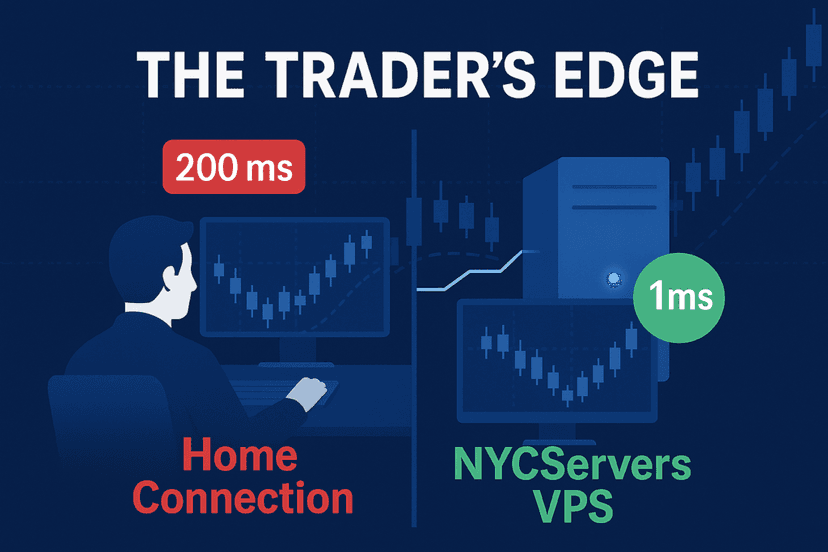
A VPS 1,000 km from your broker’s server introduces ~10ms of round-trip latency just from distance. Add network hops and routing, and you’re at 50-150ms from a consumer VPS.
Top data center locations for forex arbitrage:
- Equinix NY4 (Secaucus, NJ): Hosts IC Markets, ThinkMarkets, EightCap, OANDA, and major US liquidity providers
- Equinix LD4 (London): Hosts FXPro, Darwinex, Pepperstone EU, IG, and European brokers
- Equinix TY3 (Tokyo): Best for Asia-Pacific session traders
We host our NY4 VPS and LD4 VPS directly in these facilities for 1ms latency to most major brokers.
Ping Requirements by Strategy Type
| Strategy | Maximum Latency | Optimal Latency | Infrastructure |
|---|---|---|---|
| Latency Arbitrage | 10ms | Sub-1ms | Co-location, FIX API |
| Triangular Arbitrage | 50ms | Under 10ms | Same data center as broker |
| Cross-Broker Arbitrage | 100ms | Under 20ms | VPS near both brokers |
| Statistical Arbitrage | 300ms | Under 100ms | Standard VPS acceptable |
Co-location vs Standard VPS
Standard VPS: Your server is in the same data center as the broker but not in the same rack. Typical latency: 1-5ms.
Co-location: Your server is in the same rack or physically connected to the broker’s servers via cross-connect. Latency: 0.1-1ms.
For latency arbitrage, co-location is ideal. For triangular or statistical arbitrage, standard VPS in the same data center works fine.
At NYCServers, our infrastructure in Equinix NY4 delivers sub-2ms latency to most US and global brokers without requiring full co-location fees (which can run $1,000+ per month). See our broker latency checker to test ping to your specific broker.
FIX API vs MT4/MT5
FIX API (Financial Information eXchange):
- Direct connection to broker liquidity
- Execution time: 10-50ms
- Requires custom development or professional software (SharpTrader, Westernpips)
- Best for latency arbitrage
MT4/MT5:
- Standard retail execution
- Execution time: 50-200ms
- Easier to set up, works with most brokers
- Acceptable for triangular and statistical arbitrage
If you’re serious about latency arbitrage, FIX API is non-negotiable. For other strategies, MT4/MT5 is sufficient.
Hardware Specifications
Minimum specs for arbitrage VPS:
- CPU: 4+ cores, high clock speed (3.5GHz+) — single-thread performance matters
- RAM: 8GB minimum, 16GB recommended for running multiple platforms
- Storage: 100GB+ NVMe SSD for fast read/write
- Network: 1Gbps minimum, 10Gbps ideal
- OS: Windows Server 2019/2022 for MT4/MT5, Linux for FIX API custom development
Our dedicated servers use AMD EPYC or Ryzen 9 7950X CPUs (4.5GHz clock speed) with NVMe storage and 10Gbps network connectivity.
NYCServers Arbitrage VPS Benefits
We’ve spent over a decade optimizing infrastructure for algorithmic and arbitrage traders:
- 1ms latency: Direct connectivity to IC Markets, Exness, Axi, FTMO, and 50+ brokers from NY4, LD4, and TY3
- Equinix data centers: Same facilities where major brokers host their servers
- 100% uptime guarantee: During trading hours—no missed opportunities from downtime
- Pre-installed platforms: Select your broker at checkout, and we install MT4/MT5/cTrader before you log in
- 24/7 support: We understand arbitrage—our team responds in minutes, not hours
- Pricing: From $25/month for Basic VPS to $125/month for dedicated servers
For arbitrage traders, we recommend our Professional VPS ($60/month, 4 CPU, 8GB RAM) or dedicated servers for maximum performance. Check our full VPS plans.
Risks and Challenges
Arbitrage sounds like free money. It’s not. Here are the real risks:
1. Broker Detection and Account Closure
Even brokers that “allow” arbitrage monitor for abusive patterns:
- Mirror trades across accounts (cross-broker arbitrage)
- Extremely short holding times (milliseconds)
- High win rates with tiny stop losses
- Trading only during news events
If detected, brokers may:
- Close your account without warning
- Claw back profits from recent trades
- Cancel winning trades retroactively
- Blacklist you from opening future accounts
Mitigation: Diversify across multiple brokers, use masking techniques (mix arbitrage with normal trades), and only trade with brokers that explicitly permit arbitrage.
2. Execution Slippage
Arbitrage margins are razor-thin. A 1-pip difference between expected and actual execution can turn a winner into a loser.
Slippage occurs when:
- Network latency spikes unexpectedly
- Broker experiences temporary liquidity issues
- You’re trading during high-volatility news events
- Your position size exceeds available liquidity
Mitigation: Use ultra-low latency VPS, trade during liquid market hours, avoid news events unless your strategy specifically targets them, and backtest slippage assumptions.
3. Technology Failures
A single crashed EA, disconnected VPS, or frozen MT4 platform can cost you thousands in missed opportunities or unrealized losses.
Mitigation: Run redundant systems (primary VPS + backup VPS), use monitoring tools to alert you of downtime, choose a VPS provider with 100% uptime guarantees during trading hours (like NYCServers).
4. Regulatory Considerations
Arbitrage is legal, but certain practices attract regulatory scrutiny:
- Bonus arbitrage: Exploiting deposit bonuses by immediately withdrawing via arbitrage profits (considered fraud)
- Market manipulation: Wash trading or spoofing to create artificial arbitrage opportunities (illegal)
- Insider trading: Using non-public information for arbitrage (illegal)
Regulators in the US (CFTC, FinCEN) and Europe have increased enforcement around anti-money laundering (AML) and sanctions screening. Make sure your broker and trading practices comply.
Mitigation: Trade only with regulated brokers, avoid bonus abuse, maintain clean records, and consult a financial attorney if trading with significant capital.
5. Capital Requirements
Arbitrage requires significant capital to generate meaningful returns:
- Minimum $5,000-$10,000 to start
- Realistically $50,000+ for sustainable income
- Factor in: broker minimums, VPS costs, software fees, spread costs
With 0.5-2 pips average profit per trade and 50-100 trades per day, you need volume to make it worthwhile.
Mitigation: Start small, compound profits, and scale as you prove consistency.

Emerging Trends: AI and Crypto Arbitrage 2026
AI-Driven Latency Detection Tools
AI is now on both sides of the arbitrage trade:
- Brokers use AI to detect and block arbitrage patterns
- Traders use AI to identify micro-opportunities faster than rule-based systems
Machine learning models can now predict short-term price movements with better accuracy than traditional indicators, opening new stat arb opportunities.
Crypto Exchange Arbitrage Opportunities
Cryptocurrency markets remain less efficient than forex, creating larger arbitrage opportunities:
- Cross-platform arbitrage: BTC at $101,000 on Coinbase, $103,000 on a Korean exchange
- Spatial arbitrage: Regional price differences (US vs Asia)
- Triangular arbitrage: BTC/USDT, ETH/USDT, BTC/ETH loops
Tools like Bitsgap, Pionex, and ArbitrageScanner now support crypto arbitrage across 50+ centralized and 25+ decentralized exchanges.
Cross-Asset Opportunities
Arbitrage between related assets:
- Forex spot vs futures: Cash-and-carry arbitrage
- Forex vs crypto CFDs: BTC/USD on forex broker vs crypto exchange
- Tokenized assets: Tokenized forex pairs on DeFi platforms vs traditional brokers
As tokenized real-world assets (RWAs) grow in 2026, expect new arbitrage opportunities between traditional and blockchain-based markets.
2026 Predictions
By the end of 2026, industry experts predict:
- AI trading agents will dominate liquidity provision and arbitrage
- Arbitrage windows will shrink from milliseconds to microseconds for major pairs
- Opportunities will shift to exotic pairs, crypto, and cross-asset strategies
- Retail traders will need institutional-grade infrastructure to compete
Is Arbitrage Right for You?
Skill Requirements
Forex arbitrage demands technical expertise:
- Scripting/programming: Setting up EAs, configuring APIs, troubleshooting execution issues
- Networking knowledge: Understanding latency, VPS management, FIX protocol
- Market microstructure: How liquidity providers work, order types, execution models
- Risk management: Position sizing, drawdown limits, broker diversification
If you’re new to forex, arbitrage is not the place to start.
Capital Requirements
Realistic capital breakdown:
- Trading capital: $10,000 minimum, $50,000+ recommended
- VPS: $25-$125/month (NYCServers Professional VPS $60/month)
- Software: $2,500-$6,000 (one-time or monthly subscription)
- Broker minimums: $100-$500 per broker (2-3 brokers minimum)
- Spread costs: Budget for losing trades during testing
Total initial investment: $15,000-$60,000+
Time Investment
Arbitrage is not passive income:
- Setup: 20-40 hours to configure software, test brokers, optimize settings
- Monitoring: 1-2 hours daily checking performance, broker accounts, VPS uptime
- Maintenance: 5-10 hours weekly updating software, analyzing results, adjusting strategies
Once running smoothly, arbitrage can be semi-automated, but it requires ongoing attention.
Alternative Strategies for Beginners
If arbitrage feels overwhelming, consider these instead:
- Trend following EAs: Simpler to set up, lower infrastructure requirements
- Swing trading: Holding positions for days/weeks, no latency concerns
- Copy trading: Follow successful traders while learning
- Prop firm challenges: Trade with firm capital instead of your own (learn about FTMO VPS and FundedNext VPS)
Master the basics first. Arbitrage will still be here when you’re ready.
FAQ: Forex Arbitrage in 2026
Is forex arbitrage still profitable in 2026?
Yes, forex arbitrage remains profitable in 2026, but only with the right infrastructure. Success requires ultra-low latency VPS (sub-1ms), specialized software, and access to brokers that permit arbitrage. While 60-80% of forex volume is now automated, opportunities still exist for traders with proper technical setup and capital.
What is latency arbitrage in forex?
Latency arbitrage exploits time delays between price updates at different brokers. Fast data feeds show real-time prices while slower brokers lag by milliseconds. Traders use this window to execute trades before the slower broker updates. Requires VPS with sub-10ms ping, co-location in data centers like NY4 or LD4, and specialized software.
Which brokers allow arbitrage trading?
Tickmill (FCA regulated) explicitly allows all arbitrage strategies including latency and statistical arbitrage. RoboForex (IFSC) permits latency and statistical arbitrage. Vipro Markets (now Tickmill Europe) follows Tickmill’s permissive policies. Most brokers prohibit arbitrage, so always verify terms before trading.
What is the best forex arbitrage software in 2026?
Top options include: Westernpips Private 7 ($2,500-$3,750/month) for established traders, SharpTrader Pro by BJF Trading Group offering 11 integrated strategies and FIX API connections to 65 brokers, HFT Arbitrage Platform ($2,605 one-time) as the most affordable option, and AlgoTradeKit Arbiter EA for MT4/MT5 users.
How does triangular arbitrage work?
Triangular arbitrage exploits pricing discrepancies across three currency pairs. Example: EUR/USD 1.1325, EUR/GBP 0.7805, GBP/USD 1.4528. Buy €10,000 at 1.1325 = $11,325. Sell €10,000 at 0.7805 = £7,805. Sell £7,805 at 1.4528 = $11,339. Profit: $14. Most opportunities last under 5 seconds and require automated execution.
What VPS latency do I need for arbitrage?
Latency arbitrage requires sub-1ms to 10ms ping to broker servers. Triangular arbitrage works with under 50ms. Cross-broker arbitrage needs under 100ms. Achieve this through co-location in Equinix NY4, LD4, or TY3 data centers. Standard VPS in same data center as broker delivers 1-2ms. Home connections (50-150ms) won’t work for latency arbitrage.
Is forex arbitrage legal?
Yes, forex arbitrage is legal in the US, UK, and most countries. Regulators view it as contributing to market efficiency. However, many brokers prohibit it in their Terms of Service, particularly latency arbitrage. Violating broker policies can result in account closure, profit clawback, or trade cancellation. Always verify your broker’s arbitrage policy before trading.
What are the main risks of forex arbitrage?
Key risks include: broker detection and account closure, execution slippage eroding profits, technology failures during critical trades, high capital requirements for meaningful profits, regulatory scrutiny, and execution delays turning risk-free trades into directional positions. Professional traders mitigate these through diversified broker accounts, redundant infrastructure, and strict risk management.
How much capital do I need for forex arbitrage?
Minimum $5,000-$10,000 to start, but realistically $50,000+ for meaningful profits. Arbitrage margins are tiny (0.1-1 pip typically), so volume is essential. Factor in costs: VPS ($25-$125/month), software ($2,500-$6,000), broker minimum deposits, and transaction fees. Leverage helps, but most arbitrage-friendly brokers offer conservative leverage limits.
Can beginners do forex arbitrage?
Not recommended for beginners. Arbitrage requires technical skills (scripting, networking, platform configuration), understanding of market microstructure, significant capital investment, and experience managing multiple broker accounts. Start with simpler strategies like trend following or swing trading. If interested in arbitrage, spend 6-12 months learning forex basics and paper trading first.
What is statistical arbitrage in forex?
Statistical arbitrage uses quantitative models to exploit mean reversion and correlation between currency pairs. Example: EUR/USD and GBP/USD historically correlate 0.85. When correlation breaks temporarily, go long the underperforming pair and short the outperforming one. Profit when correlation restores. Requires coding skills (Python/R), historical data analysis, and backtesting infrastructure.
Final Thoughts: Is Arbitrage Worth It in 2026?
Forex arbitrage is alive—but it’s evolved into a technical arms race.
If you have the capital, technical skills, and patience to build proper infrastructure, arbitrage can deliver consistent returns in a market dominated by automation.
If you’re just starting out, focus on building foundational trading skills first. Master risk management, understand market structure, and get comfortable with algorithmic trading before diving into arbitrage.
The infrastructure equation is simple:
- VPS: 1ms latency in NY4, LD4, or TY3 (NYCServers VPS)
- Software: Professional arbitrage platform (SharpTrader or HFT Arbitrage Platform)
- Brokers: 2-3 accounts with arbitrage-friendly policies (Tickmill, RoboForex)
- Capital: $50,000+ for sustainable income
Get the infrastructure right, and the opportunities reveal themselves.
For more on low-latency trading infrastructure, read our guide on why latency matters for forex trading.

About the author
Thomas Vasilyev
Writer & Full Time EA Developer
Tom is our associate writer, and has advanced knowledge with the technical side of things, like VPS management. Additionally Tom is a coder, and develops EAs and algorithms.
Areas of Expertise