
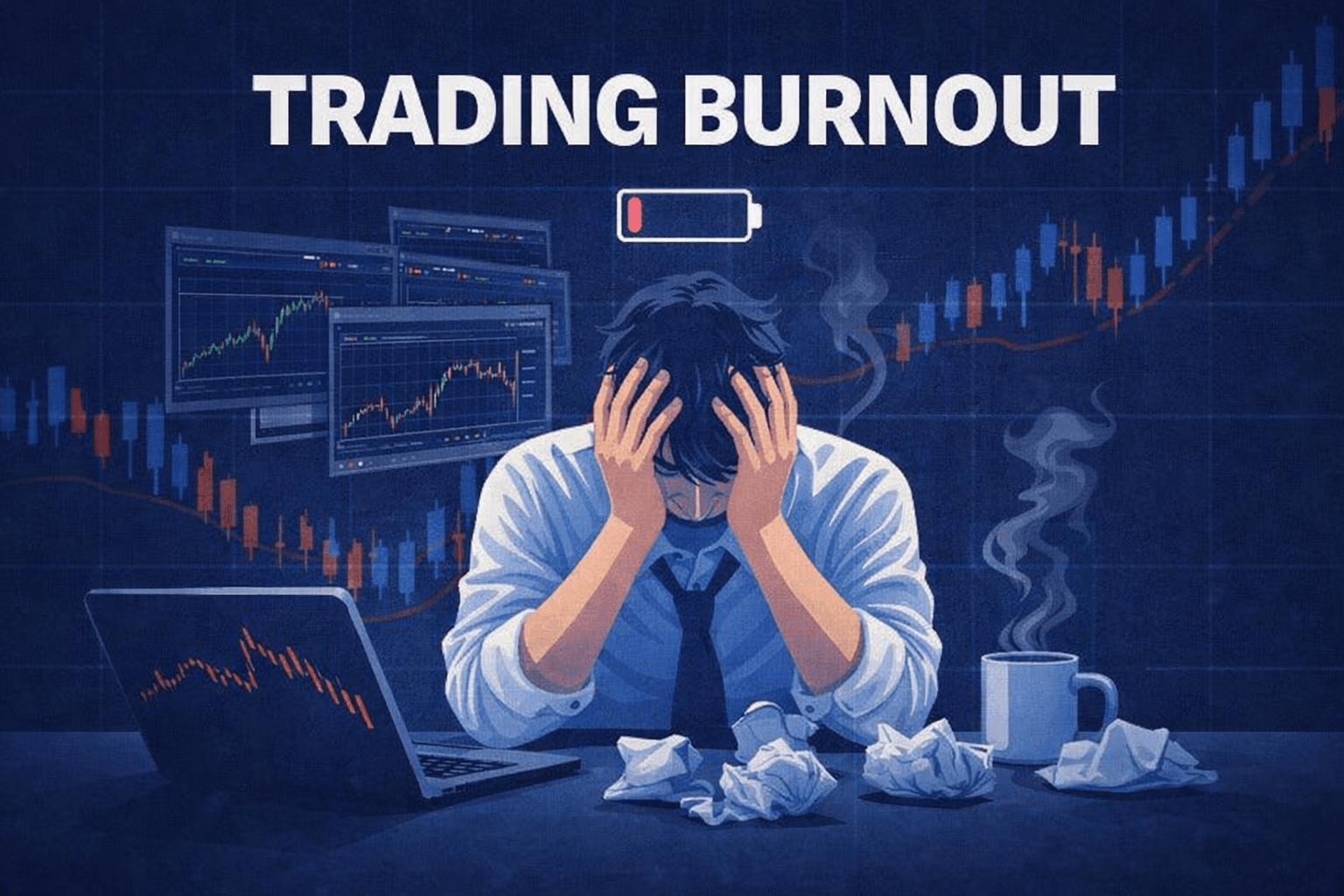
Trading Burnout: Signs, Prevention & Recovery for Traders
Learn the warning signs of trading burnout, prevent forex burnout with proven strategies including VPS automation, and follow a structured 30-day recovery plan.
What Is Trading Burnout and Why Forex Traders Are Especially Vulnerable
Trading burnout isn’t just feeling tired after a rough session. It’s a state of chronic emotional, mental, and physical exhaustion triggered by prolonged exposure to high-stakes decision-making. When it sets in, setups that once fired you up feel meaningless. Your edge erodes. Your P&L suffers. The screen you couldn’t wait to open becomes something you dread.
The World Health Organization classifies occupational burnout as a syndrome caused by “chronic workplace stress that has not been successfully managed.” Trading checks every box: constant uncertainty, financial risk on every click, and an environment that punishes even brief lapses in concentration.
Forex traders face a vulnerability that equity or futures traders don’t. The forex market runs 24 hours a day, five days a week. There’s no closing bell. No forced break. London bleeds into New York, which bleeds into Tokyo, which restarts the cycle. If you’re a manual trader watching multiple pairs, the market always has a reason to keep you glued to your charts.
This “always on” structure creates a dangerous illusion: that stepping away means missing opportunity. That illusion keeps traders at their desks far longer than their brains can function effectively. And that’s exactly where burnout starts.
The Science Behind Trading Fatigue
Decision Fatigue and Cognitive Load
Every trade evaluation costs mental energy. Entry, stop placement, position sizing, risk-to-reward calculation, news check, correlation check. Each micro-decision draws from a finite cognitive reservoir. Research from the National Academy of Sciences shows that decision quality degrades significantly as consecutive decisions increase. Judges granted parole at rates near 65% after a break but dropped to nearly 0% just before one.
Traders face identical depletion. After hours of chart analysis, your ability to distinguish a valid setup from noise drops sharply. You start taking trades you’d normally skip. Or you freeze and miss entries you’d normally take. Both outcomes feed frustration, and frustration accelerates the burnout cycle.
Cortisol and the Chronic Stress Response
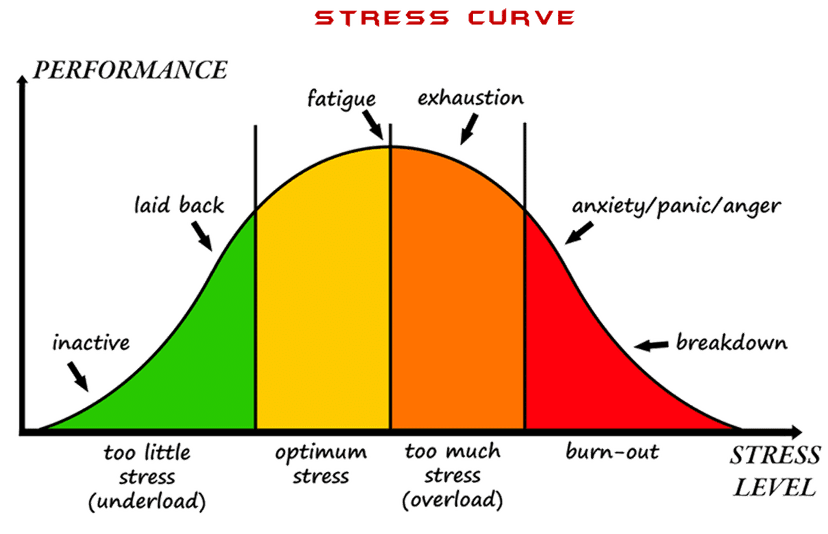
Trading triggers your body’s stress response every time you open a position. Cortisol floods your system. In short bursts, cortisol sharpens focus. But chronic exposure, the kind from sitting in drawdown for hours or watching your daily target slip, damages the prefrontal cortex. That’s the brain region responsible for impulse control, planning, and rational analysis — the very skills covered in our forex trading psychology guide. Exactly what you need to trade well.
Research published in Psychoneuroendocrinology found that sustained cortisol elevation impairs working memory and executive function. In practical terms: the longer you trade under stress, the worse your decisions become. It’s a biochemical certainty, not a mindset problem.
Your Brain’s 90-Minute Focus Cycle
Your brain doesn’t operate at a constant level of alertness. It cycles through periods of high and low focus roughly every 90 minutes. These ultradian rhythms were identified by sleep researcher Nathaniel Kleitman decades ago, and modern neuroscience confirms them.
When you push past the natural dip in a cycle, your error rate climbs, pattern recognition weakens, and emotional reactivity spikes. Most traders completely ignore these rhythms, sitting at the screen for four to six hours straight, then wondering why their afternoon trading falls apart.
Key insight: Your brain is biologically incapable of sustained high-level analysis for more than roughly 90 minutes without a genuine break. Trading through the dip isn’t discipline. It’s self-sabotage.
Warning Signs You’re Burning Out
Trading burnout doesn’t arrive overnight. It builds gradually, making it easy to miss until you’re deep in it. Watch for these signals across four categories.
Emotional Signs of Trading Burnout
- Apathy toward setups — A+ setups no longer excite you. You feel indifferent to trades that once had you fully engaged.
- Irritability and mood swings — Small losses trigger disproportionate anger. You snap at people outside of trading.
- Dread before sessions — Sunday-evening anxiety about Monday’s open. A heavy feeling when you sit down at your desk.
- Emotional numbness — Wins don’t feel rewarding. Losses don’t sting. You’re just going through the motions.
Behavioral Signs
- Overtrading — Taking setups outside your plan to feel productive. Volume increases, quality decreases.
- Revenge trading — Chasing losses with larger size or lower-quality entries.
- Skipping your routine — Ignoring your pre-market checklist, journaling, or post-session review.
- Avoiding the market entirely — Missing valid setups because you can’t bring yourself to open the platform.
- Screen addiction — Checking charts obsessively on your phone during meals, workouts, or social events.
Physical Signs
- Chronic fatigue — Feeling exhausted despite adequate sleep.
- Sleep disruption — Your mind replays trades at 2 AM. You wake to check positions.
- Headaches and eye strain — Persistent tension headaches from prolonged screen exposure.
- Back and neck pain — Physical consequences of hours in a desk chair without movement.
Performance Decline
- Declining win rate — Your edge vanishes despite using the same strategy.
- Increased drawdowns — Losses cluster from impulsive or poorly timed entries.
- Missed trades — Valid setups pass because you weren’t focused or couldn’t pull the trigger.
- Abandoning rules — Moving stops, skipping confirmations, widening risk parameters.
Burnout Self-Assessment Checklist
Score yourself honestly on each statement. Rate 0 (never), 1 (sometimes), or 2 (often).
| # | Statement | Score (0-2) |
|---|---|---|
| 1 | I feel emotionally drained after trading sessions | |
| 2 | I take trades outside my plan just to stay active | |
| 3 | I check charts during meals, exercise, or social time | |
| 4 | I dread opening my trading platform | |
| 5 | My sleep is disrupted by thoughts about open positions | |
| 6 | I feel angry or frustrated more often than satisfied | |
| 7 | I skip journaling or post-session reviews | |
| 8 | I’ve moved stops or ignored rules in the last two weeks | |
| 9 | I trade for more than four consecutive hours without a break | |
| 10 | Winning trades no longer feel rewarding |
Scoring: 0-5 = healthy range. 6-12 = early warning signs, adjust now. 13-20 = likely experiencing burnout, take immediate action.
What Causes Trading Burnout
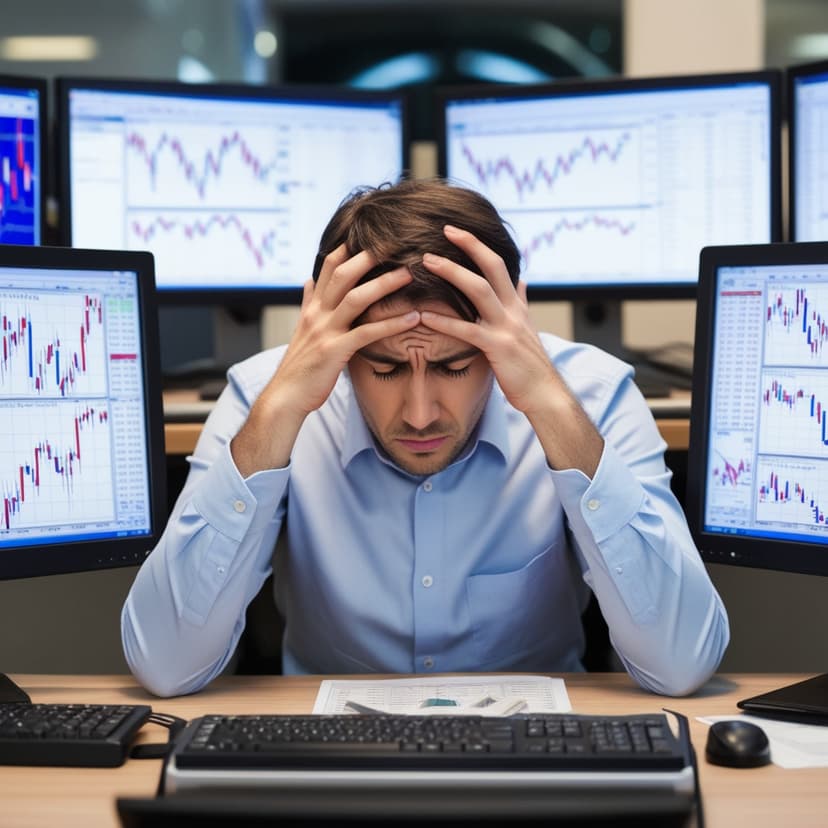
Understanding the root causes helps you target prevention where it matters most. Trading burnout rarely comes from one source. It’s usually a combination of these factors stacking over weeks or months.
Excessive Screen Time
This is the single biggest contributor to burnout from day trading. Research on occupational screen exposure shows cognitive performance drops measurably after two to three hours of continuous screen-based decision-making. Most manual forex traders spend six to ten hours per day watching charts. That’s two to three times the sustainable threshold.
The problem compounds because forex traders aren’t passively watching a screen. They’re actively scanning, analyzing, calculating, and making financial decisions. Every minute costs more mental energy than typical screen work.
Overtrading
Overtrading burnout creates a vicious cycle. You trade too much because you feel like you should always be active. The excess activity drains your cognitive resources. Depleted cognition leads to worse decisions and more losses. More losses create urgency to “make it back.” The cycle tightens until something breaks.
Isolation
Forex trading is solitary for most retail traders. You sit alone making high-pressure decisions with no team to debrief with, no manager to calibrate against, and no colleague who understands what losing 3R in a morning feels like. This isolation amplifies stress and removes the social support systems that buffer against burnout in other professions.
Unrealistic Expectations
Social media has warped what traders expect from themselves. Screenshots of massive wins with zero context create pressure to perform at unsustainable levels. When your real results don’t match the highlight reel, frustration builds. You push harder, trade longer, take more risk. All of which accelerate burnout.
Manual Execution of Repetitive Tasks
Manually watching for entries, monitoring positions, and executing trades that could be automated is one of the most draining aspects of trading. You’re essentially acting as a human computer, doing work that an Expert Advisor could handle while you sleep. The mental toll of performing these mechanical tasks hour after hour is enormous and entirely preventable.
Quantitative Burnout Risk Metrics
Track these numbers weekly to catch burnout before it catches you:
- Daily screen hours — sustained time above four hours is a red flag.
- Trade frequency — a sudden increase of 50% or more over your baseline suggests impulsive overtrading.
- Revenge trades per week — any trade opened within 10 minutes of a loss, outside your plan, counts. More than two per week is a warning.
- Break compliance — track how many of your scheduled breaks you actually take. Below 80% means your structure is slipping.
- Sleep quality score — rate your sleep 1-5 each morning. A declining weekly average correlates directly with performance drops.
Log these in a simple spreadsheet alongside your trading journal. When multiple metrics trend in the wrong direction for two consecutive weeks, it’s time to reduce exposure before full burnout hits.
How to Prevent Trading Burnout
Prevention is far easier than recovery. These strategies address the root causes identified above.
Set Fixed Trading Hours
Define your trading window and treat it like a work schedule. If you trade the London-New York overlap, your window might be 8:00 AM to 12:00 PM EST. When the window closes, you’re done. No exceptions for “one more setup.”
Fixed hours accomplish two things. They cap your screen time at a manageable level. And they force selectivity about setups, which often improves performance on its own.
Trade in 90-Minute Blocks
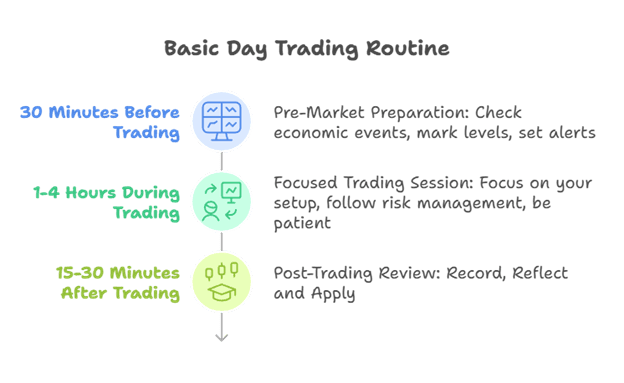
Align your sessions with your brain’s ultradian rhythms. Work in focused 90-minute blocks followed by a genuine 15-to-20-minute break. Genuine means away from the screen. Walk. Stretch. Get outside. Don’t sit at your desk scrolling trading communities.
A practical schedule for the London-New York overlap:
| Block | Time (EST) | Activity |
|---|---|---|
| Pre-market | 7:30 – 8:00 | Review calendar, mark levels, scan watchlist |
| Block 1 | 8:00 – 9:30 | Active trading (session overlap) |
| Break | 9:30 – 9:50 | Walk, stretch, hydrate |
| Block 2 | 9:50 – 11:20 | Active trading |
| Wind-down | 11:20 – 11:45 | Close positions, journal, review |
That’s roughly four hours of structured engagement, well within sustainable limits for most traders.
Automate What You Can
Every task you automate is one less drain on your cognitive resources. If your strategy has mechanical entry rules, convert them into an Expert Advisor. If you monitor specific price levels for breakouts, set alerts instead of staring at the chart. If you manage multiple accounts, use a trade copier instead of executing manually on each one.
The key is running your automated systems on a forex VPS rather than your personal computer. A VPS keeps your EAs executing 24/5 without requiring you to be present. Your strategies run in a data center with sub-millisecond execution while you step away from the screen entirely. This is the single most effective burnout prevention tool available to forex traders in 2026: letting the machine handle the mechanical work so you reserve your limited cognitive energy for decisions that actually require a human brain.
Explore our forex VPS plans to ensure your trading setup never misses a beat.
Keep a Trading Journal
Journaling serves two burnout-prevention purposes. It creates emotional distance from trades by externalizing your thoughts. And it provides objective data about your performance so you don’t rely on how you “feel” things are going.
Keep it simple. Log the setup, your entry reason, the outcome, and a one-sentence note on your emotional state. Five minutes after each session. That’s it. Overcomplicating your journal turns it into another source of fatigue instead of a relief valve.
Prioritize Physical Activity
Exercise is the most effective cortisol regulation tool available. A 30-minute walk, gym session, or swim directly counteracts the physiological stress response that trading triggers. It also improves sleep quality, which compounds the recovery benefit.
Schedule it like a trade. Put it in your calendar. Treat it as non-negotiable. Many professional traders train first thing in the morning before their session, arriving at the screen in a physiologically optimal state.
Build a Trading Community
Counter isolation by connecting with other serious traders. This doesn’t mean joining a chatroom full of signal chasers. Find a small group of traders who share your approach and commitment level. Weekly check-ins, trade reviews, or even casual conversation with people who understand the psychological demands of this work make a measurable difference in sustaining motivation.
Prevention summary: Fixed hours + 90-minute blocks + automation on a VPS + journaling + exercise + community. Address all six pillars and you dramatically reduce your burnout risk.
How to Recover from Trading Burnout
If you’re already burned out, “just take a break” isn’t a plan. You need a structured recovery protocol. Here’s a five-phase approach with realistic timelines.
Phase 1: Full Stop (Days 1-3)
Close all open positions or set protective stops. Log out of your trading platform. Remove chart apps from your phone’s home screen. This isn’t permanent. It’s a circuit breaker.
Spend these three days doing things completely unrelated to trading. Physical activity, time outdoors, time with people you care about. The goal is to break the stress-response loop your nervous system has been stuck in.
If you run automated strategies on a dedicated trading VPS, they can continue operating without you. You get a mental break without sacrificing your systematic edge. That’s the entire point of separating execution from decision-making.
Phase 2: Reflect and Assess (Days 4-7)
Once the initial decompression passes, review your situation objectively. Pull your trading journal and answer these questions:
- When did performance start declining?
- When did your screen time increase beyond your normal window?
- What external stressors were present (financial pressure, personal issues, health)?
- Which specific habits broke down first?
- Were you trading with a plan or reacting to the market?
The answers reveal the specific triggers. Maybe you started chasing during Asian session because you had a losing week in London. Maybe you increased size to recover from a drawdown. Identify the first domino that fell.
Phase 3: Rebuild Your Framework (Days 8-14)
Before touching a live chart, rebuild the structure around your trading. Revise or rewrite your trading plan with explicit rules for:
- Maximum daily screen time (e.g., four hours)
- Maximum consecutive trading days before a mandatory rest day
- Daily loss limit that triggers automatic shutdown
- Session structure with 90-minute blocks and mandatory breaks
- Automation plan — identify which tasks to offload to EAs or price alerts
This framework becomes your guardrails. Without it, you’ll slide back into the same patterns within weeks.
Phase 4: Paper Trading Re-Entry (Days 15-21)
Return to the screen on a demo account. The purpose isn’t to practice your strategy. It’s to practice your new habits. Trade only during your defined window. Take every scheduled break. Follow your session structure exactly.
Pay close attention to how you feel. If dread or apathy returns within a few days, you need more time in Phase 2 or a more fundamental change to your approach.
Phase 5: Controlled Live Return (Days 22-30+)
Transition to live trading with reduced position size. Half your normal risk per trade for the first two weeks. This reduces the emotional weight of each trade while you re-establish your rhythm.
Scale back to full size only after completing at least two consecutive weeks following your framework without breaking a single rule. The goal is consistency, not profit. Performance follows consistency naturally.
| Phase | Duration | Focus | Key Action |
|---|---|---|---|
| 1. Full Stop | 3 days | Break the stress loop | No charts, no market exposure |
| 2. Reflect | 4 days | Identify root causes | Journal review and self-assessment |
| 3. Rebuild | 7 days | Create guardrails | Rewrite trading plan with limits |
| 4. Paper Trade | 7 days | Practice new habits | Demo trade within new framework |
| 5. Live Return | 14+ days | Re-establish rhythm | Half-size, strict rule adherence |
Burnout vs. a Normal Losing Streak
Traders often confuse a losing streak with burnout. They’re fundamentally different, and misdiagnosing one as the other leads to the wrong response.
A losing streak is a statistical outcome. Every strategy experiences drawdowns. If your process is sound and your risk management is intact, a losing streak is just variance. You don’t need to change anything except maybe your expectations for the current week.
Burnout is a psychological and physiological state, classified by the WHO as an occupational phenomenon. It affects how you feel, think, and function. You can burn out during a winning period if you’re overworking yourself, and you can endure a brutal drawdown without burning out if your habits are solid.
| Factor | Losing Streak | Burnout |
|---|---|---|
| Cause | Market conditions, variance | Chronic overwork and stress |
| Your process | Still intact | Breaking down |
| Motivation | Frustrated but engaged | Apathetic or dreading sessions |
| Physical symptoms | Minimal | Fatigue, sleep issues, tension |
| Recovery | Stick to the plan | Step away and restructure |
If your process is intact but results are poor, stay the course. If your process is crumbling and you feel exhausted regardless of results, that’s burnout. Respond accordingly.
How Automation Reduces Screen Time and Prevents Burnout
Screen time is the thread connecting nearly every cause of trading burnout. More screen time means more decisions, more cortisol, more fatigue, and less recovery. The most direct way to cut screen time without reducing market exposure is automation.
Running Expert Advisors or trading bots on a low-latency VPS means your strategies execute in a data center with 100% uptime during trading hours. You don’t need to be present. You don’t need the screen open. The VPS handles execution while you focus your energy on what actually requires your brain: strategy development, risk management decisions, and performance analysis.
This isn’t about removing yourself from trading entirely. It’s about removing yourself from the mechanical, repetitive parts that drain you without adding value. Watching a 15-minute candle form in real time doesn’t make you a better trader. It just makes you a more tired one.
NYCServers forex VPS plans start at $25/month with servers in New York (Equinix NY4), London, and Tokyo. Your EAs get sub-millisecond execution to major brokers while you get your screen time and your mental health back.
Frequently Asked Questions
How long does trading burnout last?
Without intervention, trading burnout can persist for months and often worsens over time. With the structured recovery protocol above, most traders can return to live trading within 30 days. The full stop and reflection phases are critical. Skipping them and jumping straight back into the market usually leads to relapse within two to four weeks.
Can part-time traders experience forex burnout?
Absolutely. Part-time traders are sometimes more vulnerable because they compress their trading into evenings or weekends on top of a full-time job. They’re already cognitively depleted, then they add high-stakes decision-making. If you trade part-time, strict session limits and automation are even more important.
Does automating trades with EAs actually reduce burnout?
Yes, when implemented properly. Automation removes the need for constant screen monitoring, which is the primary burnout driver. Running EAs on a VPS means your strategies operate independently and you only check in periodically for performance review. The key is trusting your system enough to step away, which requires thorough backtesting and forward testing before going live.
How much screen time is too much for trading?
Research on cognitive performance suggests that sustained, high-focus screen work degrades significantly after two to three hours. For active trading, four hours per day is a practical upper limit. Beyond that, decision quality declines measurably. If you need longer sessions, structure them with mandatory 15-to-20-minute breaks every 90 minutes and automate portions of your workflow.
Should I quit trading if I’m burned out?
Burnout doesn’t mean trading isn’t for you. It usually means your process isn’t sustainable. Before making permanent decisions, complete the recovery protocol. Most traders who burn out were doing something unsustainable: too many hours, too much risk, no structure, no breaks. Fix the process and see if the passion returns. If it doesn’t after a full recovery cycle, then reassess.
When should I take a break from trading?
Take a break when you notice multiple warning signs from the checklist above, especially if your self-assessment score hits 13 or higher. Other clear signals include three or more revenge trades in a single week, consistent rule-breaking over a two-week period, or physical symptoms like chronic fatigue and sleep disruption. A proactive three-day break at the first warning signs is far less costly than a forced month-long recovery after full burnout.
What’s the difference between trading burnout and depression?
Trading burnout is tied specifically to the activity of trading and its demands. It improves when you step away and restructure your approach. Depression is a broader clinical condition that affects all areas of life and doesn’t resolve simply by changing your trading habits. If your symptoms persist during your break from trading, extend beyond your trading life, or include feelings of hopelessness, seek help from a mental health professional. It’s the smartest decision you can make for your long-term wellbeing.

About the author
Thomas Vasilyev
Writer & Full Time EA Developer
Tom is our associate writer, and has advanced knowledge with the technical side of things, like VPS management. Additionally Tom is a coder, and develops EAs and algorithms.
Areas of Expertise