
Prop Firm Rule Changes for 2026: What’s Coming and How to Prepare
Deep dive into prop firm rule changes expected for 2026. CFTC oversight, news trading bans, KYC requirements, and what prop traders need to know to stay compliant.

The prop firm industry is heading into 2026 facing its biggest regulatory shake-up yet.
What started as a largely unregulated space offering traders access to capital with minimal oversight is now under intense scrutiny from the CFTC, FCA, ASIC, and other global regulators. If you’re trading with a prop firm or planning to get funded in 2026, you need to understand what’s changing.
The days of the Wild West are ending. Firms are tightening rules. Regulators are asking hard questions about whether prop trading is a financial service or gambling. And traders who don’t adapt will find themselves locked out.
This guide breaks down the current state of prop firm regulations in late 2025, the regulatory pressure building from government agencies, the rule-tightening trends already in motion, and what’s most likely coming in 2026.
The Current State: Late 2025
Let’s be clear: most prop firms are currently unregulated.
They don’t fall under SEC broker-dealer requirements. They don’t register with the CFTC as Futures Commission Merchants. They avoid NFA oversight entirely. Why? Because they claim they’re trading their own capital, not managing client funds.
The business model works like this: traders pay an evaluation fee (typically $100-$500), attempt to pass a challenge with strict profit targets and drawdown limits, and if successful, receive access to a “funded account.” The firm keeps 10-30% of profits.
Sounds reasonable. Except for one problem: most funded accounts are demo accounts. No real trading occurs. The firm profits off failed challenges and subscription renewals. According to DailyForex, 90%+ of challenges fail, and those fees are sufficient to pay the small percentage who do get funded.
Industry Growth Has Been Explosive
Between December 2015 and April 2024, the prop trading industry expanded by 1,264%, far outpacing the 240% growth seen in traditional investing. That kind of growth attracts attention. Regulatory attention.
By late 2025, we’re seeing cracks in the foundation:
- Italy’s Consob issued warnings about prop firm risks in July 2024
- Belgium’s FSMA and Spain’s CNMV followed with similar concerns
- ASIC (Australia) warned financial influencers in 2025 about promoting prop trading without proper disclosures
- MetaQuotes conducted a major crackdown in February 2024, forcing firms to suspend or restructure
- Between 2023-2024, an estimated 80-100 prop firms closed due to tighter rules
The message is clear: regulation is coming. The only question is how fast and how harsh.

The Gambling vs. Finance Debate
Here’s the uncomfortable truth: regulators can’t decide if prop firms are financial services or online gambling.
Since no money changes hands (traders pay fees for “educational services” and access demo accounts), some argue financial regulation doesn’t apply. Evgeny Sorokin, CEO of Devexperts, stated that “rules around prop firm operations could be better suited to the gaming and gambling industry legislation rather than financial” (source).
DailyForex goes further, arguing that retail prop trading represents “the troubling gamification of trading” and should fall under gambling oversight, not financial regulation.
This classification debate matters. If prop firms are deemed gambling, they’ll face completely different rules around payouts, fee structures, and consumer protection. If they’re financial services, expect CTA registration, capital requirements, and formal licensing.
Regulatory Pressure: CFTC, FCA, and ASIC
Regulatory bodies worldwide are circling. Here’s what each major authority is doing.
CFTC (United States)
The Commodity Futures Trading Commission is asking a simple question: should prop firms that offer futures trading be classified as Commodity Trading Advisors (CTAs)?
If the answer is yes, everything changes. CTAs must register with the CFTC and NFA, meet capital requirements, maintain detailed records, and submit to regular audits. According to Morrison Foerster, the CFTC finalized amendments to Rule 4.7 in September 2024, updating portfolio requirements for “qualified eligible persons” with a compliance date of March 26, 2025.
Additionally, the Digital Asset Market Clarity Act (CLARITY Act) passed the House in July 2025 with bipartisan support. If enacted, it would expand CTA and CPO definitions to include managers and advisers involved with digital assets, requiring many crypto-focused prop firms to register with the CFTC (Reed Smith analysis).
The CFTC is also considering:
- Mandatory registration for all prop firms offering futures/options access
- Risk management and capital adequacy rules
- Enhanced disclosure requirements for evaluation fees and payout structures
The regulatory net is tightening. Firms that operated in gray areas are being forced to restructure or withdraw from US markets entirely.

SEC (United States)
On February 6, 2024, the SEC adopted new Rules 3a5-4 and 3a44-2 that broaden the definition of “dealers” and “government securities dealers.” Proprietary trading firms deemed dealers under these rules will be required to:
- Register with the SEC and FINRA
- Meet net capital requirements
- Submit to SEC and FINRA examinations
This targets traditional prop shops more than retail evaluation firms, but it signals the SEC’s willingness to expand oversight into prop trading structures (Willkie Farr analysis).
FCA (United Kingdom)
The Financial Conduct Authority published a multi-firm review in August 2025 assessing algorithmic trading controls among principal trading firms. The FCA is focusing on:
- Algorithmic control frameworks and risk management
- Transparency in profit split agreements
- Marketing claims around “90% profit shares” or “free weekly payments”
UK-based prop firms are increasingly adopting formal FCA compliance procedures, even if not legally required, to build trust and avoid future enforcement actions. Evaluation-based firms currently operate legally by providing “clearly defined services” rather than regulated investment activities (LuxAlgo guide).

ASIC (Australia)
ASIC has taken a proactive stance, issuing warnings to financial influencers in 2025 for promoting prop trading without proper disclosures. The regulator is concerned about:
- Misleading marketing to retail traders
- Lack of investor protections
- High failure rates not being disclosed upfront
ASIC’s guidance mirrors the FCA’s approach: tighter control over marketing, more stringent KYC/AML requirements, and clearer risk disclosures.

Europe: ESMA and MiCA
The European Securities and Markets Authority launched a Common Supervisory Action in early 2024 to assess pre-trade controls among algorithmic trading firms. By 2025, the EU’s Markets in Crypto-Assets (MiCA) framework is in effect, which will require prop firms dealing in crypto to ensure full compliance around custody, transaction reporting, and consumer protection.
Italy’s Consob noted complaints about prop firms making challenge tests “contrived to push players to try again” and failure to share alleged profits (source).
Rule Tightening Trends
Even without formal regulation, prop firms are changing their rules. Some changes are proactive (avoiding future scrutiny). Others are reactive (responding to trader complaints and payout disputes).
News Trading Restrictions Becoming Standard
News trading used to be fair game during evaluations. Not anymore.
A growing number of firms now enforce blackout periods around high-impact announcements like Non-Farm Payrolls, CPI, and FOMC decisions. According to FX News Group, leading prop firms have begun implementing rules that restrict trades or profits immediately around major news events.
Here’s how major firms handle news trading in 2025:
| Prop Firm | Blackout Window | Account Type | Consequence |
|---|---|---|---|
| FTMO | 2 minutes before/after | Funded only | Soft breach (certain pairs) |
| MyFundedFX | 3 minutes before/after | Funded only | Profits removed (soft breach) |
| ThinkCapital | 2 minutes before/after | All accounts | Account termination |
| QT Funded | 5 minutes before/after | Prime/Instant funded | Rule violation |
| Blue Guardian | 2.5 minutes before/after | Funded only | Account termination |
| OANDA Prop Trader | 2 minutes before/after | All accounts | Trading not allowed |
Why the crackdown? News events create extreme volatility, slippage, and widened spreads. Firms want to avoid risk exposure from traders exploiting short-term price spikes. But it also raises questions: if firms are truly providing capital for traders to profit, why restrict legitimate strategies?
Banned Trading Strategies Expanding
Prop firms are increasingly banning specific strategies they deem “manipulative” or “high-risk.” The most common prohibited strategies include:
1. Martingale Strategy
Doubling position sizes after losses in hopes of recovering. Banned because it carries extreme risk of total capital loss and only works with unlimited capital (Billions Club).
2. Grid Trading
Placing inverse buy and sell orders at fixed intervals. Firms ban this due to over-leveraging risks and potential market manipulation (Forex Prop Reviews).
3. High-Frequency Trading (HFT)
Executing thousands of trades per second. For Traders defines HFT as “trading under 5-second intervals” and bans it to prevent system overload in simulated environments (TradingFinder).
4. Latency Arbitrage
Exploiting delayed data feeds for unfair advantages. Banned across most firms for creating unequal trading conditions.
Consequences: Violations result in immediate account termination and profit forfeiture. Firms actively monitor for these patterns using automated detection systems.
KYC/AML Checks Getting Stricter
Know Your Customer (KYC) and Anti-Money Laundering (AML) requirements are becoming standard, even for firms without formal licenses.
Why? Payment providers and banks are demanding it. According to PropFirmPlus, “even without a broker license, prop firms still operate under increasing scrutiny. Payment providers expect robust KYC, AML, and payout monitoring systems.”
Traders now face:
- Identity verification (passport/driver’s license)
- Proof of address (utility bills, bank statements)
- Source of funds documentation
- Enhanced due diligence for high-value payouts
This trend will accelerate in 2026 as firms seek to avoid money laundering risks and build legitimacy.
Profit Split Transparency Requirements
Regulators are scrutinizing marketing claims like “Keep 90% of profits” or “Unlimited scaling.”
In response, firms are moving toward structured, milestone-based payout tiers with clear terms. Instead of vague promises, you’ll see:
- “80% profit split for first $10,000 earned, 90% after”
- “Payouts processed within 14 business days”
- “Minimum payout threshold: $100”
This shift toward transparency is a win for traders, as it enables more informed decisions when comparing firms.
Evaluation Fee Scrutiny
Non-refundable evaluation fees are a major point of contention. Regulators in Europe, Australia, and North America worry that charging fees without delivering funding resembles gambling or a pay-to-play model.
Some firms are responding with:
- Free trial challenges
- Refundable fees once traders reach milestones
- Fee-free models where firms profit only from trader performance
Expect this trend to accelerate as regulators demand clearer distinctions between “educational services” and financial products.

What’s Likely Coming in 2026
Based on current regulatory momentum, here’s what traders should expect in 2026.
1. Mandatory Licensing in Key Jurisdictions
The CFTC, FCA, and ASIC will likely require prop firms to register or obtain licenses to operate legally. Firms offering futures access will face the most immediate pressure.
What this means:
- Smaller, undercapitalized firms will exit the market
- Offshore firms will be forced to restructure or lose access to US/EU/AU traders
- Compliance costs will rise, potentially increasing evaluation fees
FundedSquad predicts: “In the next 12 to 24 months, we can expect even more significant changes. Licensing will likely become mandatory in most regions where firms operate.”
2. CTA Classification for US Firms
The CFTC is likely to classify evaluation-based prop firms as Commodity Trading Advisors, requiring registration, capital requirements, and formal risk disclosures.
This would fundamentally change the business model. Firms would need to:
- Maintain segregated funds
- Submit to regular audits
- Provide standardized risk disclosures
- Register individual traders as associated persons (in some cases)
3. Standardized News Trading Rules
Expect industry-wide standards around news trading. We’ll likely see regulators or self-regulatory bodies mandate:
- Clear disclosure of blackout periods in terms of service
- Standardized blackout windows (e.g., 2-5 minutes)
- Transparency around which news events trigger restrictions
4. Stricter Payout Verification
Regulators will require firms to prove they can honor payouts, potentially through:
- Segregated payout funds separate from operational capital
- Regular financial audits
- Public disclosure of payout statistics
This addresses a core concern: traders have no recourse if a firm delays or denies payouts.
5. 2026 IRS Crypto Reporting Rules
Starting January 1, 2026, the IRS will require centralized exchanges to report cost basis information via Form 1099-DA for all digital asset transactions. This affects prop traders dealing with crypto in several ways:
- Mandatory transaction reporting: All crypto trades on centralized platforms will be reported to the IRS
- Expanded broker definition: Payment processors, hosted wallet providers, and certain DeFi protocols may be classified as brokers
- Self-custody challenges: Traders using non-custodial wallets must maintain meticulous records since transfers won’t include basis reporting
- International reporting (2027): The OECD’s Crypto-Asset Reporting Framework (CARF) will require global information sharing
Prop traders should use tax software like CoinLedger or CryptoTax to consolidate transaction data and prepare for stricter compliance (Benzinga analysis).
6. Industry Consolidation
FTMO’s prediction will likely come true: “3 players will take 80%” of the market.
Between 2023-2024, we’ve already seen 80-100 firms close. That trend will accelerate. Smaller firms without compliance infrastructure will merge, sell, or shut down. The survivors will be firms that:
- Invest in regulatory compliance early
- Build transparent payout systems
- Partner with regulated brokers
- Demonstrate financial stability
For traders, this means fewer options but higher quality firms.
7. Hybrid Models: Prop Firms + Regulated Brokers
To navigate regulatory pressure, many prop firms will form strategic partnerships with licensed brokers. This hybrid model allows:
- Live trading to occur under a regulated framework
- Prop firms to focus on trader education and evaluation
- Enhanced trader confidence through regulatory oversight
Over time, the distinction between traditional brokers and prop firms may blur entirely (BrightFunded prediction).
8. AI-Driven Risk Management
Prop firms will increasingly use AI and machine learning for real-time risk monitoring. AI models can:
- Identify banned trading patterns (Martingale, grid, HFT)
- Monitor trader performance and exposure
- Automatically flag potential violations before they become major issues
This benefits both firms (reduced risk) and compliant traders (fewer false positives).

How Traders Should Prepare
If you’re trading with a prop firm now or planning to get funded in 2026, here’s how to stay ahead of the curve.
1. Choose Regulated or Compliance-Forward Firms
Prioritize firms that:
- Have formal CFTC, FCA, or ASIC oversight (or are actively pursuing it)
- Publish transparent profit split terms
- Disclose payout statistics publicly
- Partner with regulated brokers
Avoid firms with vague terms, offshore registration in unregulated jurisdictions, or a history of payout disputes.
2. Understand News Trading Rules Before Funding
Read the fine print. Know:
- Which news events trigger blackout periods
- How long the blackout window lasts
- Whether violations result in soft breaches (profit removal) or account termination
If news trading is core to your strategy, choose firms that allow it during evaluation (like FTMO’s swing accounts) or avoid firms with strict restrictions.
3. Avoid Banned Strategies
Don’t test the boundaries. Firms actively monitor for Martingale, grid trading, HFT, and latency arbitrage. Even if you pass evaluation using a banned strategy, you’ll lose your funded account and profits.
Stick to consistent, rule-compliant strategies with clear risk management.
4. Prepare for Stricter KYC/AML
Have your documents ready:
- Government-issued ID (passport or driver’s license)
- Proof of address (utility bill or bank statement, recent)
- Source of funds documentation (especially for large payouts)
Expect delays if your documents don’t match exactly. Use legal names, current addresses, and high-quality scans.
5. Track Your Performance and Taxes
With 2026 IRS crypto reporting rules, traders must maintain detailed records of:
- All trades (entry/exit, date, instrument, P&L)
- Crypto transactions (cost basis, wallet transfers)
- Payout receipts and tax withholdings
Use trading journals, spreadsheets, or tax software to stay organized. The IRS expects accurate reporting, and non-compliance carries penalties.
6. Diversify Across Multiple Firms
Don’t put all your capital (or evaluation fees) into one firm. Regulatory changes could force firms to restructure, delay payouts, or shut down entirely.
Spread risk by working with 2-3 reputable firms with different regulatory footprints.
7. Stay Informed
Regulation moves fast. Follow:
- CFTC press releases and rule proposals
- FCA multi-firm reviews
- Industry news from Finance Magnates, PropFirmMatch, and DailyForex
- Firm-specific rule updates (most firms email changes to funded traders)
8. Optimize Your Trading Infrastructure
As prop firms tighten rules around execution speed and consistency, infrastructure matters more than ever. Many funded traders rely on Forex VPS hosting to:
- Reduce latency to broker servers (1ms or less)
- Ensure 24/7 uptime during evaluations and funded trading
- Run EAs and automated strategies without interruptions
- Meet consistency rules by avoiding home internet outages
If you’re serious about passing challenges and scaling funded accounts, a reliable VPS is no longer optional. Learn more about what prop firms are and how VPS hosting fits into a professional trading setup.
Timeline: Recent Prop Firm Regulatory Milestones
| Date | Event | Impact |
|---|---|---|
| Feb 2024 | MetaQuotes crackdown on prop firms | Forced firms to suspend or restructure offerings |
| Feb 2024 | SEC adopts new dealer registration rules (3a5-4, 3a44-2) | Broadens definition of “dealers” to include some prop firms |
| Jul 2024 | Italy’s Consob warns investors about prop firm risks | Signals European regulatory concern |
| Aug 2024 | FCA publishes algorithmic trading review | Increased scrutiny on PTF control frameworks |
| Sep 2024 | CFTC finalizes Rule 4.7 amendments | Updates QEP portfolio requirements (compliance: Mar 26, 2025) |
| Jul 2025 | CLARITY Act passes US House | Expands CTA/CPO definitions to digital assets |
| 2025 | ASIC warns financial influencers | Increased oversight on prop firm marketing |
| 2025 | MiCA framework fully implemented (EU) | Crypto prop firms face strict compliance |
| Jan 1, 2026 | IRS Form 1099-DA crypto reporting begins | Mandatory cost basis reporting for digital assets |
Frequently Asked Questions
Are prop firms currently regulated?
Most prop firms are currently unregulated. In the US, they avoid oversight from the SEC, CFTC, and NFA by positioning themselves as educational services trading their own capital rather than client funds. However, this is changing as regulatory bodies question whether firms charging evaluation fees and offering profit-sharing should be classified as CTAs or investment advisors.
What regulatory changes are expected in 2026?
Expected changes for 2026 include mandatory licensing in key jurisdictions, stricter KYC/AML checks, formal profit split transparency requirements, potential CTA classification by the CFTC, standardized news trading blackout periods, and increased capital adequacy standards. The EU’s MiCA framework will also be fully implemented.
Why are regulators targeting prop firms now?
Regulators are concerned about non-refundable evaluation fees resembling gambling, lack of transparency in payout structures, potential money laundering risks, consumer protection gaps, and the explosive industry growth (1,264% between 2015-2024). Italian watchdog Consob, Belgian FSMA, and Spanish CNMV have all issued warnings about prop trading risks.
What are the most common banned trading strategies at prop firms?
Most prop firms ban Martingale strategies (doubling position sizes after losses), grid trading (placing inverse buy/sell orders at fixed intervals), high-frequency trading (HFT) under 5-second intervals, and latency arbitrage (exploiting delayed data feeds). Violations typically result in immediate account termination and profit forfeiture.
How do news trading restrictions work?
Most funded accounts now have blackout periods around high-impact news events like NFP, CPI, and FOMC decisions. Common restrictions include 2-5 minute windows before and after announcements where opening/closing trades is prohibited. FTMO enforces 2 minutes, QT Funded has 5 minutes, and MyFundedFX applies 3 minutes with soft breaches that remove profits but preserve accounts.
Will prop firms survive increased regulation?
The industry will consolidate. FTMO predicts “3 players will take 80%” of the market. Between 2023-2024, an estimated 80-100 prop firms closed due to tighter rules. Firms that invest in compliance infrastructure, transparent operations, and strategic broker partnerships will survive. By 2030, most legitimate prop firms will likely operate under formal licensing regimes.
How will 2026 IRS crypto reporting rules affect prop traders?
Starting January 1, 2026, centralized exchanges must report cost basis information via Form 1099-DA for all digital asset transactions. Prop traders dealing with crypto will face mandatory transaction reporting, expanded broker definitions including payment processors and DeFi protocols, and self-custody record-keeping requirements. The global CARF framework begins rolling out in 2027.
Final Thoughts
The prop firm industry is at a crossroads.
Regulation is coming whether firms like it or not. The Wild West days of unregulated evaluation fees, vague payout terms, and zero oversight are ending. By 2026, we’ll see mandatory licensing, stricter KYC/AML checks, standardized news trading rules, and potentially full CTA classification for US firms.
For traders, this is both a challenge and an opportunity.
The challenge: fewer firms, higher compliance costs, and stricter rules around strategies and trading behavior.
The opportunity: more transparency, better trader protections, and a clearer path to legitimate funded trading with firms that have real capital and regulatory oversight.
The firms that survive will be the ones that embrace regulation early, invest in compliance infrastructure, and build genuine partnerships with regulated brokers. Traders who prepare now by choosing reputable firms, understanding rule changes, and maintaining professional trading infrastructure will thrive.
2026 is going to separate serious traders from hobbyists. Make sure you’re on the right side of that divide.
Trade Smarter with NYCServers
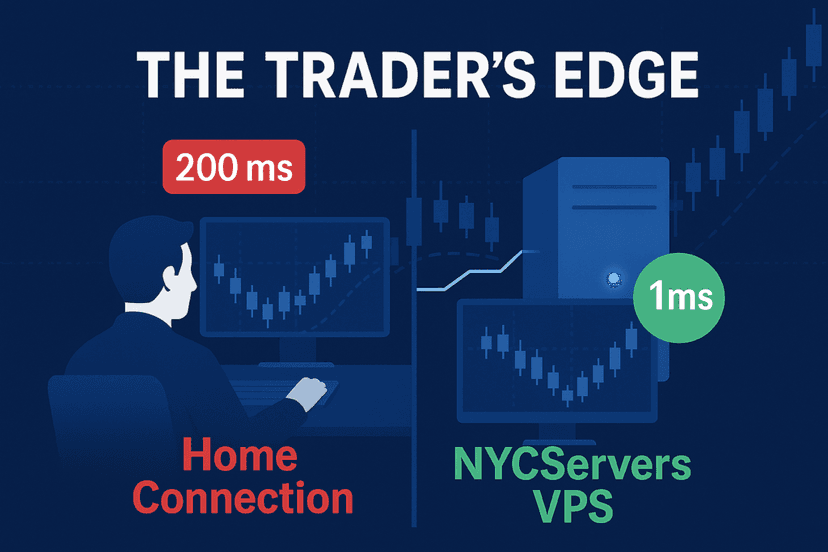
As prop firms tighten rules around execution speed, uptime, and consistency, your trading infrastructure matters more than ever. Professional prop traders rely on ultra-low latency VPS hosting to:
- Pass evaluations consistently with 1ms latency to broker servers
- Run EAs 24/7 without home internet interruptions
- Meet consistency rules with guaranteed uptime during trading hours
- Scale funded accounts with enterprise-grade infrastructure
NYCServers offers Forex VPS hosting optimized for prop traders, with servers in NY4, LD4, and TY3 data centers. Pre-installed MT4/MT5, instant setup, and 24/7 support.

About the author
Matthew Hinkle
Lead Writer & Full Time Retail Trader
Matthew is NYCServers' lead writer. In addition to being passionate about forex trading, he is also an active trader himself. Matt has advanced knowledge of useful indicators, trading systems, and analysis.
Areas of Expertise