
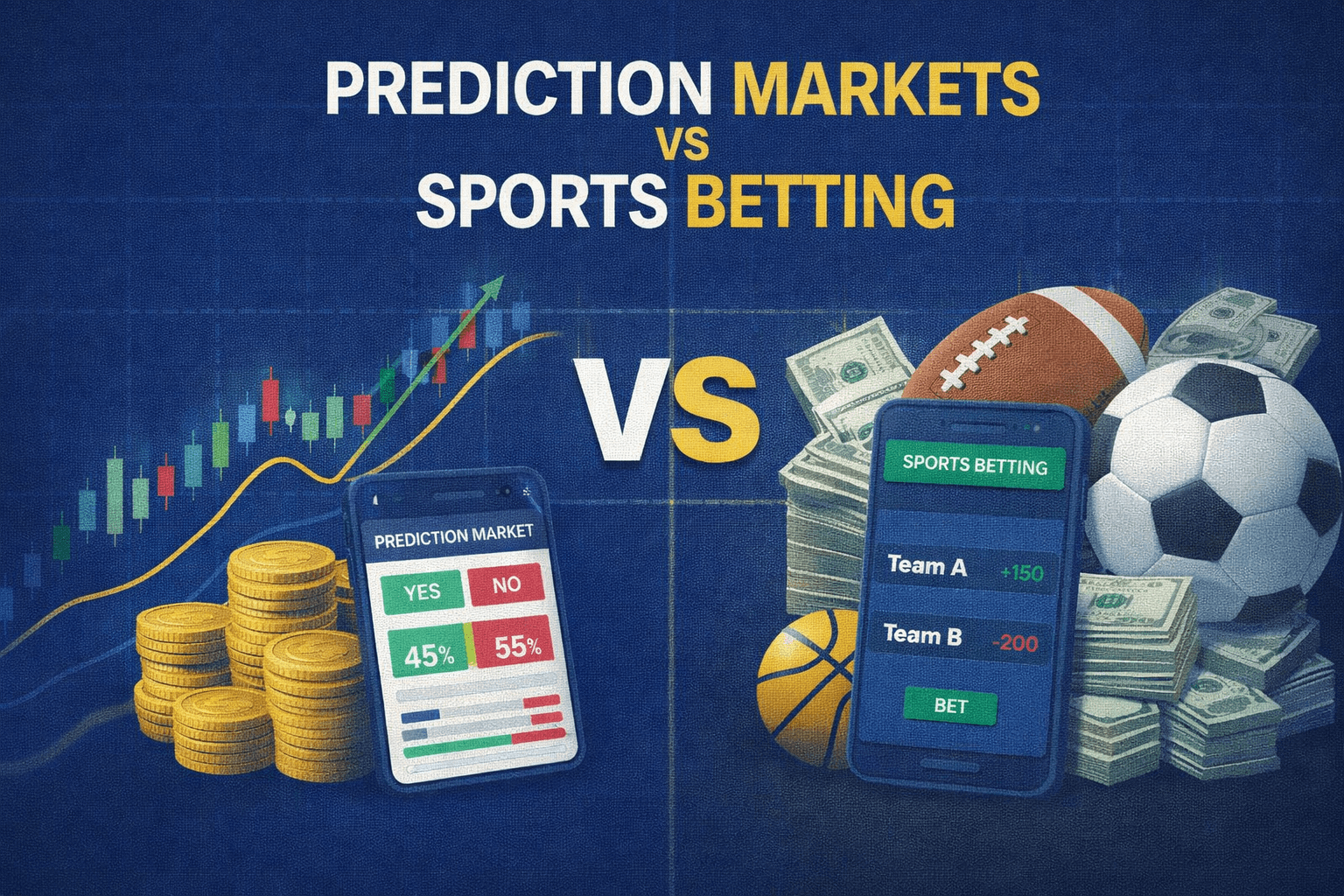
Prediction Markets vs Sports Betting: Key Differences
Prediction markets vs sports betting differ in regulation, fees, tax treatment, and structure. Learn the key differences and which option is right for you.
Prediction Markets and Sports Betting Look Similar on the Surface
You place a wager on an outcome. You either win or lose money. The event hasn’t happened yet. So what’s the difference between prediction markets and sports betting?
Quite a lot, actually. Prediction markets and sportsbooks share a superficial resemblance, but they operate under different regulatory frameworks, fee structures, tax treatments, and market mechanics. The distinction matters whether you’re a casual participant exploring your options or a serious trader building automated strategies around event-driven contracts.
This guide breaks down every meaningful difference between prediction markets and sports betting so you can understand exactly what you’re dealing with, and which model fits your goals.
What Are Prediction Markets?
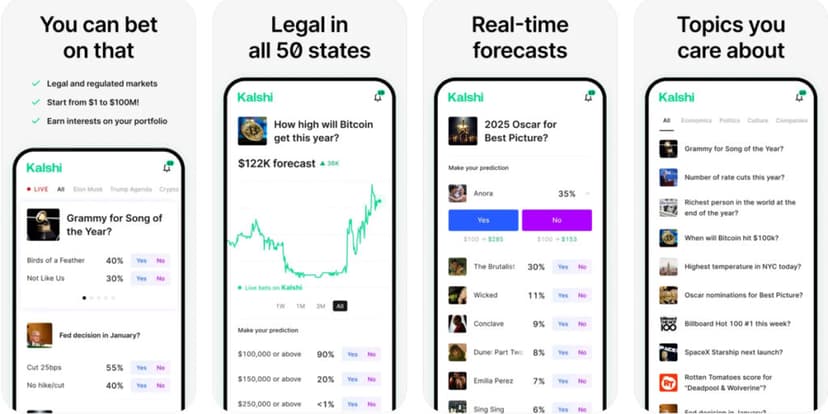
Prediction markets are exchange-based platforms where participants buy and sell contracts tied to the outcome of real-world events. These contracts typically trade between $0.00 and $1.00, with the price reflecting the market’s implied probability of that outcome occurring.
If you buy a “Yes” contract on “Will the Fed raise rates in June 2026?” at $0.65, you’re paying 65 cents for a contract that pays $1.00 if the event happens. Your maximum profit is $0.35 per contract. If it doesn’t happen, the contract settles at $0.00 and you lose your $0.65.
Major prediction market platforms in 2026 include Kalshi (CFTC-regulated, US-based), Polymarket (crypto-based, restricted for US users), and PredictIt (academic-focused, limited). Kalshi alone saw over $1 billion in trading volume around the 2024 Super Bowl, signaling that these markets have moved well beyond niche territory. If you’re new to event contracts, our guide to prediction market strategies covers the fundamentals.
Key Characteristics of Prediction Markets
- Exchange model — buyers and sellers trade directly with each other
- No house edge — the platform charges fees, not a built-in margin on odds
- Binary contracts — settle at $0 or $1 (sometimes with ranged/multi-bracket structures)
- Order books — pricing driven by supply and demand, not set by a bookmaker
- 24/7 trading — contracts can be bought and sold continuously until settlement
- Regulated as financial instruments — overseen by the CFTC, not state gaming commissions
What Is Sports Betting?
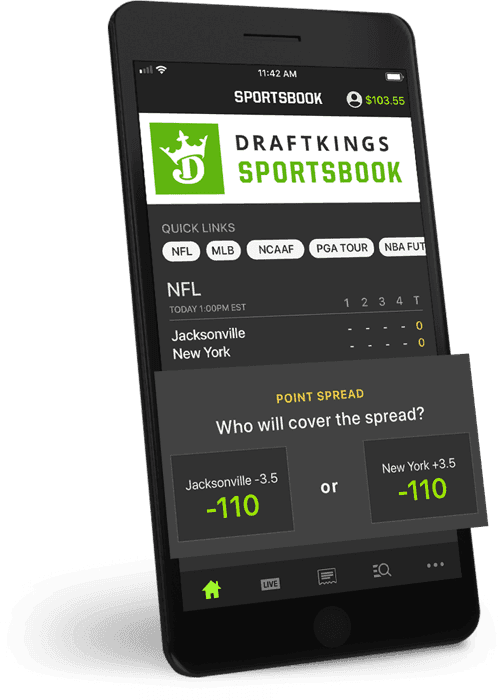
Sports betting is wager-based gambling where you bet against a sportsbook (the house) on athletic events. The sportsbook sets the odds, takes the opposite side of every bet, and builds a profit margin into those odds — commonly known as the “vig” or “juice.”
When you see -110 odds on both sides of an NFL spread, that’s the sportsbook guaranteeing itself roughly 4.5% margin regardless of the outcome. You need to win about 52.4% of your bets just to break even.
Key Characteristics of Sports Betting
- House model — you bet against the sportsbook, not other participants
- Built-in house edge — the vig typically ranges from 4% to 10%+ depending on market and sport
- Fixed or live odds — set by the sportsbook’s oddsmakers and algorithms
- State-regulated — licensed under individual state gambling commissions
- Event-locked — most bets cannot be sold or traded once placed (aside from cash-out features)
- Limited to sports — legal US sportsbooks only offer athletic event wagering
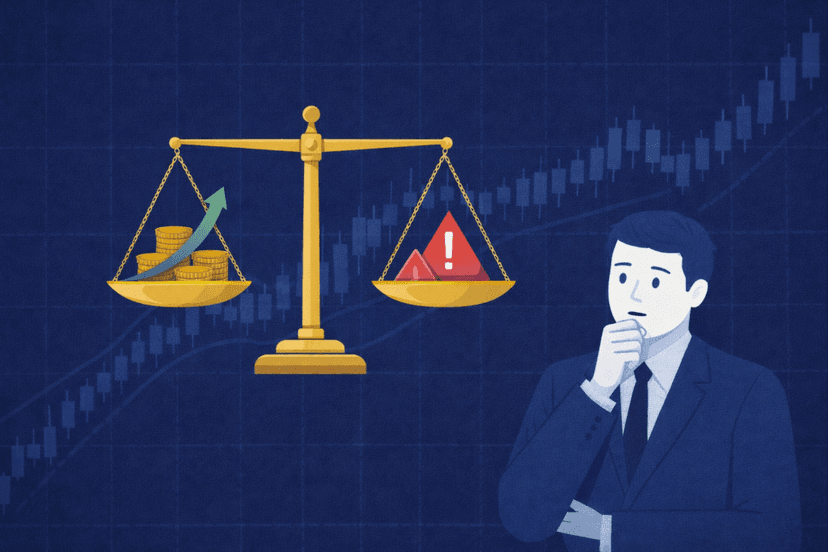
Side-by-Side Comparison: Prediction Markets vs Sportsbooks
| Feature | Prediction Markets | Sports Betting |
|---|---|---|
| Market Structure | Exchange (peer-to-peer) | House/bookmaker model |
| Pricing | Set by supply/demand on order book | Set by oddsmakers with built-in margin |
| House Edge | None (platform charges transaction fees) | 4-10%+ vig baked into odds |
| Regulation | CFTC (federal, financial) | State gaming commissions |
| Event Types | Politics, economics, weather, sports, culture | Sports and athletic events only |
| Tax Treatment | 1099-B (capital gains/losses) | W-2G (gambling winnings) |
| Position Exit | Sell contract anytime before settlement | Generally locked (limited cash-out) |
| Trading Hours | 24/7 until contract settlement | Pre-game and live during events |
| Loss Deduction | Offset against capital gains | Only offset against gambling winnings |
| Automation | API access for algorithmic trading | Generally prohibited; accounts limited |
Regulatory Differences: CFTC vs State Gaming Commissions
This is the single most important structural difference between prediction markets and sports betting, and it shapes everything else — tax treatment, fee structures, legality, and who can participate.
Prediction Markets: Federal Financial Regulation
CFTC-regulated prediction markets like Kalshi operate as Designated Contract Markets (DCMs). They’re classified alongside futures exchanges, not casinos. The CFTC treats event contracts as financial derivatives, meaning participants are “traders,” not “gamblers,” from a regulatory and tax perspective.
In 2024, Kalshi won a landmark federal court case against the CFTC, gaining approval to list election-related event contracts. This ruling significantly expanded the scope of what prediction markets can legally offer in the United States. As of 2026, the regulatory framework continues to evolve, with the CFTC refining its approach to event contract categories and expanding the types of markets that can be listed.
Sports Betting: State-by-State Patchwork
Sports betting is regulated at the state level following the 2018 Supreme Court decision that struck down PASPA. Each state sets its own licensing requirements, tax rates, approved operators, and permitted bet types. As of early 2026, sports betting is legal in 38+ states, but the rules vary dramatically.
Some states allow mobile betting. Others require in-person wagering. Tax rates on operator revenue range from 8% in Nevada to over 50% in New York. This patchwork creates inconsistency for bettors and operators alike.
The regulatory distinction matters for you as a participant: prediction market activity falls under federal financial law, while sports betting falls under state gambling law. These are very different legal frameworks with very different implications for your taxes, your rights, and how platforms can treat you.
Fee Structure: No House Edge vs The Vig
The fee structures are fundamentally different because the market models are fundamentally different.
How Prediction Markets Charge Fees
Prediction market exchanges don’t take a side in your trade. They match buyers with sellers and charge a fee for the service. Kalshi, for instance, charges fees on contract settlement — typically a few cents per contract. Some platforms also charge trading fees on each transaction.
Because there’s no house edge, the pricing on prediction markets reflects genuine supply-and-demand dynamics. If a contract is trading at $0.70, the market collectively believes there’s approximately a 70% chance that event will occur. No margin has been added to distort that signal. For traders monitoring these price movements around the clock, a dedicated trading server ensures you never miss a shift in the order book.
How Sportsbooks Charge Fees
Sportsbooks build their profit margin directly into the odds. On a standard -110/-110 line, the implied probabilities sum to approximately 104.5% — that extra 4.5% is the sportsbook’s vig. On less liquid markets (player props, niche sports), the vig can balloon to 8%, 10%, or higher.
This structural cost compounds over time. A bettor placing 1,000 bets against a 5% vig faces a massive headwind that even skilled handicappers struggle to overcome. Prediction market traders face transaction fees that are typically far lower in percentage terms.
Tax Treatment: Capital Gains vs Gambling Income
Here’s where the difference between prediction markets and sports betting directly hits your bottom line.
Prediction Market Taxes
CFTC-regulated event contracts are treated as Section 1256 contracts for tax purposes, similar to regulated futures. This means:
- Profits and losses are reported on a 1099-B
- Gains receive the 60/40 tax treatment — 60% taxed as long-term capital gains, 40% as short-term, regardless of how long you held the contract
- Losses can offset other capital gains in your portfolio
- Net losses can offset up to $3,000 of ordinary income per year, with carryforward
The 60/40 treatment is significant. For a trader in the 37% federal bracket, the blended rate on prediction market gains is roughly 26.8% rather than the full 37% short-term rate. That’s a meaningful tax advantage.
Sports Betting Taxes
Sports betting winnings are classified as gambling income and reported on a W-2G (for wins above certain thresholds). Key differences:
- All winnings are taxed as ordinary income at your marginal rate
- Losses can only offset gambling winnings — not capital gains or other income
- You must itemize deductions to claim gambling losses (many filers take the standard deduction)
- No 60/40 treatment, no favorable capital gains rates
For high-volume participants, this tax distinction alone can represent thousands of dollars annually. The prediction market framework is objectively more favorable from a tax planning perspective.
Are Prediction Markets Gambling?
This is the question that generates the most debate, and the answer depends on who you ask.
Legally, no. CFTC-regulated prediction markets are classified as financial instruments, not gambling products. Participants are traders executing transactions on a regulated exchange. The platforms are licensed as financial entities, not gaming operators.
Functionally, there’s a strong argument that prediction markets behave more like trading than gambling. You can enter and exit positions. You can analyze order book depth and price action. You can build systematic strategies based on data. You’re not locked into a bet with no exit.
Philosophically, some argue that any binary wager on an uncertain outcome is a form of gambling. And there’s a kernel of truth there. But by that standard, buying options or futures contracts would also be gambling — and no serious person classifies regulated derivatives markets that way.
The practical takeaway: prediction markets are regulated and taxed as financial instruments. Whether you personally consider them “gambling” is a matter of perspective, but the legal and tax systems treat them very differently from sports betting.
Strategy Differences: Trading vs Betting
The strategic approaches to prediction markets and sports betting diverge sharply once you move beyond the basics.
Prediction Market Strategy
Prediction market trading borrows heavily from financial markets. Successful participants often employ:
- Market-making — providing liquidity by posting bids and asks to capture the spread
- Arbitrage — exploiting price discrepancies between platforms or correlated contracts
- Portfolio construction — building diversified positions across multiple event categories
- Quantitative modeling — using polling data, economic indicators, or statistical models to identify mispriced contracts
- Automated execution — deploying algorithms via platform APIs to execute strategies 24/7
The order book structure means you can see the depth of buy and sell interest at each price level. This transparency allows for sophisticated strategies that simply aren’t possible in a sportsbook environment.
Sports Betting Strategy
Sports bettors focus primarily on handicapping — analyzing matchups, injuries, weather, trends, and line movement to find value against the sportsbook’s odds. Common approaches include:
- Line shopping — comparing odds across multiple sportsbooks
- Closing line value (CLV) — consistently beating the final line before game time
- Specialization — focusing on a specific sport, league, or bet type
- Bankroll management — sizing bets appropriately relative to edge and variance
One critical difference: sportsbooks actively limit or ban winning bettors. If you’re consistently profitable, your account will eventually be restricted. Prediction market exchanges don’t penalize successful traders — they welcome the liquidity.

Automation and API Access
This is where prediction markets pull away from sports betting entirely for technically-minded participants.
Platforms like Kalshi offer full API access, allowing traders to programmatically place orders, monitor positions, stream market data, and execute complex strategies around the clock. The exchange model actively encourages algorithmic participation because it adds liquidity to the order book.
Sports betting takes the opposite approach. Most sportsbooks explicitly prohibit automated betting in their terms of service. Bots and scripts that interact with sportsbook platforms can result in account closure and forfeiture of funds. Even manual bettors who win too consistently face account restrictions.
For traders running automated strategies on prediction markets, reliable infrastructure becomes essential. Contracts trade 24/7, and order books can shift rapidly around news events. A missed fill or delayed API call during a fast-moving market can mean the difference between capturing a profitable trade and watching it disappear. A VPS trading with API support lets you deploy and manage your execution scripts without worrying about connectivity drops.
This is where a dedicated VPS makes sense for serious prediction market traders. Running your trading scripts on a server with consistent uptime and low-latency connectivity ensures your algorithms execute when they’re supposed to — not when your home internet decides to cooperate.
Event Coverage: Beyond Sports
Sports betting is, by definition, limited to sporting events. Prediction markets cover a vastly broader range of real-world outcomes.
Common Prediction Market Categories in 2026
- Politics — elections, policy decisions, legislative votes
- Economics — Fed rate decisions, inflation data, GDP, unemployment figures
- Weather and climate — hurricane landfalls, temperature records
- Technology — product launches, AI milestones, company earnings
- Culture and entertainment — award shows, box office performance
- Sports — yes, prediction markets also offer sports contracts
- Geopolitics — international agreements, conflict developments
This breadth means prediction market traders can diversify across completely uncorrelated event categories. A political contract has no correlation to a weather contract, which has no correlation to a Fed rate contract. That kind of diversification is impossible within sports betting alone.
Liquidity and Market Maturity
Sports betting is the more mature market by a wide margin. US sportsbooks handle tens of billions in annual wagering volume, with deep liquidity across major sports. You can bet $10,000 on an NFL spread without moving the line.
Prediction markets are growing fast but are still developing. Kalshi’s billion-dollar Super Bowl volume was a landmark, and overall prediction market activity has increased dramatically since 2024. However, liquidity remains thinner on niche contracts. Placing a large order on a low-volume prediction market contract can move the price against you.
This liquidity gap is narrowing as prediction market adoption grows and more institutional and algorithmic participants enter the space. But it’s something to consider if you plan to trade large positions.

Which Should You Choose?
The right choice depends on your goals, your approach, and what you’re trying to achieve.
Choose prediction markets if:
- You want to trade (not just bet) on event outcomes
- You value the ability to exit positions before settlement
- You prefer favorable tax treatment on gains and losses
- You’re interested in events beyond sports
- You want to build automated or systematic strategies
- You don’t want to deal with a house edge working against you
Choose sports betting if:
- You primarily follow sports and want to wager on games
- You prefer the simplicity of placing a bet with fixed odds
- You enjoy the range of bet types (parlays, props, teasers)
- You’re comfortable with the gambling framework and tax treatment
- You don’t need position management or exit flexibility
Many participants use both. There’s no rule saying you can’t trade prediction markets during the week and bet on NFL games on Sunday. The key is understanding how each system works so you can make informed decisions about where your money goes.
Get Your Prediction Market Trading Infrastructure Right
If you’re serious about prediction market trading — especially automated strategies — your infrastructure matters. Prediction market order books run 24/7, and algorithmic strategies depend on consistent uptime and fast execution.
A dedicated trading VPS gives you a stable environment for running scripts, connecting to platform APIs, and monitoring positions around the clock. You don’t want your strategy going offline because your laptop went to sleep or your home network dropped.
Check out our prediction market VPS services for a server that stays online while you don’t have to. With sub-millisecond connectivity and 100% uptime during trading hours, your automated prediction strategies can run the way they’re supposed to.
Frequently Asked Questions
Are prediction markets legal in the United States?
Yes, CFTC-regulated prediction markets like Kalshi are legal in the United States. They operate as Designated Contract Markets under federal financial regulation. However, some crypto-based prediction platforms restrict US access due to regulatory uncertainty. Always verify that a platform is properly licensed before trading.
Are prediction markets considered gambling?
Legally, no. CFTC-regulated prediction markets are classified as financial instruments, not gambling products. They’re taxed under capital gains rules, not gambling income rules. The regulatory framework treats prediction market participants as traders, not gamblers, even though both activities involve wagering on uncertain outcomes.
How are prediction market profits taxed differently than sports betting winnings?
Prediction market profits from CFTC-regulated platforms receive Section 1256 treatment: 60% long-term capital gains and 40% short-term, regardless of holding period. Sports betting winnings are taxed as ordinary income at your full marginal rate. Prediction market losses can offset capital gains, while sports betting losses can only offset gambling winnings and require itemized deductions.
Do prediction markets have a house edge like sportsbooks?
No. Prediction markets use an exchange model where buyers and sellers trade directly. There’s no house taking the opposite side of your trade. The platform charges transaction or settlement fees instead. Sportsbooks, by contrast, build a 4-10%+ margin (the vig) directly into every set of odds they offer.
Can you automate trading on prediction markets?
Yes. Platforms like Kalshi offer full API access for algorithmic trading. You can programmatically place orders, manage positions, and stream market data. This is a major contrast with sportsbooks, which generally prohibit automated betting and restrict or ban accounts that show signs of systematic, profitable wagering.
What types of events can you trade on prediction markets?
Prediction markets cover a wide range of event categories including politics, economics (Fed rate decisions, inflation data), weather, technology, entertainment, geopolitics, and sports. This is much broader than sports betting, which is legally restricted to athletic events in the United States.
Is a VPS useful for prediction market trading?
For traders running automated strategies, yes. Prediction market contracts trade 24/7 and order books can move quickly around news events. A dedicated VPS ensures your trading scripts run continuously with reliable uptime and consistent API connectivity, rather than depending on a home computer that might go offline, restart, or lose its internet connection.

About the author
Thomas Vasilyev
Writer & Full Time EA Developer
Tom is our associate writer, and has advanced knowledge with the technical side of things, like VPS management. Additionally Tom is a coder, and develops EAs and algorithms.
Areas of Expertise