
Polymarket Server Location & How to Reduce Latency
Polymarket runs on AWS eu-west-2 (London). Learn how server proximity, API endpoints, and a Dublin VPS cut latency and solve geo-restrictions for traders.
Where Are Polymarket’s Servers Located?
Polymarket runs its core trading infrastructure on Amazon Web Services in the eu-west-2 region, which maps to London, United Kingdom. This is where the Central Limit Order Book (CLOB) lives, where orders get matched, and where your latency clock starts ticking.
The choice of London makes sense. AWS eu-west-2 sits inside one of the world’s largest financial networking hubs, with dense interconnection to European exchanges, liquidity providers, and blockchain nodes. Polymarket’s hybrid-decentralized architecture relies on off-chain order matching for speed and on-chain settlement on Polygon for finality, so proximity to well-connected infrastructure matters.
For the frontend, Polymarket uses Vercel’s CDN with Anycast endpoints distributed across 48 countries. That keeps the website snappy no matter where you are. But the website isn’t what matters for trading. The CLOB API, Gamma API, WebSocket streams, and the Real-Time Data Stream (RTDS) all route through the London-based backend. Your distance from London determines how fast your orders land.
Polymarket’s API Endpoints and What They Do
Polymarket isn’t a single monolithic API. It’s a suite of services, each with different latency profiles and rate limits. Understanding which endpoints you’re hitting helps you optimize your setup.
CLOB API (Order Execution)
Endpoint URL: https://clob.polymarket.com
This is the core trading engine. You use it to place orders, cancel them, and read the order book. Rate limits sit at 3,500 requests per 10 seconds for order placement and 3,000 per 10 seconds for cancellations. The CLOB API is hosted on AWS eu-west-2 and is the most latency-sensitive endpoint. Every millisecond between your server and London adds to your execution time. Running your bot on a dedicated trading server close to AWS eu-west-2 is the single biggest latency improvement you can make.
Gamma API (Market Data)
Endpoint URL: https://gamma-api.polymarket.com
The Gamma API handles market discovery and metadata: available markets, conditions, token IDs, and resolution sources. It’s less latency-critical since you’re reading market info rather than executing trades, but slow responses here can delay your strategy’s decision-making loop.
WebSocket and RTDS (Real-Time Streams)
Endpoint URL: wss://ws-live-data.polymarket.com
WebSocket connections provide live order book updates, trade feeds, and price ticks. The Real-Time Data Stream (RTDS) is a lower-latency option designed specifically for market makers. Both maintain persistent connections, eliminating HTTP handshake overhead on every update. If you’re building any kind of automated strategy, WebSocket or RTDS should be your primary data source rather than REST polling.
Polygon RPC (Blockchain Settlement)
Final settlement happens on-chain via Polygon. Your Polygon RPC endpoint matters if you’re monitoring on-chain state, canceling orders via smart contract, or tracking wallet balances. For most API traders, this is secondary to the CLOB latency, but it still plays a role in the full execution pipeline.

Why Latency Matters on Polymarket
Prediction markets reward speed more than most traders realize. When a news event breaks, market odds shift within seconds. The traders closest to Polymarket’s matching engine get their orders filled first, at the best available prices. Everyone else gets worse fills or misses the move entirely.
Consider a presidential debate scenario. The moment a candidate makes a notable gaffe, hundreds of bots simultaneously fire sell orders on that candidate’s victory contract. The bots with sub-5ms connections get filled at 52 cents. The ones at 50ms get filled at 48 cents, or don’t get filled at all because the book has already moved. That’s real money left on the table because of infrastructure, not analysis.
This dynamic is especially pronounced in short-duration markets. Polymarket’s 15-minute crypto prediction markets saw so much latency arbitrage that the platform introduced dynamic taker fees in early 2026 specifically to curb it. Bots were monitoring small delays between Polymarket’s internal pricing and spot prices on major crypto exchanges, entering at 50/50 odds and exiting moments later as prices converged. The fees now reach approximately 3.15% on 50-cent contracts at the midpoint, directly targeting that strategy.
But taker fees don’t eliminate the speed advantage. They just raise the bar. Market makers providing liquidity actually benefit from the new fee structure through Polymarket’s Maker Rebates Program, which redistributes taker fees daily. And on longer-dated markets like politics, economics, and finance, no taker fees apply. Speed still wins.
Key point: Polymarket projected $800,000 to $1 million in daily fee revenue starting March 30, 2026, when it expanded dynamic fees to eight additional market categories. The platform recorded roughly $9.55 billion in 30-day trading volume. These numbers confirm one thing: serious money flows through Polymarket, and infrastructure advantages compound.
Latency Impact by Strategy Type
Not every strategy needs sub-millisecond execution. Here’s how latency affects different approaches:
| Strategy | Latency Sensitivity | Target |
|---|---|---|
| Market making | Very high | <5ms round-trip |
| News/event arbitrage | High | <10ms round-trip |
| Cross-platform arbitrage | High | <15ms round-trip |
| Swing trading (hours/days) | Low | <100ms acceptable |
| Manual discretionary | Minimal | Any stable connection |
If you’re running any automated strategy, especially market making or arbitrage, your infrastructure is part of your edge. A home internet connection with 30-50ms to London puts you behind every colocated bot from the start. A purpose-built Polymarket VPS eliminates that gap entirely.
The Geo-Restriction Problem
Polymarket’s international exchange actively blocks IP addresses from 33 restricted countries, including the United States. The platform uses a dedicated geoblock API endpoint (polymarket.com/api/geoblock) that checks every IP before allowing order submission. If your IP resolves to a restricted region, your order gets rejected automatically.
The block is strictly IP-based. There’s no KYC or identity verification on the international platform. This means your server’s IP address determines your access, not your nationality or identity.
Polymarket US vs. International Exchange
In December 2025, Polymarket launched a separate US-regulated exchange under CFTC oversight, following its acquisition of QCEX for $112 million. Polymarket US operates as a Designated Contract Market (DCM) with full federal regulatory compliance. However, it remains invite-only with a significant waitlist. Full public access isn’t expected until Q3-Q4 2026.
The international exchange is where the deep liquidity lives. It facilitates over $3 billion in monthly trades and offers the widest market variety with no KYC requirement. For serious API traders running automated strategies, the international exchange is still the primary venue. It supports batch orders of up to 15 per call, WebSocket streaming, and the dedicated RTDS feed that Polymarket US has not yet matched in feature parity.
This creates a practical problem for US-based traders: the exchange they want to use blocks their IP addresses, and the regulated alternative isn’t fully open yet.
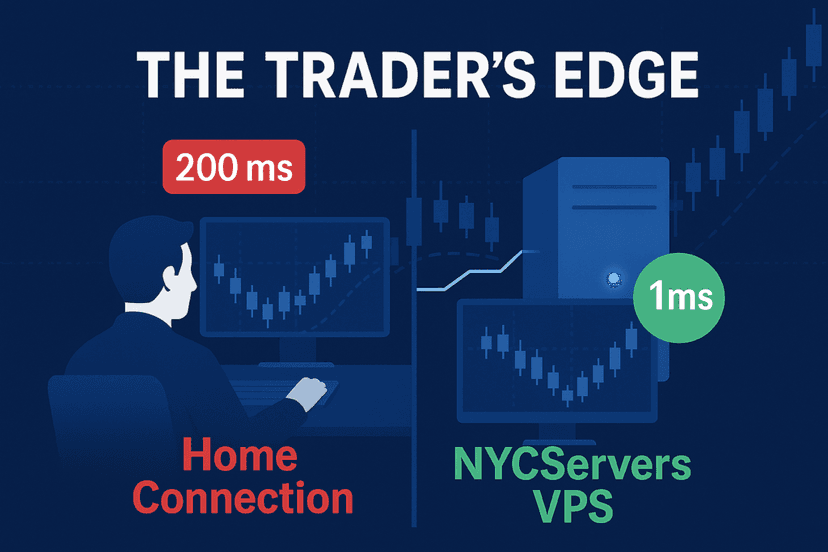
How a Dublin VPS Solves Both Problems
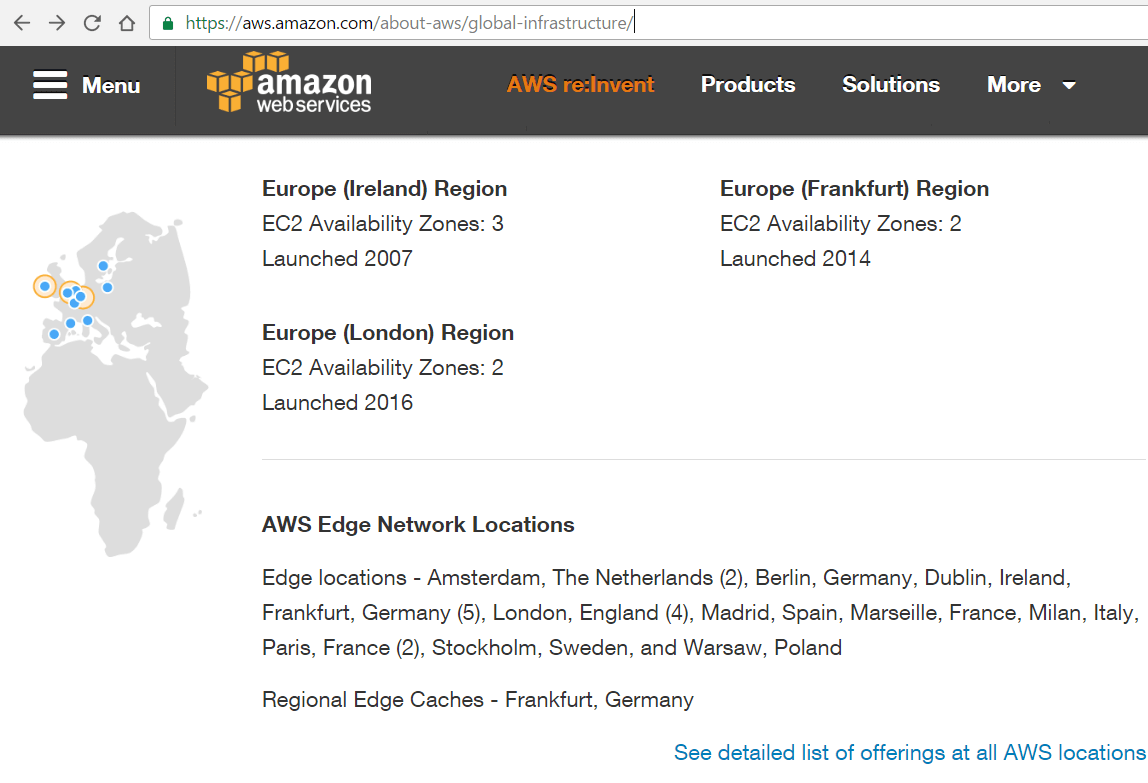
Dublin sits in the AWS eu-west-1 region, roughly 450 kilometers from London’s eu-west-2 where Polymarket’s servers live. The inter-region fiber latency between Dublin and London is consistently under 2ms. That puts a Dublin-hosted VPS within striking distance of sub-millisecond round-trip times to the CLOB API.
Community benchmarks from traders on LowEndTalk and trading forums consistently show Dublin achieving 0-1ms ping to Polymarket’s backend. That’s datacenter-to-datacenter speed over dedicated fiber, not consumer broadband with variable routing and congestion.
But latency is only half the story. Because your VPS runs in Ireland, your traffic originates from an EU jurisdiction. Ireland is not on Polymarket’s restricted country list. Orders submitted from a Dublin IP address pass the geoblock check cleanly, giving you unrestricted access to the international exchange with its deep liquidity pools.
A single Dublin VPS solves both problems simultaneously:
- Latency: Sub-2ms to Polymarket’s London servers, competitive with the fastest colocated setups
- Access: EU-based IP address that passes Polymarket’s geoblocking without issues
- Stability: Datacenter-grade uptime with redundant power and networking, no ISP outages
- Always-on: Your bots run 24/7 without depending on your local machine, which is critical given how AI agents in prediction market trading are taking over manual strategies
Compare this with a US-based VPS. Even from New York with excellent connectivity, you’re looking at 70-80ms minimum to London. And your IP will be geoblocked from the international exchange entirely. A London VPS gets you close to the servers but still requires you to route through a UK-based IP, which is fine for access but Dublin’s AWS proximity offers comparable latency with the added benefit of EU-jurisdiction hosting.

NYCServers Dublin Location: Built for This
NYCServers has recently launched a Dublin service location. This isn’t a coincidence. The Dublin location is specifically positioned to serve traders who need proximity to European financial infrastructure, and Polymarket’s London-based servers are a prime use case.
With NYCServers’ Dublin VPS, you get:
- Ultra-low latency to Polymarket: Sub-1ms network latency to AWS eu-west-2
- No geo-restrictions: IP addresses are not blocked by Polymarket’s geoblock API
- Full platform support: Run Python, JavaScript, or Rust bots. Deploy your CLOB client, WebSocket streams, and monitoring tools in any stack
- Instant setup: VPS arrives configured and ready to trade, not a bare server you need to build from scratch
- 24/7 support: Issues at 3am during a market-moving event get handled immediately
Most competing VPS providers push their existing US or limited international locations. They can get you a server, but they can’t get you close to Polymarket’s actual infrastructure while also solving the access problem. The Dublin location does both.

Setting Up Your Polymarket Trading VPS
Once you have a Dublin-based VPS, the setup process is straightforward. Here’s what a typical deployment looks like:
Step 1: Install Your Trading Stack
Polymarket’s official Python client (py-clob-client) handles authentication, order placement, and cancellation. The TypeScript CLOB client offers the same functionality for Node.js environments. For maximum performance, the Rust client (rs-clob-client) supports WebSocket streaming with minimal overhead.
Step 2: Connect to the CLOB
Generate your API credentials through Polymarket’s authentication flow, configure your CLOB client with the API endpoint, and establish your WebSocket connection for real-time data. With a Dublin VPS, the initial connection handshake completes in under 5ms. Once the persistent WebSocket is established, updates arrive with sub-2ms latency from the matching engine.
Step 3: Configure Monitoring
Set up health checks for your WebSocket connections, rate limit tracking against Polymarket’s Cloudflare-enforced limits (9,000 requests per 10 seconds for general CLOB operations), and automated restart logic. All rate limits are enforced via Cloudflare throttling, meaning requests over the limit are delayed and queued rather than immediately rejected, but hitting these limits repeatedly will degrade your performance. A VPS with auto-restart monitoring ensures your platform recovers from unexpected crashes without manual intervention.
Step 4: Optimize for Performance
Use batch order endpoints where possible (up to 15 orders per call). Prefer WebSocket over REST polling for market data. Keep your order book state in memory using sorted structures so best bid/ask lookups are instantaneous. These optimizations stack with your latency advantage.
Comparing VPS Locations for Polymarket
Where you host your VPS matters. Here’s a realistic comparison of common options:
| VPS Location | Latency to Polymarket | Geo-Block Status | Best For |
|---|---|---|---|
| Dublin, Ireland | ~1ms | Not blocked | API trading, market making, bots |
| London, UK | ~0.5-1ms | Blocked | Not suitable for Polymarket |
| Frankfurt, Germany | ~8-12ms | Blocked | Not suitable for Polymarket |
| New York, US | ~70-80ms | Blocked | Not suitable for Polymarket |
| Singapore | ~200-250ms | Not blocked | Asia-Pacific traders (high latency) |
Dublin offers the best balance: near-London latency with EU jurisdiction and no geo-restrictions. It’s the sweet spot for anyone who needs both speed and access.

Frequently Asked Questions
Where are Polymarket’s servers physically located?
Polymarket’s core trading infrastructure runs on AWS eu-west-2, which is the London, UK region. The CLOB (Central Limit Order Book) API, Gamma API, WebSocket streams, and RTDS all operate from this region. The frontend website uses Vercel’s CDN with Anycast distribution, but the latency-sensitive trading backend is in London.
Does Polymarket block US IP addresses?
Yes. Polymarket’s international exchange blocks IP addresses from 33 countries, including the United States. The geoblock check happens via a dedicated API endpoint before every order submission. A separate Polymarket US exchange launched in December 2025 under CFTC regulation, but it remains invite-only with full public access estimated for Q3-Q4 2026.
Can I use a VPS to trade on Polymarket from the US?
A VPS hosted in a non-restricted country like Ireland gives you an IP address from that jurisdiction, which passes Polymarket’s geoblock check. This is a common approach for traders who need access to the international exchange’s deeper liquidity and wider market selection. A Dublin VPS also provides the latency benefit of proximity to Polymarket’s London servers, making it the preferred choice for traders who want both access and speed.
What latency do I need for Polymarket trading?
It depends on your strategy. Market makers and arbitrage bots should target under 5ms round-trip. News-based strategies work well under 15ms. Swing traders and manual participants can operate comfortably with under 100ms. The biggest gains come from dropping high-latency home connections (30-50ms+) down to sub-5ms datacenter connections.
What are Polymarket’s dynamic taker fees?
Polymarket introduced dynamic taker fees to combat latency arbitrage on short-term markets. Fees reach up to 3.15% on 50-cent contracts and are highest when odds sit near 50/50, the exact zone where arbitrage strategies operate. Makers pay no fees and receive daily rebates from the fee pool. The fees expanded to eight additional market categories on March 30, 2026.
Is Dublin or London better for a Polymarket VPS?
Both are excellent choices. London offers marginally lower raw latency (sub-1ms vs 1-2ms from Dublin). Dublin provides comparable performance with the added advantage of Irish EU jurisdiction hosting. For practical purposes, the 1ms difference rarely impacts strategy performance, making Dublin the more versatile choice since it combines low latency with favorable jurisdictional positioning.
What programming languages does Polymarket’s API support?
Polymarket provides official SDK clients for Python (py-clob-client), TypeScript (clob-client), and Rust (rs-clob-client). The Rust client offers the best raw performance for WebSocket streaming. Most traders use Python for prototyping and either TypeScript or Rust for production deployments. Any language that can make HTTP requests and handle WebSocket connections will work with the API.
Reduce Your Polymarket Latency Today
Polymarket’s servers sit in London. Your trading performance depends on how close you can get to them. A Dublin VPS puts you within 2ms of the matching engine while keeping your IP address in an unrestricted jurisdiction.
With Polymarket processing nearly $10 billion in monthly trading volume and the platform expanding its fee structure across major market categories, the infrastructure gap between professional and casual traders is only widening. The traders who invest in proper infrastructure aren’t just getting faster fills. They’re accessing a venue that generates real returns across politics, economics, crypto, and finance markets.
Whether you’re building a market-making bot, running event arbitrage, or just want reliable 24/7 access to the international exchange, the right infrastructure makes the difference between catching a move and watching it happen.

About the Author
Matthew Hinkle
Lead Writer & Full Time Retail Trader
Matthew is NYCServers' lead writer. In addition to being passionate about forex trading, he is also an active trader himself. Matt has advanced knowledge of useful indicators, trading systems, and analysis.