
Best Prop Firms for Swing Traders (2026)
Compare the 7 best prop firms for swing traders in 2026. Covers balance-based drawdown, weekend holding, leverage math, gap risk, and why a VPS matters.
What Swing Traders Actually Need from a Prop Firm
Most prop firm listicles slap a “swing-friendly” label on any firm that allows weekend holding and call it a day. That’s not enough. Swing trading inside a funded account introduces risk mechanics that day traders never think about — and one wrong assumption about drawdown calculation can blow your account overnight.
If you hold positions for days or weeks, you need a firm that works with your strategy instead of against it. That means specific structural features, not just a checkbox on a marketing page.
Here’s what actually matters:
- Balance-based drawdown — Your floating P&L shouldn’t tighten your drawdown limit every time price moves in your favor. Balance-based calculation gives you room to ride through pullbacks without breaching.
- Weekend and overnight holding — Obvious, but some firms still auto-close positions on Friday or restrict holding past a certain hour. Confirm it’s truly unrestricted.
- No time limit on evaluations — Swing setups don’t appear on demand. If a firm gives you 30 days to hit a 10% target, you’re incentivized to overtrade or force entries that don’t exist.
- Reasonable leverage — Lower leverage (1:30 vs 1:100) forces wider position sizing, which actually aligns with swing trading’s wider stop losses. But it also limits your lot size per dollar of margin.
- Static drawdown floors — A trailing drawdown that locks in at your equity high-water mark punishes profitable swing trades. Static floors stay anchored to your initial balance.
- No consistency rules — Swing trading naturally produces uneven returns. A rule requiring no single day to exceed 30% of total profits can disqualify a perfectly valid swing strategy.
With those criteria in mind, let’s break down how drawdown mechanics actually work before jumping into the firm-by-firm analysis.
Balance-Based vs. Equity-Based Drawdown: The Math That Matters
This is the single most important concept for swing traders in prop firms. Get this wrong and you’ll breach your account on a trade that would have been profitable if you’d held it one more day.
How Balance-Based Drawdown Works
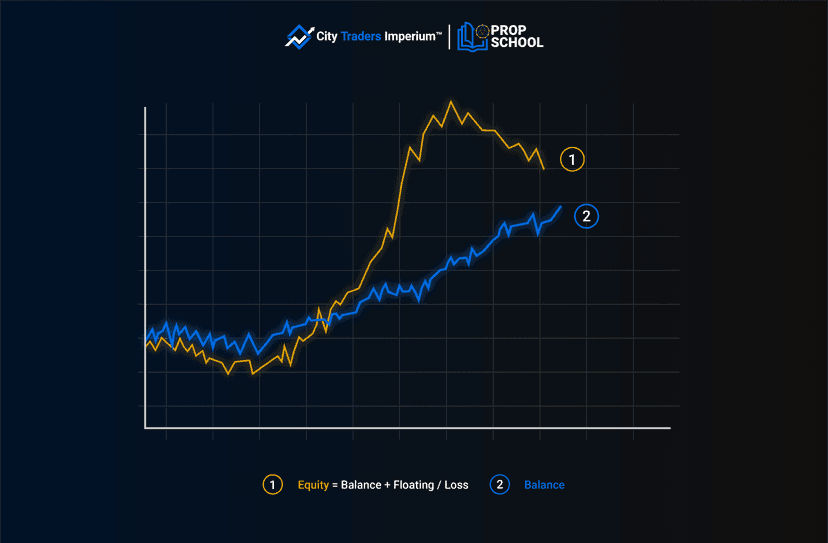
Balance-based drawdown calculates your loss limit from your account balance — the figure that only changes when you close a trade. Floating (unrealized) P&L doesn’t count against you until the position is actually closed. Our guide to prop firm drawdown rules covers the full mechanics, but here’s a quick worked example.
Worked Example — Balance-Based (10% Max Drawdown)
Starting balance: $100,000
Drawdown floor: $90,000 (fixed at 10% below starting balance)Day 3: You open a GBP/USD long. It floats to +$6,000, pushing equity to $106,000. Your drawdown floor stays at $90,000.
Day 5: Price pulls back. Your floating P&L drops to -$4,000. Equity sits at $96,000. Your balance is still $100,000. No breach.
Day 7: You close the trade at +$3,000. Balance becomes $103,000. Drawdown floor remains $90,000. You now have $13,000 of breathing room.
How Equity-Based Drawdown Punishes Swing Traders
Equity-based drawdown recalculates your loss limit in real time based on your highest equity point. Every unrealized profit tightens the noose.
Worked Example — Equity-Based Trailing (10% Max Drawdown)
Starting balance: $100,000
Initial drawdown floor: $90,000Day 3: Same GBP/USD long floats to +$6,000. Equity hits $106,000. Your drawdown floor trails up to $95,400 (10% below $106,000).
Day 5: Price pulls back. Floating P&L drops to -$4,000. Equity is $96,000. You’re now only $600 above your new floor. One more bad candle and you’re breached — on a trade that’s still above your entry.
Day 7: If you survive the pullback and close at +$3,000, your drawdown floor has permanently moved to $95,400. Your real breathing room shrank from $10,000 to $7,600.
This is why every firm on this list uses balance-based or static drawdown. It’s not a preference. For swing traders, it’s a survival requirement.
The 7 Best Prop Firms for Swing Traders in 2026
Each firm below was selected based on the criteria above: balance-based drawdown, weekend holding, no punitive time limits, and rules that don’t structurally conflict with holding trades for days or weeks. Here’s how they stack up.

1. FTMO — Swing Account
FTMO remains the most recognized name in prop trading, and their dedicated Swing Account is purpose-built for traders who hold positions through sessions, overnight, and across weekends.
The Swing Account uses a static, balance-based max drawdown of 10% anchored to your initial balance. Your daily loss limit is 5%, calculated from the higher of your balance or equity at midnight CE(S)T. This reset mechanic matters — if you’re holding a floating winner at midnight, your daily limit recalculates from that higher figure the next day.
Key details:
- Drawdown: 10% max (static, balance-based), 5% daily
- Leverage: 1:30 (reduced from the standard account’s 1:100)
- Weekend/overnight holding: Fully unrestricted
- News trading: Allowed on Swing Account (restricted on standard)
- Time limit: None on either evaluation phase
- Profit split: 80%, scaling to 90% via the Scaling Plan
- Max allocation: $400,000 across all accounts
- Platforms: MT4, MT5, cTrader, DXtrade
The trade-off is leverage. At 1:30, your margin requirements are roughly 3.3x higher than a 1:100 account. We’ll break down the exact position sizing impact later in this article.
Best for: Traders who want the industry’s most established firm and don’t mind lower leverage in exchange for maximum flexibility on holding rules. Pair it with an FTMO VPS for uninterrupted platform uptime across weekend holds.

2. The5ers
The5ers has built its entire identity around long-term trader development. Their no-time-limit evaluations and scaling path to $4 million at 100% profit split make them a standout for swing traders who think in months, not minutes.
Drawdown is calculated based on the higher of your account balance or equity at end of day. This is a high-water-mark system recalculated at EOD, which means intraday floating P&L doesn’t immediately shift your limit — but a profitable close does raise the bar for the next day.
Key details:
- Programs: Bootcamp ($95 for $100K eval), High Stakes (2-step), Hyper Growth (1-step)
- Drawdown: 5-10% max depending on program, EOD high-water-mark calculation
- Weekend/overnight holding: Allowed across all programs
- Time limit: None
- Minimum trading days: None
- Profit split: 80% starting, scaling to 100%
- Max scaling: $4 million
- Platforms: MT5, and proprietary dashboard
The Hyper Growth program starts with a 50/50 profit split, which is lower than competitors. But the aggressive scaling (account doubles at each milestone) and the path to 100% split compensate over time.
Best for: Patient swing traders focused on long-term capital growth who want the highest possible scaling ceiling and don’t need immediate high profit splits.

3. FundedNext
FundedNext combines balance-based drawdown with a unique perk: you earn 15% of your profits during the evaluation phase, even if you don’t pass. For swing traders who might take several months working through an eval, that’s money back in your pocket regardless of outcome.
Their Stellar 2-Step is the most swing-friendly option. The 5% daily and 10% max drawdown are both static and balance-based. Your floor doesn’t move, period.
Key details:
- Recommended program: Stellar 2-Step (8% / 5% profit targets)
- Drawdown: 5% daily / 10% max, both balance-based and static
- Weekend/overnight holding: Allowed on all plans
- Time limit: None
- Profit split: 80-95%
- Eval profit share: 15% of profits earned during challenge
- Scaling: 40% balance increase every 4 consecutive profitable months, up to $4M
- Platforms: MT4, MT5, cTrader
One caveat: on funded Stellar accounts, trades executed within 5 minutes of high-impact news events receive only a 40% profit split on those specific trades. Losses during news count in full. Swing traders rarely open or close around news events, so this is typically a non-issue — but be aware if you’re timing exits around NFP or FOMC.
Best for: Swing traders who want a safety net during evaluation and a clean, static drawdown structure on the funded account.

4. Atlas Funded
Atlas Funded’s standout feature is the pay-after-you-pass model. Through their Atlas Access program, you can evaluate for just a $5-$10 broker fee upfront. You only pay the full challenge fee after you’ve already proven you can pass.
For swing traders, this eliminates the financial risk of paying $500+ for an evaluation that might take months to complete. If you fail, you’re out $5 — not $500.
Key details:
- Pay After Pass: $5-$10 upfront via Atlas Access, full fee only on success
- Drawdown: 3% daily / 6% max on Access plan (static, balance-based)
- Weekend/overnight holding: Allowed
- Time limit: None
- Minimum trading days: None
- Consistency rule: None
- Profit split: Up to 90% (100% available as add-on)
- Scaling: 37.5% capital increase quarterly, up to $750K
- Platforms: MT5, TradeLocker, Match Trader
The drawdown limits on the Access plan are tighter than competitors (3% daily / 6% max vs. the more common 5% / 10%). That tighter room means you need precise risk management and smaller position sizes. But the near-zero upfront cost makes it worth the trade-off for many traders.
After your 4th successful payout, Atlas refunds the entire challenge fee, effectively making the cost of getting funded zero.
Best for: Swing traders who want to minimize upfront financial risk and don’t mind tighter drawdown parameters in exchange for a pay-after-pass structure.

5. FXIFY
FXIFY‘s key differentiator is its broker-backed structure through a partnership with FXPIG. This means your trades are routed through a regulated broker with real liquidity — not a simulated environment that may not reflect actual market conditions.
For swing traders, the broker-backed model matters because execution quality on entries and exits affects slippage on positions held through volatile sessions. Real liquidity means your fills reflect actual market depth.
Key details:
- Broker backing: FXPIG (licensed, regulated)
- Programs: 1-Step, 2-Step, 3-Step, and Instant Funding
- Drawdown: Varies by program — 2-Step offers static drawdown on select plans
- Weekend holding: Allowed on most programs (not Lightning)
- Consistency rule: None on select programs (25-30% rule on Lightning)
- Profit split: 80% base, upgradable to 90% via add-on
- Scaling: Account doubles every 3 months (10% profit required), up to $4M
- Platforms: MT4, MT5, DXtrade
Avoid the Lightning program if you’re a swing trader. It doesn’t allow weekend holding, and the 30% consistency rule conflicts with swing trading’s natural return distribution. Stick with the standard 2-Step or 3-Step for maximum flexibility.
Best for: Traders who want the added trust layer of a broker-backed firm and prioritize execution quality on multi-day holds.

6. FundingPips
FundingPips has grown fast since its 2022 launch, processing over $200 million in payouts. Their 2-Step Standard program hits nearly every checkbox for swing traders: static drawdown, weekend holding, no time limit, and no consistency rule during evaluation.
The static drawdown on the 2-Step Standard is genuinely swing-friendly. Your 5% daily and 10% max drawdown are fixed to your initial balance. Grow your account to $120,000 on a $100,000 start, and your floor is still $90,000. That’s $30,000 of room instead of the $10,000 you started with.
Key details:
- Recommended program: 2-Step Standard
- Drawdown: 5% daily / 10% max, static and balance-based
- Weekend/overnight holding: Allowed
- Time limit: None
- Consistency rule: None on Standard (45% rule on Pro — avoid for swing trading)
- Profit split: Up to 90%
- Account sizes: $5K to $100K
- Platforms: MT5, cTrader, Match-Trader, TradeLocker
The entry-level pricing is budget-friendly — the 2-Step Pro starts at just $29 for a $5,000 account. But swing traders should avoid Pro due to its 3% daily drawdown, 6% max drawdown, and a 45% consistency rule that punishes large single-day gains.
Two things to watch: a 30-day inactivity rule requires at least one trade per month (easy to forget if you’re waiting for setups), and funded accounts on some programs have a 1% floating loss cap that doesn’t appear during evaluation. Confirm the specific rules for your program before committing.
Best for: Budget-conscious swing traders who want a clean static drawdown and wide platform selection without paying premium evaluation fees.

7. City Traders Imperium (CTI)
CTI is one of the older prop firms in the space, founded in 2018 in the UK. Their core appeal for swing traders is a balance-based drawdown system where unrealized losses don’t count against you until the position is closed, combined with no time limit on evaluations and weekend holding.
The scaling potential is headline-worthy: up to $4 million across multiple accounts, with profit splits reaching 100%. But there’s a critical nuance. The $4M scaling applies to their Instant Funding programs, not the standard challenge accounts. Challenge accounts cap scaling at $200K per account.
Key details:
- Programs: 2-Step Challenge, 1-Step, Instant Funding, Instant Funding Pro
- Drawdown: Balance-based, 6% max on Instant Funding programs
- Weekend/overnight holding: Allowed
- Leverage: Up to 1:33
- Time limit: None
- Profit split: 80% starting, scaling to 100%
- Max scaling: $4M (Instant Funding), $200K per account (Challenge)
- Platforms: MT5, Match-Trader
CTI also bundles free access to their trading academy with any funded account purchase. For swing traders still developing their approach, that’s added value beyond the funding itself.
The downside: Instant Funding programs have higher upfront fees ($216-$4,799 depending on account size), and some traders have reported inconsistent rule enforcement around risk behavior flags. Read the terms thoroughly before committing.
Best for: Experienced swing traders who want the highest scaling potential and are willing to pay more upfront for Instant Funding programs that reach the $4M cap.
Prop Firm Comparison Table for Swing Traders
| Firm | Drawdown Type | Max Drawdown | Weekend Holding | Time Limit | Profit Split | Max Scaling |
|---|---|---|---|---|---|---|
| FTMO (Swing) | Balance-based, static | 10% | Yes | None | 80-90% | $400K |
| The5ers | EOD high-water-mark | 5-10% | Yes | None | 80-100% | $4M |
| FundedNext | Balance-based, static | 10% | Yes | None | 80-95% | $4M |
| Atlas Funded | Balance-based, static | 6% | Yes | None | 90-100% | $750K |
| FXIFY | Varies by program | 8-10% | Yes (not Lightning) | None | 80-90% | $4M |
| FundingPips | Balance-based, static | 10% | Yes | None | Up to 90% | $100K (per account) |
| CTI | Balance-based | 6% | Yes | None | 80-100% | $4M |
Leverage and Position Sizing: FTMO 1:30 vs. Standard 1:100
Leverage doesn’t change your profit or loss in dollar terms. It changes how much margin you need to hold a position open. For swing traders, this is critical because you’re tying up margin for days or weeks — and you might want to hold multiple positions simultaneously.
Let’s run the numbers on a concrete example.
Position Sizing at 1:100 Leverage
You want to trade 1 standard lot of EUR/USD on a $100,000 account. One standard lot is 100,000 units of the base currency.
- Required margin: 100,000 / 100 = $1,000
- Margin used: 1% of your account
- Free margin remaining: $99,000
- Room for additional positions: Plenty
Position Sizing at 1:30 Leverage (FTMO Swing Account)
Same trade. Same account. Different leverage.
- Required margin: 100,000 / 30 = $3,333
- Margin used: 3.33% of your account
- Free margin remaining: $96,667
- Room for additional positions: Significantly reduced
At 1:30, you’re using 3.3x more margin per lot. If your swing strategy involves holding 3-4 correlated positions simultaneously (say, long EUR/USD, long GBP/USD, short USD/CHF), you’ll consume margin fast.
Practical Impact: On a $100K account at 1:30, holding 10 standard lots across multiple pairs would require roughly $33,333 in margin — one-third of your entire account. At 1:100, the same position block requires just $10,000. The 1:30 constraint doesn’t make swing trading impossible, but it forces you to run fewer concurrent positions or use smaller lot sizes per trade.
This is why prop firms like FundedNext, FundingPips, and Atlas Funded that offer 1:100 leverage give swing traders more flexibility to diversify across pairs. FTMO’s Swing Account trades that flexibility for unrestricted holding rules — a worthwhile exchange if you run a single-pair or low-correlation strategy. Regardless of which firm you choose, running your platform on a forex VPS keeps margin calculations and risk management active even while you sleep.
Weekend Gap Risk Management for Funded Accounts
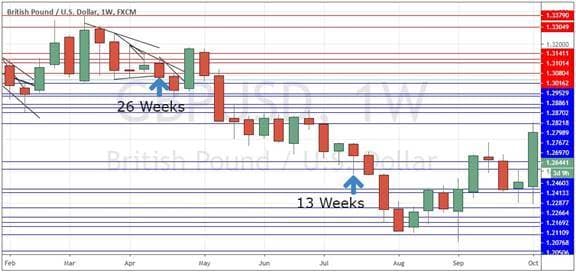
Holding positions over the weekend is one of the main advantages of these prop firms. It’s also one of the biggest risks. Weekend gaps — where the market opens at a significantly different price than Friday’s close — can blow through stop losses and drawdown limits in a single tick.
How Weekend Gaps Happen
Forex markets close Friday at 5:00 PM EST and reopen Sunday at 5:00 PM EST. During those 48 hours, geopolitical events, economic data releases, central bank comments, or natural disasters can shift market sentiment. When the market reopens, price often “gaps” to reflect the new information.
Major pairs like EUR/USD typically gap 10-30 pips. But during high-volatility events (elections, geopolitical crises, surprise rate decisions), gaps of 50-100+ pips on majors and 200+ pips on exotics are not uncommon.
The Funded Account Problem
Your stop loss doesn’t execute during the weekend. If price gaps past your stop, you get filled at the opening price — not your stop level. On a $100,000 account with a 5% daily drawdown limit ($5,000), a 50-pip gap on 5 standard lots of GBP/USD would produce a roughly $2,500 slippage beyond your stop. That’s half your daily limit consumed by a gap alone.
Strategies to manage weekend gap risk:
- Reduce position size before Friday close. Scale down to 50-75% of your normal size if holding through the weekend.
- Avoid holding exotic pairs over weekends. Stick to majors and major crosses where liquidity is deeper and gaps are typically smaller.
- Calculate worst-case gap impact. Before the weekend, check your total exposure. If a 100-pip adverse gap on all open positions would breach your daily or max drawdown, reduce exposure.
- Use a VPS to manage Sunday open. Set your platform to execute a hedge or partial close the moment markets reopen. This requires your trading platform to be running and connected at the exact second the market opens — which is where infrastructure matters.
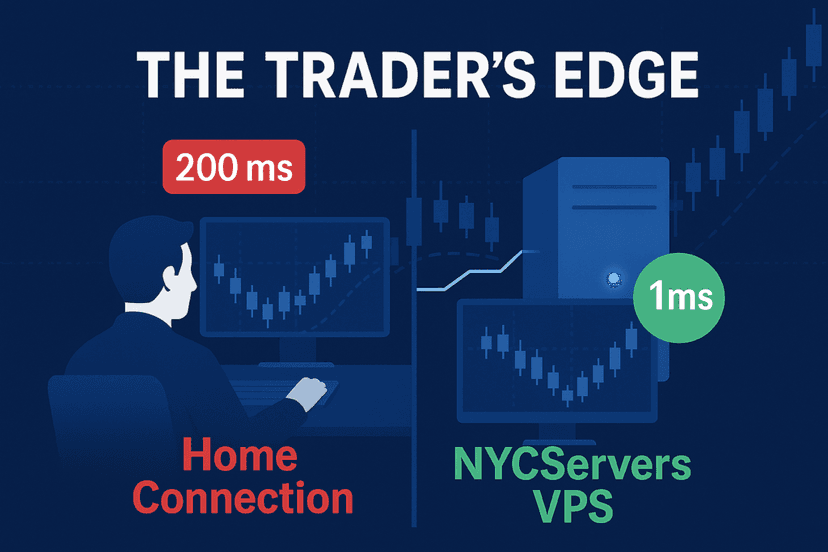
Why Swing Traders Need a VPS
Day traders can get away with running MetaTrader on a laptop. Swing traders can’t. When you hold positions for days or weeks, your trading platform needs to stay connected to your broker’s server 24 hours a day, 5.5 days a week. A disconnection at the wrong moment — Sunday open, during a news spike, or when a trailing stop needs to adjust — can mean the difference between a managed loss and a blown account.
The Sunday Open Problem
Most swing traders set conditional orders or expert advisors to manage positions at the Sunday open. Maybe it’s a partial close if price gaps against you. Maybe it’s a breakeven stop adjustment. These only work if your platform is actually running when the market opens.
Your home computer might be asleep. Your internet might have dropped. Your power might have flickered. A VPS eliminates all of those variables. It’s a dedicated Windows server running in a data center with redundant power, redundant internet, and sub-millisecond connectivity to your broker.
Latency Still Matters for Swing Traders
You might think latency only matters for scalpers. It doesn’t. When GBP/USD gaps 40 pips on a Sunday open and your EA fires an order to hedge or close, the difference between 1ms execution and 200ms execution can be several pips of additional slippage on fast-moving price. Over dozens of weekend opens across a year, that slippage adds up.
We run servers in Equinix NY4, London, and Tokyo — the same data centers where major brokers and prop firms host their matching engines. That means 1ms or less to firms like FTMO and IC Markets. Your orders execute before price has moved past the first tick.
Keeping EAs and Risk Management Active
Many swing traders use EAs not for trade entry, but for risk management: trailing stops, time-based partial closes, session-based hedges, or drawdown circuit breakers that flatten positions if you approach your daily limit. All of these require your platform to be running and connected.
A VPS keeps MT4, MT5, or cTrader running 24/7 with 100% uptime during trading hours. No sleep mode. No Windows updates interrupting at 3 AM. No family member accidentally closing your laptop.
Check our low-latency VPS plans to ensure your trading setup never misses a beat.

How to Choose the Right Firm for Your Swing Strategy
Not every swing trader has the same needs. Here’s a quick decision framework based on your priorities:
| Your Priority | Best Pick | Why |
|---|---|---|
| Maximum trust and track record | FTMO | Most established firm, dedicated Swing Account type |
| Highest scaling potential | The5ers or CTI | Both scale to $4M with 100% profit split at top tiers |
| Lowest upfront risk | Atlas Funded | Pay only $5-$10 to start evaluation; full fee on pass only |
| Budget-friendly evaluation | FundingPips | 2-Step Pro starts at $29; 2-Step Standard is competitively priced |
| Broker-backed execution | FXIFY | Trades routed through regulated broker FXPIG |
| Safety net during evaluation | FundedNext | 15% profit share earned even if you fail the challenge |
| No time pressure whatsoever | The5ers or Atlas Funded | No time limits, no minimum trading days |
Frequently Asked Questions
What is balance-based drawdown and why does it matter for swing trading?
Balance-based drawdown calculates your loss limit using your account balance, which only changes when you close trades. Floating (unrealized) P&L doesn’t count against you. This matters for swing trading because your positions naturally fluctuate over days or weeks. With equity-based drawdown, a temporary pullback on a winning trade could breach your account. Balance-based drawdown gives you room to ride those pullbacks without triggering a violation.
Can I hold trades over the weekend with a prop firm?
Yes, but only with firms that explicitly allow it. All seven firms in this list permit weekend holding on their swing-friendly programs. However, some firms restrict weekend holding on specific account types — for example, FXIFY’s Lightning program auto-closes positions before Friday market close. Always confirm weekend holding is allowed on your specific program before entering a trade you plan to hold past Friday.
Why does FTMO’s Swing Account have lower leverage (1:30)?
FTMO reduces leverage on its Swing Account to 1:30 (vs. 1:100 on standard) as a risk management measure. Since swing traders hold positions through weekends and news events — periods of higher volatility and potential gaps — lower leverage limits maximum exposure. The practical impact is that you need about 3.3x more margin per lot, which reduces the number of simultaneous positions you can hold. This is a trade-off for the unrestricted holding rules.
Do I need a VPS to trade with a prop firm as a swing trader?
It’s not strictly required, but it’s strongly recommended. Swing traders rely on their platform being connected 24/7 to manage open positions, execute Sunday-open orders, and run risk management EAs. A disconnection during a gap event or while your trailing stop needs adjustment can result in losses that breach your drawdown limit. A VPS running in a financial data center provides the uptime and low-latency connection that eliminates this risk.
Which prop firms have no minimum trading days for swing traders?
The5ers and Atlas Funded have no minimum trading day requirements on their evaluations. FTMO requires a minimum of 4 trading days per evaluation phase. FundedNext and FundingPips also require minimum trading days during their challenge phases. If you only take a handful of high-conviction swing trades per month, firms with no minimums give you the freedom to trade only when setups align with your strategy.
How do I manage weekend gap risk on a funded account?
Reduce position size to 50-75% of normal before the Friday close. Avoid exotic pairs over weekends, as they gap wider than majors. Calculate the worst-case impact of a 100-pip gap across all open positions and compare it to your daily and max drawdown limits. Consider using a VPS with an EA that can execute risk management orders the moment markets reopen on Sunday. The goal is to ensure that even a worst-case gap won’t breach your funded account.
What’s the difference between static drawdown and trailing drawdown?
Static drawdown sets a fixed floor based on your starting balance — it never moves regardless of how much profit you make. Trailing drawdown moves upward as your equity (or balance) reaches new highs, permanently locking in a higher floor. For swing traders, static drawdown is significantly better because profitable trades don’t shrink your available risk buffer. A trailing drawdown can create situations where a trade that’s currently in profit puts you closer to a breach than when you started.

About the author
Thomas Vasilyev
Writer & Full Time EA Developer
Tom is our associate writer, and has advanced knowledge with the technical side of things, like VPS management. Additionally Tom is a coder, and develops EAs and algorithms.
Areas of Expertise