
Asian Session Forex Strategy: Low-Volatility Trading Guide
Master the Asian forex session with range trading, breakout, and EA strategies. Learn the best pairs, hours, and VPS setup for effective Tokyo session trading.
Why the Asian Session Deserves Your Attention
Most Western-timezone traders ignore the Asian forex session entirely. They log off after the New York close, sleep through Tokyo, and wake up chasing London volatility. That’s a mistake.
The Asian session offers something the London and New York sessions can’t: predictable, range-bound price action. Tight ranges. Repeatable setups. And because most retail traders are asleep, you’re competing against fewer emotional participants.
Whether you trade manually during off-hours or run an expert advisor while you sleep, an Asian session forex strategy can add a consistent edge to your trading. This guide covers everything you need: exact session hours, the best currency pairs, three proven strategies, and how to automate the entire process with a VPS so you never miss a Tokyo session setup again.
Asian Session Hours: When Does It Start and End?
The Asian session revolves around the Tokyo open. But the full picture includes multiple financial centers across the Asia-Pacific region.
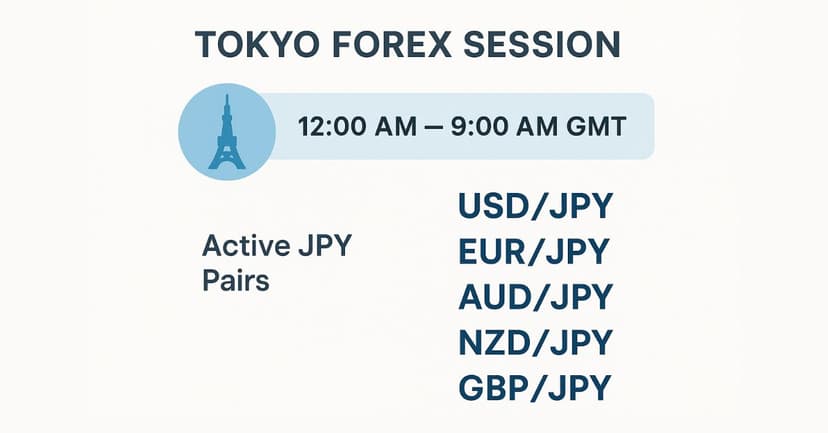
Core Session Times (GMT)
| Market | Open (GMT) | Close (GMT) |
|---|---|---|
| Sydney | 22:00 | 07:00 |
| Tokyo | 00:00 | 09:00 |
| Hong Kong / Singapore | 01:00 | 09:00 |
| Sydney-Tokyo Overlap | 00:00 | 07:00 |
The Sydney-Tokyo overlap from 00:00 to 07:00 GMT is the most active window within the Asian session. Liquidity is highest during this overlap, spreads are tighter, and AUD and JPY pairs see their best volume.
Converting to Your Timezone
If you’re trading from the US, the Asian session runs roughly from 7:00 PM to 4:00 AM Eastern Time. For traders on the West Coast, that’s 4:00 PM to 1:00 AM Pacific. European traders see the session from 1:00 AM to 10:00 AM CET.
These hours make manual trading impractical for most Western-based traders. If you’re exploring ways to fit trading around your schedule, our guide on trading forex around a full-time schedule covers several approaches. That’s exactly why automation and VPS-based EA trading become so valuable for this session, but we’ll cover that in detail later.
What Makes the Asian Session Different
The Asian session has a distinct personality compared to London and New York. Understanding these characteristics is the foundation of every Tokyo session trading strategy.
Lower Volatility and Tighter Ranges
Average daily ranges during the Asian session are 30-50% smaller than during London or New York hours. Major pairs like EUR/USD often move only 20-30 pips during the entire Tokyo session, compared to 60-80 pips during London.
This isn’t a weakness. It’s a feature. Low volatility creates predictable support and resistance levels that hold for hours, giving range traders high-probability entries and clearly defined risk.
Liquidity Characteristics
Tokyo handles roughly 6% of daily forex volume globally, compared to London’s 38% and New York’s 19%. Lower volume means:
- Spreads widen slightly on European pairs (EUR/USD, GBP/USD)
- Spreads remain tight on Asia-Pacific pairs (USD/JPY, AUD/USD, NZD/USD)
- Large orders can cause short, sharp spikes that reverse quickly
- Price tends to consolidate rather than trend
The “Asian Range” Phenomenon
One of the most well-documented patterns in forex is the Asian range, sometimes called the Asian kill zone. Price establishes a high and a low during the Tokyo session, and then London traders break that range when European markets open. This two-step process forms the basis of multiple strategies we’ll cover below.
The Asian session builds the box. London breaks it. Understanding this dynamic gives you an edge in both sessions.
Best Forex Pairs for the Asian Session
Not all currency pairs perform equally during Tokyo hours. You want pairs with active underlying economies, tight spreads, and enough movement to generate profit.
Tier 1: Primary Asian Session Pairs
These pairs should form the core of any Asian session forex strategy:
| Pair | Avg Asian Range (pips) | Spread (Asian hours) | Why It Works |
|---|---|---|---|
| USD/JPY | 30-50 | 0.8-1.5 | Most liquid Asian pair. BOJ activity drives movement. |
| AUD/USD | 25-40 | 1.0-1.8 | Australian economic data released during session. |
| AUD/JPY | 30-50 | 1.5-2.5 | Active cross with both economies in play. |
| NZD/USD | 20-35 | 1.2-2.0 | RBNZ decisions and NZ data create opportunities. |
Tier 2: Secondary Pairs
These pairs can work but require more careful spread management:
- EUR/JPY — Decent range but wider spreads than USD/JPY
- GBP/JPY — Higher volatility cross, but spreads widen significantly during Asian hours
- AUD/NZD — Tight range suitable for scalping when both economies release data
- USD/SGD — Niche pair with decent Asian session liquidity
Pairs to Avoid
Stay away from European-focused pairs during the Asian session. EUR/GBP, GBP/CHF, and EUR/CHF see minimal movement and inflated spreads. You’ll pay more in spread costs than you can reasonably extract in profit.
Strategy 1: Asian Session Range Trading
Range trading is the bread and butter of the Asian session. When price moves sideways between clear support and resistance, you trade the bounces.
How It Works
The setup is straightforward. During the first 1-2 hours of the Tokyo session (00:00-02:00 GMT), price typically establishes a range. You then trade the bounces off the top and bottom of that range for the remainder of the session.
Step-by-Step Setup
- Identify the range. Wait for at least two touches on both support and resistance. Use the 15-minute or 30-minute chart on USD/JPY or AUD/USD.
- Confirm with indicators. RSI between 30-70 confirms range conditions. If RSI is trending strongly in one direction, skip the trade — a breakout may be forming.
- Enter at the boundaries. Go long near support with a stop 10-15 pips below. Go short near resistance with a stop 10-15 pips above.
- Set realistic targets. Target 60-75% of the range width. On a 30-pip range, that’s an 18-22 pip target.
- Exit before London. Close all range trades by 07:00 GMT. The London open will break your range.
Risk Management for Range Trading
Keep your risk-to-reward ratio at least 1:1, ideally 1:1.5. Because the Asian range is predictable, your win rate should be higher than trend-following strategies — around 60-70% on well-selected setups.
Position size conservatively. Low volatility means smaller profits per trade, so avoid the temptation to increase lot sizes to compensate. Let the consistency do the work over time. Pairing a range strategy with reliable forex VPS hosting ensures your platform stays connected and your orders execute without interruption throughout the session.
Strategy 2: Asian Session Breakout for London Open
This Asian session breakout strategy doesn’t trade during the Asian session itself. Instead, it uses the Asian range as a setup for the London open breakout.
The Logic
London traders are the most aggressive participants in the forex market. When they come online, they push price out of whatever range Tokyo established. The direction of that breakout often defines the trend for the rest of the European session.
Step-by-Step Setup
- Mark the Asian range. At 07:00 GMT (just before the London open), draw horizontal lines at the highest high and lowest low of the session from 00:00-07:00 GMT.
- Place pending orders. Set a buy stop 5 pips above the range high. Set a sell stop 5 pips below the range low.
- Set your stop loss. Place stops on the opposite side of the range, or at minimum the midpoint of the range.
- Target the expansion. The London breakout typically moves 1-1.5x the width of the Asian range. A 30-pip Asian range suggests a 30-45 pip move from the breakout point.
- Cancel the unfilled order. Once one pending order triggers, cancel the other. Don’t leave both sides open.
Pro tip: Pair this strategy with a fundamental bias. If USD/JPY has been bearish on the daily chart, give more weight to a downside breakout and consider skipping the long setup entirely.
Best Pairs for the Asian Breakout
EUR/USD and GBP/USD actually work well here — even though they’re poor Asian session range pairs. The breakout occurs during London hours when these pairs have full liquidity. You’re just using the Asian range as your trigger.
USD/JPY and AUD/USD remain excellent choices because they have defined ranges during Tokyo and then react strongly to London flow.

Strategy 3: Night Scalper EA Automation
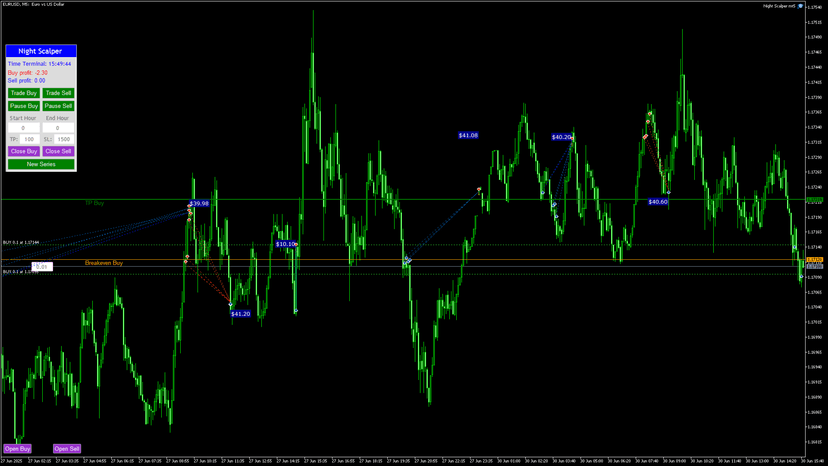
This is where the Asian session gets genuinely exciting for Western-timezone traders. Instead of waking up at 2 AM to trade Tokyo manually, you run a night scalper EA on a VPS and let automation handle the session.
What Is a Night Scalper EA?
Night scalper EAs are expert advisors designed specifically for the low-volatility Asian session. They identify micro-ranges and scalp small profits (5-15 pips) repeatedly throughout the Tokyo session.
These EAs typically share common characteristics:
- Trade only during a defined time window (usually 21:00-02:00 GMT or similar)
- Target USD/JPY, AUD/USD, EUR/USD, or NZD/USD
- Use tight stop losses (15-30 pips) and modest take profits (5-15 pips)
- Rely on mean-reversion logic — buying dips and selling rallies within the range
- Open multiple positions across different pairs simultaneously
Popular Night Scalper EA Categories
Night scalper EAs generally fall into a few categories based on their approach:
| EA Type | Logic | Typical Win Rate | Risk Profile |
|---|---|---|---|
| Pure range scalper | Trades between S/R levels inside the range | 75-85% | Moderate (fixed SL) |
| Mean reversion | Fades moves away from session VWAP or moving average | 70-80% | Moderate |
| Grid/martingale hybrid | Opens additional positions on drawdown | 90%+ (until it doesn’t) | High — can blow accounts |
| Breakout anticipation | Detects early momentum before London open | 50-60% | Lower (larger R:R) |
A word of caution on grid and martingale-based night scalpers. They show beautiful equity curves until a news event or flash crash during the Asian session wipes out months of gains. Stick with EAs that use fixed stop losses.
Why a VPS Is Essential for Asian Session EA Trading
Running a night scalper EA on your home computer while you sleep is risky for several reasons:
- Power outages close your terminal and leave trades unmanaged
- Internet drops prevent your EA from managing open positions
- Windows updates can restart your PC at the worst possible time
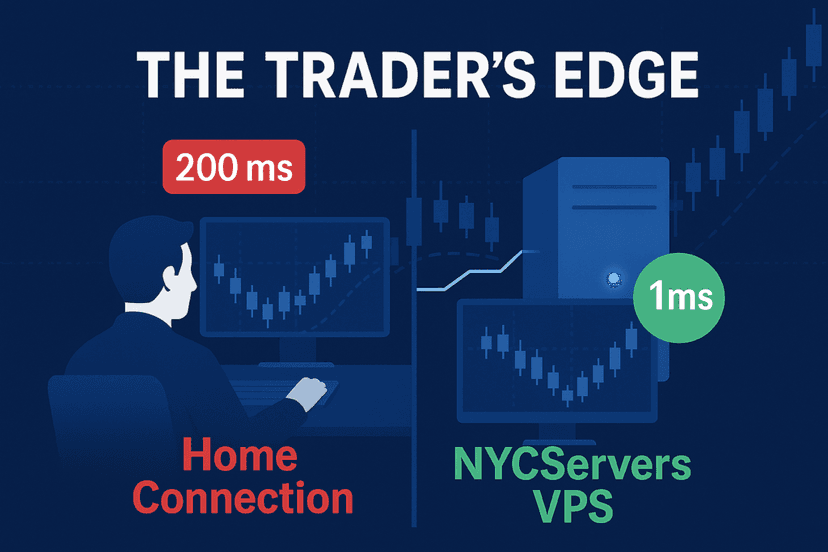
- Latency from home connections causes slippage on entries and exits, eroding the small margins that night scalpers depend on
A forex VPS solves all of these problems. Your EA runs on a dedicated server with enterprise-grade uptime, redundant power, and direct connections to broker servers. The VPS runs 24/7 whether your home PC is on or not.
Server Location Matters
For Asian session strategies specifically, server location is critical. Your EA needs the lowest possible latency to your broker’s server during Tokyo hours.
If your broker’s matching engine is in Tokyo (common for brokers serving the Asia-Pacific region), you want a VPS in the same data center or city. A VPS located in New York adds 150-200ms of latency to a Tokyo-based broker — that’s an eternity for a scalper taking 5-pip profits.
NYCServers operates data centers in Tokyo, New York, and London. For Asian session EA trading, our Tokyo VPS location gives you sub-1ms latency to Asia-Pacific broker servers. Your night scalper gets the fastest possible fills, minimizing slippage on every trade.
Spread Considerations During the Asian Session
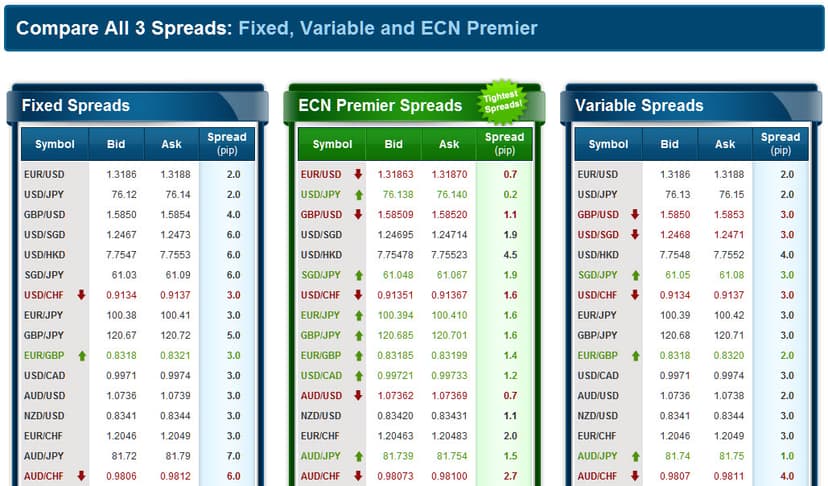
Spreads are the silent killer of Asian session strategies. Because you’re trading in a low-volatility environment with smaller targets, spread costs represent a larger percentage of each trade’s profit.
How Spreads Behave
During the Asian session, spreads on major pairs typically widen by 0.3-0.8 pips compared to London/New York hours. For most Asia-Pacific pairs, this widening is modest. For European pairs, it can be significant.
| Pair | London Spread (pips) | Asian Spread (pips) | Widening |
|---|---|---|---|
| USD/JPY | 0.5-0.8 | 0.8-1.5 | +0.3-0.7 |
| AUD/USD | 0.6-1.0 | 1.0-1.8 | +0.4-0.8 |
| EUR/USD | 0.3-0.6 | 0.8-1.5 | +0.5-0.9 |
| GBP/USD | 0.6-1.0 | 1.5-2.5 | +0.9-1.5 |
Choosing the Right Broker
Not all brokers are equal when it comes to Asian session spreads. ECN/raw spread brokers tend to offer tighter pricing during low-liquidity hours because they aggregate feeds from multiple liquidity providers.
Look for brokers that specifically list their Asian session spreads. Some brokers advertise tight spreads but only deliver them during peak London hours. Check your broker’s average spread data for the 00:00-07:00 GMT window specifically.
If your scalper EA targets 8 pips per trade and the spread is 1.5 pips, you’re giving up nearly 19% of your profit to spread costs alone. On the same pair during London with a 0.5-pip spread, that cost drops to 6%. This is why pair selection and broker choice matter so much during Asian hours.
Key Economic Releases During the Asian Session
The Asian session isn’t always calm. Several high-impact economic releases can blow up ranges and create sharp moves.
Major Events to Watch
- Bank of Japan (BOJ) rate decisions and statements — These are the biggest JPY movers. BOJ meetings don’t follow a fixed schedule like the Fed, which makes them harder to anticipate. Always check the BOJ calendar.
- Reserve Bank of Australia (RBA) rate decisions — Released at 03:30 GMT on the first Tuesday of each month. Major impact on AUD/USD and AUD/JPY.
- Reserve Bank of New Zealand (RBNZ) rate decisions — Released at 01:00 GMT. Significant NZD/USD movement.
- Australian employment data — Released at 00:30 GMT. One of the highest-impact Australian releases, regularly moving AUD pairs 30-50 pips.
- Chinese PMI data — Released at 01:00 GMT. Impacts AUD/USD heavily due to Australia’s trade relationship with China.
- Japanese CPI and GDP — Released at 23:30 GMT (previous day). Affects JPY pairs for the first hours of the Tokyo session.
How to Handle News During Asian Session Trading
If you’re range trading manually, close all positions 15 minutes before any high-impact release. Use the Forex Factory economic calendar to flag upcoming Asian session events each week. The range will likely break, and your stop will get hit with slippage.
For EA trading, most quality night scalper EAs include a news filter. This feature pauses trading around scheduled events. If your EA doesn’t have a built-in news filter, add one through an external news filter EA or script running on the same VPS.
A single BOJ surprise can move USD/JPY 200+ pips in minutes. No Asian session strategy survives that without a news filter. Treat news management as non-negotiable.
Risk Management for Low-Volatility Environments
Trading low volatility requires a different risk management mindset than trading during London or New York. The rules change when ranges are tight.
Position Sizing Adjustments
Many traders make the mistake of increasing position sizes during the Asian session to compensate for smaller pip movements. This is backwards. Smaller ranges mean your stop loss is closer to your entry, which naturally allows larger position sizes per trade while keeping dollar risk constant.
Use the same dollar risk per trade as any other session. If you risk 1% per trade during London, risk 1% per trade during Tokyo. The smaller stop loss automatically adjusts your lot size upward.
Stop Loss Placement
Tight ranges need tight stops, but don’t go too tight. The Asian session sees periodic liquidity spikes — a large order from an institutional desk can push price 10-15 pips in seconds before reverting. Your stop needs to survive these spikes.
For range trading, place stops 10-15 pips beyond the range boundary. For night scalper EAs, a fixed stop loss of 20-30 pips provides enough buffer against noise without risking outsized losses.
Maximum Daily Loss Limits
Set a hard daily loss limit for your Asian session trading. If your EA hits three consecutive losses, it should stop trading for the night. Most profitable night scalpers have losing nights — the key is preventing one bad night from erasing a week of gains.
A good benchmark: if you lose more than 1.5-2% in a single Asian session, shut it down. There’s always tomorrow night.
Setting Up Your Asian Session Trading Environment
Automation is the natural path for Western-timezone traders who want to capture Asian session opportunities. Here’s how to set up a reliable, hands-off trading environment.
VPS Configuration Checklist
Your VPS is the foundation of your set-and-forget Asian session strategy. Get the configuration right from the start:
- Location: Tokyo for Asia-Pacific brokers, or match your broker’s server location
- RAM: 2GB minimum for a single MT4/MT5 terminal running one EA. 4GB or more if running multiple EAs or pairs.
- Uptime guarantee: 100% during trading hours is non-negotiable. Your EA can’t trade if the server is down.
- Latency: Sub-1ms to your broker’s matching engine. Every millisecond counts for scalping strategies.
- Pre-installed platform: Save setup time with a VPS that comes with your trading platform ready to go.
EA Optimization for Asian Hours
Once your VPS is running, optimize your EA settings for the Asian session specifically:
- Set the trading window. Restrict your EA to trade only during 21:00-06:00 GMT (or your preferred Asian session window). Never let an Asian session EA trade into London.
- Enable the news filter. Configure it to pause trading 30 minutes before and 15 minutes after high-impact Asian session events.
- Backtest with Asian session data. Don’t use 24-hour backtests. Filter your backtesting to Asian hours only to get accurate performance metrics.
- Set maximum spread filters. Configure your EA to skip trades when the spread exceeds your threshold (e.g., 2 pips on USD/JPY).
- Enable trade logging. Have your EA write detailed logs so you can review its decisions each morning.
Monitoring Your EA Remotely
Even automated trading needs oversight. Use your broker’s mobile app to check open positions when you wake up. Set up email or Telegram alerts from your EA for opened trades, closed trades, and any errors.
Connect to your VPS via remote desktop once a week to check for platform updates, verify your EA is running correctly, and review the trade log. A few minutes of maintenance prevents days of unnoticed problems.
Common Mistakes in Asian Session Trading
Avoid these pitfalls that trip up traders new to the Tokyo session:
Overtrading the Range
Tight ranges tempt traders to take every bounce. Be selective. The highest-probability range trades occur at well-established levels with multiple touches. One or two quality trades per session beats five mediocre ones.
Ignoring the Session Transition
The most dangerous time for Asian session traders is 07:00-08:00 GMT, when London opens. If you’re still holding range trades at this point, you’re about to get run over. Close everything before the transition or set hard time-based exits.
Using London-Optimized Settings
EAs designed for trending markets or high-volatility conditions will underperform during the Asian session. Don’t take a trend-following EA and expect it to work in Tokyo’s range-bound environment. Use tools designed for the conditions you’re actually trading.
Neglecting Swap Costs
Positions held during the Asian session often span the daily rollover at 00:00 GMT (5:00 PM Eastern). If you’re trading pairs with high negative swap rates, those costs eat into your already-modest profits. Check your broker’s swap rates for your chosen pairs and factor them into your strategy’s expected return.
Putting It All Together: Your Asian Session Action Plan
Here’s a practical roadmap for getting started with Asian session trading, whether you’re going manual or automated.
For Manual Traders
- Choose USD/JPY and AUD/USD as your starting pairs
- Start with the range trading strategy — it’s the most forgiving for beginners
- Trade on a demo account for at least 20 Asian sessions before going live
- Track your results separately from your London/New York trading
- Add the Asian breakout strategy once you’re consistently profitable with range trading
For Automated Traders
- Select a night scalper EA with fixed stop losses and a verified track record
- Set up a VPS in a location that matches your broker’s server — Tokyo for Asia-Pacific brokers
- Run the EA on a demo account for at least 30 days to verify performance matches backtests
- Go live with conservative lot sizes — no more than 0.5% risk per trade initially
- Review performance weekly and adjust settings monthly
The Asian session rewards patience, discipline, and proper infrastructure. You don’t need to be awake for it. You just need the right strategy running on the right server.
Check our forex VPS plans to ensure your trading setup never misses a beat. With servers in Tokyo, New York, and London, NYCServers gives your Asian session EAs the sub-1ms latency and 100% uptime they need to perform while you sleep.
Frequently Asked Questions
What are the best forex pairs to trade during the Asian session?
USD/JPY and AUD/USD are the top choices due to their tight spreads and consistent activity during Tokyo hours. AUD/JPY and NZD/USD are strong secondary options. Avoid European pairs like EUR/GBP and GBP/CHF, which see minimal volume and wide spreads during the Asian session.
What time does the Asian forex session start and end?
The Asian session begins with the Sydney open at 22:00 GMT and the Tokyo open at 00:00 GMT. It closes at 09:00 GMT when Tokyo shuts. The most active window is the Sydney-Tokyo overlap from 00:00 to 07:00 GMT. For US Eastern traders, this translates to roughly 7:00 PM to 4:00 AM.
Can you make money trading only the Asian session?
Yes. The Asian session offers consistent range-bound setups and is well-suited for scalping and range trading strategies. While individual trade profits tend to be smaller than London or New York sessions, the high win rate and predictability of range setups can produce steady returns. Many successful night scalper EAs are profitable trading only this session.
Do I need a VPS for Asian session trading?
If you’re a Western-timezone trader using an EA to trade the Asian session, a VPS is strongly recommended. Your EA needs to run reliably while you sleep, with guaranteed uptime, stable internet, and low latency to your broker. A power outage or internet drop at home while you’re asleep could leave open trades unmanaged. A VPS in Tokyo or near your broker’s server location ensures uninterrupted execution.
What is the Asian kill zone in forex?
The Asian kill zone refers to the high and low range established during the Tokyo session (typically 00:00-07:00 GMT). This concept is popularized in ICT (Inner Circle Trader) methodology. London session traders use this range as a reference — expecting price to break above or below it during the European session, triggering stop losses placed during the Asian range.
How do I avoid losses from news events during the Asian session?
Check the economic calendar weekly for BOJ, RBA, and RBNZ rate decisions, plus Australian employment and Chinese PMI data. For manual trading, close positions 15 minutes before high-impact events. For EA trading, enable the built-in news filter or add a separate news filter EA to your VPS. Never leave an Asian session strategy running unfiltered during central bank announcements.
What’s the difference between Asian session range trading and breakout trading?
Range trading involves buying at support and selling at resistance within the Asian session’s established range, targeting small profits within the range itself. Breakout trading uses the Asian range as a setup, then trades the directional move when London opens and breaks that range. Range trading happens during the Asian session. Breakout trading triggers at the end of it, during the London open.

About the author
Thomas Vasilyev
Writer & Full Time EA Developer
Tom is our associate writer, and has advanced knowledge with the technical side of things, like VPS management. Additionally Tom is a coder, and develops EAs and algorithms.
Areas of Expertise