
Forex Trading Daily Routine: Full Day Checklist
Build a structured forex trading daily routine with our pre-market to post-market checklist. Covers session prep, risk checks, journaling, and weekend review.
Why Every Forex Trader Needs a Structured Daily Routine
Profitable traders don’t wing it. They follow repeatable processes that remove emotion from the equation and keep them focused on execution. A forex trading daily routine is the backbone of consistent performance, whether you’re a discretionary scalper or running EAs on a VPS around the clock.
Without structure, you drift. You check charts at random, skip risk checks, and let impulse drive your entries. Over weeks and months, that lack of discipline compounds into blown accounts and frustration.
A solid routine solves this. It gives every trading day a framework: what to check before markets move, how to manage trades during live sessions, and what to review after the close. Think of it as your trading operating system.
This guide walks you through a complete forex trading daily routine, from the moment you sit down to the weekend review that sets up your next week. We’ll cover every phase, give you specific checklists, and show you how automation through a forex VPS can streamline the entire process.
Phase 1: Pre-Market Preparation (60-90 Minutes Before Your Session)
The pre-market phase is where most traders gain their edge. What you do before the session opens determines whether you’re reacting to markets or trading with a plan. Block out 60 to 90 minutes before your target session for this work.
Step 1: Check Your Infrastructure
Before you analyze a single chart, confirm your tools are working. This takes two minutes and prevents disasters.
- VPS status check — Log into your forex VPS control panel and verify your server is online. Confirm MT4, MT5, or cTrader is running without errors.
- EA health check — If you run expert advisors, verify they’re actively connected to your broker’s server. Check the journal tab for any disconnection warnings or error codes.
- Internet and platform connectivity — Confirm your local machine’s connection is stable. If you trade from your VPS, verify the remote desktop session is responsive.
- Broker server status — Glance at spreads and ping times. Abnormally wide spreads or high latency before the session opens can signal broker-side issues.
Traders who run automated systems on a VPS for automated trading have an advantage here. Your EAs have been executing 24/5 without interruption, so this check is mostly about confirming everything stayed healthy overnight rather than scrambling to set things up from scratch.
Step 2: Review the Economic Calendar
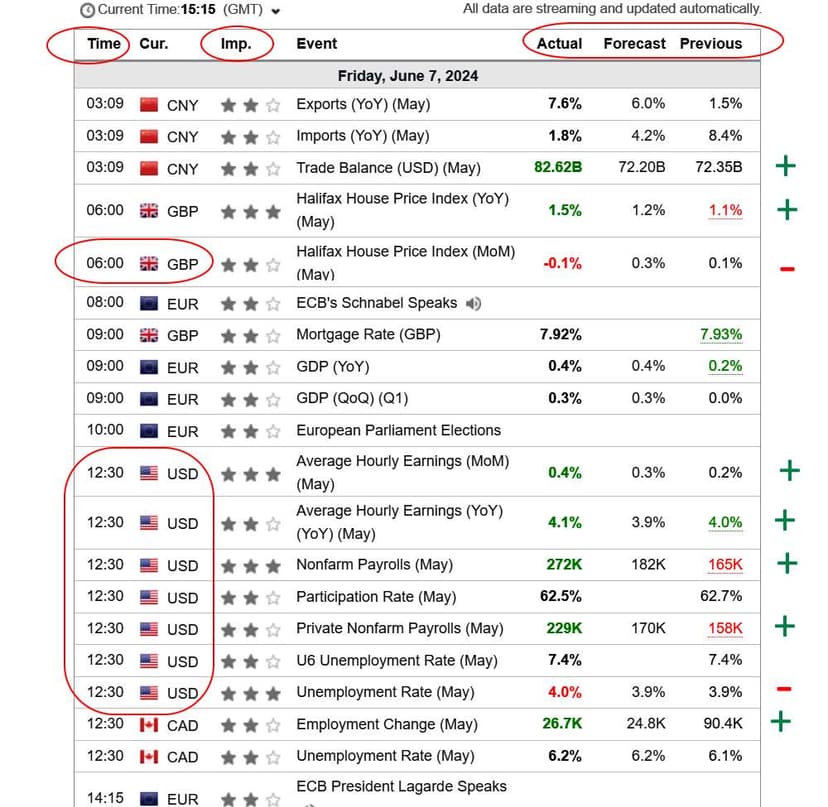
Pull up an economic calendar and flag every high-impact event for the next 24 hours. You’re looking for three things:
- Timing — When do the releases hit? Mark these on your chart or set alerts so you’re not caught off guard.
- Relevance — Which events affect the pairs you trade? An Australian employment report matters if you trade AUD crosses, not so much for EUR/USD.
- Risk adjustment — Decide now whether you’ll trade through the event, reduce position size, or sit it out entirely. Don’t make this decision in the heat of the moment.
Key events to watch in 2026 include central bank rate decisions (Fed, ECB, BOE, BOJ), NFP releases, CPI prints, and PMI data. These move markets and can blow through stops in seconds.
Pro tip: Create a standing rule for how you handle high-impact news. For example: “No new entries within 30 minutes of a Fed decision. Reduce open position size by 50% if holding through NFP.” Write it down. Follow it every time.
Step 3: Overnight Market Review
Scan what happened while you were away. This is especially important if you trade the London or New York sessions and missed the Asian session, or vice versa.
- Check major pair moves — Did EUR/USD gap? Did USD/JPY break a key level during Tokyo? Any surprise headlines overnight?
- Review Asian session range — Asian ranges often set the stage for London breakouts. Note the high and low of the overnight consolidation.
- Scan the DXY (Dollar Index) — A quick look at the Dollar Index tells you the overall USD trend without checking every pair individually.
- Check commodity currencies — If gold, oil, or major commodity prices moved significantly, AUD, CAD, and NZD pairs will react.
Step 4: Multi-Timeframe Analysis and Trade Planning
Now you’re ready for the actual chart work. This is where you build your watchlist and define trade setups for the day.
Start with the higher timeframes and work down:
- Weekly chart — Identify the dominant trend and any major support/resistance zones. This takes 30 seconds per pair. You’re establishing directional bias.
- Daily chart — Look for candlestick patterns, key moving average positions, and whether price is at a decision point. The daily close is the most important data point in forex.
- 4-hour and 1-hour charts — Drill into the structure. Where are the recent swing highs and lows? Is there a pattern forming that aligns with the daily bias?
- Entry timeframe — Whatever timeframe you use for entries (15M, 5M, etc.), identify specific price levels where you’d consider taking a trade.
For each potential setup, write down the following details before the session starts:
| Element | What to Define |
|---|---|
| Pair | Which currency pair |
| Direction | Long or short |
| Entry zone | Specific price area (not a single pip) |
| Stop loss | Exact level, based on structure |
| Take profit | At least one target, ideally two |
| Risk | Dollar amount or percentage of account |
| Invalidation | What would cancel this setup |
This is your trading plan for the day. If a setup doesn’t appear on this list, you don’t trade it. Period.
Phase 2: Session-Specific Preparation
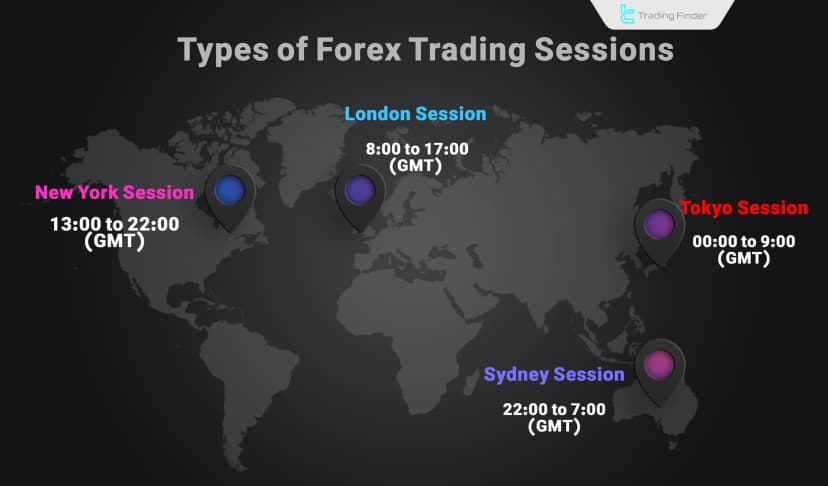
Forex runs 24 hours a day, five days a week, across three major sessions. Each session has its own personality, and your routine should adapt accordingly.
Asian Session (Tokyo) — 00:00 to 09:00 GMT
The Asian session is typically the quietest. Ranges are tighter, and major breakouts are less common. If this is your primary session:
- Focus on JPY, AUD, and NZD pairs where liquidity is highest.
- Trade range-bound strategies — mean reversion works well when volatility is compressed.
- Set alerts for the London open. If you’re holding positions, decide beforehand how you’ll manage them when volatility picks up.
- Watch for BOJ-related headlines and Australian/Chinese economic data.
If you’re based in North America or Europe and want to capture Asian session opportunities, running EAs on a VPS with a server in Tokyo puts your automation right next to the liquidity. Your pre-market routine for this session happens the night before — set your parameters, confirm your EAs are loaded, and let the VPS handle execution while you sleep.
London Session — 08:00 to 17:00 GMT
London is the most liquid session. It handles roughly 38% of daily forex volume. This is where breakouts happen and trends form.
- Review the Asian session range immediately — many London breakout strategies target the high or low of the prior session.
- EUR, GBP, and CHF pairs are most active. Crosses like EUR/GBP and GBP/JPY see peak volatility.
- Be ready for the 08:00-10:00 GMT window. That’s when European institutional orders flow in and the day’s trend often establishes itself.
- Tighten risk management heading into the London-New York overlap (13:00-17:00 GMT) when volatility spikes again.
New York Session — 13:00 to 22:00 GMT
New York brings the second wave of institutional volume. The overlap with London (13:00-17:00 GMT) is the most volatile window of the entire trading day.
- Most US economic releases drop between 13:30 and 15:00 GMT. Have your calendar ready.
- USD pairs dominate. EUR/USD and GBP/USD see massive volume.
- The 15:00-17:00 GMT window is prime for trend continuation or reversal setups as London traders close positions.
- After 17:00 GMT, liquidity thins noticeably. Spreads widen and moves become less reliable. Consider stopping active trading by this point.
Session overlap tip: The London-New York overlap (13:00-17:00 GMT) produces the tightest spreads and largest moves of the day. If you can only trade during one window, this is it.
Phase 3: Active Trading Session Checklist
You’ve done your homework. Now it’s game time. During the live session, your job shifts from analysis to execution and management. Here’s what that looks like in practice.
Pre-Entry Checklist (Before Every Trade)
Run through this mental checklist before clicking buy or sell:
- Is this on my plan? — If it’s not in your pre-market notes, don’t take it. Impulse trades are the number one account killer.
- Does the risk make sense? — Calculate your position size based on your stop distance and risk per trade. Never eyeball it.
- Am I within my daily risk limit? — If you’ve already lost 2-3% today (or whatever your limit is), you’re done. Walk away.
- Are spreads normal? — During news events or low liquidity, spreads can blow out. Don’t enter when execution quality is compromised.
- What’s the news risk? — Double-check that no high-impact event is imminent. Getting filled two minutes before NFP is a recipe for pain.
Trade Management Rules
Once you’re in a trade, discipline matters even more. Stick to these principles:
- Don’t move stops to widen risk. If your analysis was wrong, take the loss. Moving stops to “give it room” is how small losses become account-destroying ones.
- Partial profits are fine. Taking half off at the first target and moving your stop to breakeven on the remainder is a valid approach. It locks in gains and removes pressure.
- Set alerts, don’t stare. If your trade needs time to develop, set a price alert and step away. Watching every tick causes overtrading and emotional management decisions.
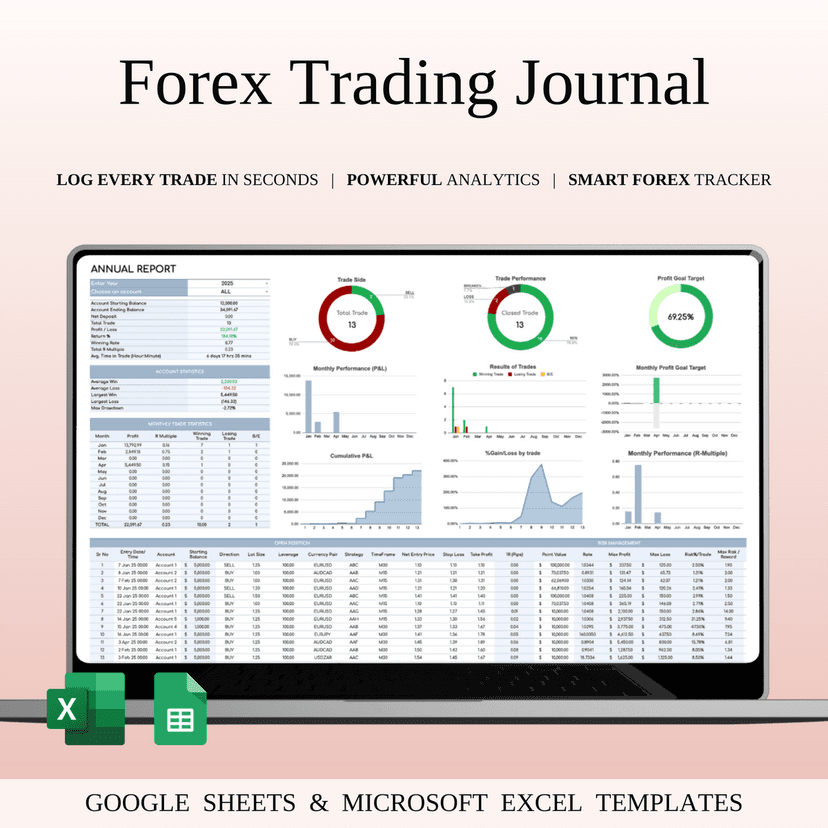
- Record everything in real time. Note your entry reason, emotional state, and any deviations from the plan. This data is gold during post-market review.
Daily Risk Management Dashboard
Keep a simple tracker visible during your session. It doesn’t need to be fancy — a spreadsheet or notepad works.
| Metric | Your Rule | Current Status |
|---|---|---|
| Max daily loss | e.g., 2% of account | Track in real time |
| Max trades per day | e.g., 3-5 trades | Count as you go |
| Max risk per trade | e.g., 1% of account | Calculate per entry |
| Max correlated exposure | e.g., 3% total in USD longs | Sum open risk |
| Consecutive loss limit | e.g., 3 losses then stop | Track after each close |
When any metric hits your limit, you stop trading. No exceptions. This is the difference between a professional approach and gambling.
Phase 4: Post-Market Review (30-60 Minutes After Your Session)
The post-market review is where improvement happens. Most traders skip this step, and it shows in their results. Spend 30 to 60 minutes after your session closes doing the following.
Step 1: Log All Trades in Your Journal
Every trade gets recorded. Winners and losers. Here’s the information to capture for each position:
- Pair and direction
- Entry and exit price
- Stop loss and take profit levels
- Position size and risk percentage
- P&L (pips and dollar amount)
- Entry reason — What setup triggered this trade?
- Exit reason — Hit TP? Hit SL? Manual close? Why?
- Emotional state — Were you calm, anxious, revenge trading, bored?
- Screenshots — Capture the chart at entry and exit
- Grade the trade — A (perfect execution), B (good but minor flaw), C (followed plan but setup was weak), D (broke rules)
The grading system is critical. A losing trade can still be an A-grade trade if you executed your plan perfectly. A winning trade can be D-grade if you broke every rule and got lucky. Over time, you want more A and B trades regardless of outcome. If you’re looking for a dedicated tool to streamline this process, see our roundup of the best trading journal apps available today.
Step 2: Performance Metrics Review
After logging trades, update your running statistics. These numbers tell you whether your edge is intact.
| Metric | What It Tells You |
|---|---|
| Win rate | Percentage of trades that hit target |
| Average R:R | Average reward relative to risk taken |
| Expectancy | (Win rate x avg win) – (Loss rate x avg loss). Must be positive. |
| Profit factor | Gross profit / gross loss. Above 1.5 is solid. |
| Max drawdown | Largest peak-to-trough decline. Your stress test number. |
| Average holding time | How long you hold trades. Reveals if you’re cutting winners short. |
Don’t obsess over daily numbers. Weekly and monthly trends matter more. But tracking daily builds the dataset you need for meaningful analysis.
Step 3: Identify Patterns and Mistakes
Review your journal entries for the day and ask yourself these questions:
- Did I follow my trading plan? If not, what caused me to deviate?
- Did I honor my risk management rules completely?
- Were there setups on my watchlist that I missed? Why?
- Did I take any trades not on my plan? What triggered the impulse?
- Was my position sizing appropriate for the volatility conditions?
Be brutally honest. The journal is for you, not for anyone else. If you revenge-traded after a loss, write it down. If you froze and missed a setup out of fear, document it. Patterns only become visible when you track them consistently.
Step 4: Check Automated Systems
If you run EAs or algorithmic strategies on a VPS, your post-market review includes checking their performance too.
- Review all trades executed by your EAs during the session.
- Check for any unusual behavior — trades outside normal parameters, excessive drawdown, or connection issues.
- Verify that the EA’s performance aligns with backtested expectations.
- Review server logs for any downtime, reconnection events, or latency spikes.
Running EAs on a forex VPS means your systems execute around the clock, even while you sleep. But “set and forget” is a myth. Automated systems still need regular oversight, and your daily post-market check is the time to provide it.
Phase 5: End-of-Day Wind-Down
After the review is complete, it’s time to shut down for the day. This phase is about mental health as much as trading performance.
Close Out or Manage Positions
Decide what happens to any open positions overnight. Your options:
- Close everything — If you’re a day trader, flat is your default overnight position.
- Set stops and take profits — If holding swing trades, make sure protective orders are in place. Never hold a position overnight without a stop loss.
- Transfer management to your VPS — If you use trailing stops or EA-managed exits, verify they’re configured correctly on your VPS before stepping away.
Disconnect From Markets
This is non-negotiable for long-term survival. After your session and review are done, close your charts. Stop refreshing your phone for price updates. The market will be there tomorrow.
Traders who can’t disconnect burn out. And burnout leads to poor decision-making, larger losses, and eventually quitting altogether. Protect your mental capital as fiercely as your financial capital.
Prepare Tomorrow’s Watchlist (Optional)
Some traders prefer to do a quick scan for tomorrow’s potential setups the night before. This is optional but can make your pre-market routine faster the next morning.
- Flag any pairs approaching key levels on the daily chart.
- Note upcoming economic events for the next day.
- Jot down one or two “if/then” scenarios you’ll watch for.
Keep this brief — 10 to 15 minutes maximum. The detailed planning happens in tomorrow’s pre-market phase.
Phase 6: Weekend Review and Planning (1-2 Hours)
The weekend is when you zoom out. Markets are closed, there’s no pressure to trade, and you can evaluate your performance with a clear head.
Weekly Performance Summary
Compile your daily journal entries into a weekly summary. Key metrics to calculate:
- Total P&L for the week (pips and dollar amount)
- Number of trades taken vs. number planned
- Win rate for the week
- Average R:R actually achieved (not planned, but actual)
- Expectancy for the week (platforms like Myfxbook can calculate this automatically from your connected account)
- Best trade — What made it work?
- Worst trade — What went wrong?
- Rule violations — Count them. Trend should be decreasing over time.
Strategy Assessment
Look at your results through the lens of your strategy, not just raw P&L. Ask yourself:
- Are the setups I’m trading still producing positive expectancy?
- Has the market environment changed in a way that affects my strategy? (Trending vs. ranging, high vs. low volatility)
- Do I need to adjust any parameters, or is this normal variance?
- Am I overtrading certain pairs or sessions?
Important: Don’t change your strategy after one bad week. Strategies go through drawdown periods. Only consider adjustments after a statistically significant sample — typically 50 to 100 trades minimum.
Next Week Preparation
Use Sunday to set up the week ahead:
- Mark the weekly chart levels. Draw horizontal support and resistance on the weekly timeframe for your core pairs. These are your key reference points for the entire week.
- Review the economic calendar. Flag every high-impact event for the week. Central bank decisions, employment data, and GDP releases should already be on your radar.
- Set weekly goals. Not P&L goals — process goals. Examples: “Follow my pre-entry checklist on every trade,” “No more than 4 trades per day,” “Grade every trade same day.”
- VPS maintenance. The weekend is a good time to check for platform updates, restart your VPS if needed, and ensure your EA settings are optimized for next week’s conditions.

How Automation Changes Your Daily Routine
If you run automated strategies, your daily routine shifts from execution to oversight. The difference is significant.
Manual Trader’s Day vs. Automated Trader’s Day
| Activity | Manual Trader | Automated (VPS) Trader |
|---|---|---|
| Screen time | 4-8 hours active | 30-60 minutes monitoring |
| Trade execution | Manual entries and exits | EA handles execution 24/5 |
| Overnight management | Set stops, hope for best | VPS runs trades around the clock |
| Pre-market focus | Chart analysis, entry planning | System health checks, parameter review |
| Post-market focus | Trade journaling, self-review | EA performance audit, log review |
| Emotional load | High — every decision is manual | Lower — system follows rules without emotion |
Automated trading doesn’t mean no routine. It means a different routine. Instead of staring at charts waiting for setups, you spend your time analyzing your system’s performance, optimizing parameters, and ensuring your infrastructure is running cleanly.
A forex VPS is the foundation of this approach. Your EAs need 24/5 uptime, stable low-latency connections to your broker, and reliable hardware that doesn’t crash during news events. Running EAs on a home computer means every power outage, Windows update, or internet hiccup is a potential missed trade or unclosed position.
Automated Trader’s Daily Checklist
- Morning (5 minutes): Check VPS status, verify EA connections, review overnight trades
- Midday (5 minutes): Quick check on open positions, margin levels, any error logs
- Evening (30 minutes): Full performance review, journal EA trades, check for parameter drift
- Weekly (1 hour): Compare live results to backtest expectations, update settings if needed, run VPS maintenance
That’s roughly 45 minutes per day versus 6+ hours of active screen time. The time savings alone justify the infrastructure investment for many traders.
Building Your Personal Routine: A Step-by-Step Template
Every trader’s routine will look slightly different based on their strategy, session, and whether they trade manually or use automation. Here’s a template you can customize.
Daily Routine Template
| Time Block | Duration | Activity |
|---|---|---|
| Pre-market | 60-90 min | Infrastructure check, calendar review, overnight scan, chart analysis, trade planning |
| Session open | 15 min | Confirm spreads are normal, review opening price action, set alerts for watchlist levels |
| Active session | 2-4 hours | Execute planned trades, manage positions, track risk metrics |
| Mid-session break | 15-30 min | Step away from screens, reset focus, re-evaluate open positions with fresh eyes |
| Session close | 15 min | Close or manage remaining positions, set overnight orders |
| Post-market review | 30-60 min | Journal trades, update metrics, identify patterns, check EA performance |
| Wind-down | 15 min | Preview tomorrow’s calendar, note potential setups, disconnect from markets |
Key Principles for Making Your Routine Stick
- Start small. Don’t try to implement everything at once. Begin with the pre-market checklist and journal. Add layers over time.
- Be consistent, not perfect. Missing one day isn’t failure. Missing a week is a problem. Build the habit gradually.
- Time-block ruthlessly. Schedule your trading activities like meetings. If pre-market analysis is 7:00-8:30 AM, that time is sacred.
- Remove friction. Keep your journal template open, your economic calendar bookmarked, and your VPS control panel accessible. The easier your routine is to follow, the more likely you’ll follow it.
- Review and refine monthly. Your routine should evolve as your trading matures. What worked when you started may not work six months in. Adjust, but don’t overhaul.
Common Mistakes That Wreck Your Trading Routine
Even with the best intentions, traders sabotage their routines in predictable ways. Watch out for these pitfalls.
Skipping the Pre-Market Phase
You’re running late, markets are already moving, and you jump straight into trading without analysis. This is how unplanned, low-probability trades happen. If you don’t have time for pre-market prep, don’t trade that session. Seriously.
Over-Analyzing After Losses
A bad day triggers a three-hour post-market session where you question your entire strategy. This leads to unnecessary changes and strategy-hopping. Your post-market review should be the same length whether you won or lost. Stick to the process.
Ignoring the Journal
Journaling feels tedious. So traders skip it “just this once,” which becomes every day. Within a month, they have no data to analyze. If traditional journaling feels like a chore, simplify it. Even a one-line note per trade is better than nothing.
Trading Outside Your Session
You planned to trade London but spotted a “perfect setup” during the Asian session. Now you’re tired during London, your best session, because you stayed up chasing low-liquidity trades. Stick to your scheduled session.
Never Taking Breaks
Trading for six straight hours without stepping away from the screen degrades your decision-making. Schedule a mid-session break. Your brain needs it.
Prop Firm Trader Routine Additions
If you’re trading a prop firm challenge or managing a funded account, your daily routine needs extra checkpoints. The margin for error is smaller when a single bad day can cost you the account.
Extra Pre-Market Steps for Prop Traders
- Check your account dashboard — Verify current drawdown level, profit target progress, and remaining trading days before analyzing any charts.
- Calculate available risk — Know exactly how much you can lose today before breaching daily or overall drawdown limits. This number determines your position sizing.
- Review firm-specific rules — Some firms restrict trading during high-impact news, prohibit holding over weekends, or limit lot sizes. Confirm you know today’s constraints.
Extra Post-Market Steps for Prop Traders
- Track drawdown buffer — How close are you to the limit? Do you need to reduce size tomorrow?
- Log rule compliance — Did every trade today comply with the firm’s rules? Any borderline situations?
- Evaluate pacing — Are you on track to hit the profit target within the time limit, or do you need to adjust your approach?
Prop firm traders running EAs on a VPS need to be especially careful. Program your firm’s constraints directly into your EA parameters — maximum daily loss, position size limits, and news trading restrictions. A runaway EA that violates a firm’s rules will blow your challenge faster than any manual mistake.
Get Your Infrastructure Right
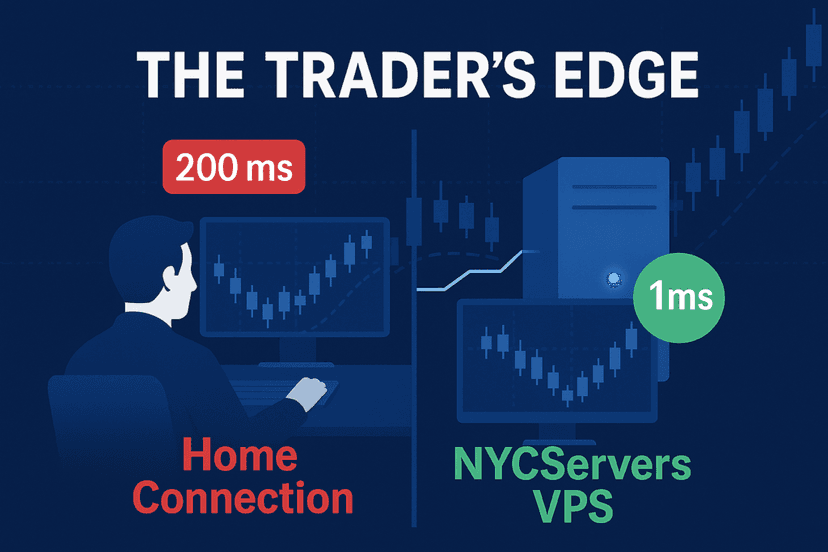
A disciplined routine is only as good as the tools supporting it. If your platform crashes during pre-market prep or your EA disconnects overnight, even the best routine can’t save you.
For traders running automated strategies or simply wanting reliable 24/5 access to their charts, a forex VPS ensures your infrastructure never becomes the weak link. Your platforms stay online, your EAs keep running, and your routine stays intact regardless of your home internet quality or power situation.
Check our forex VPS plans to ensure your trading setup never misses a beat.
Frequently Asked Questions
What should a forex trader do every day?
At minimum, a forex trader should complete a pre-market analysis (economic calendar check, overnight market scan, chart analysis), execute only planned trades during their session, and perform a post-market review with journaling. The pre-market and post-market phases are where real improvement happens. Trading itself is just execution of the work you’ve already done.
How long should a forex pre-market routine take?
Plan for 60 to 90 minutes before your target session opens. This covers infrastructure checks, economic calendar review, overnight market scan, and multi-timeframe chart analysis. Experienced traders with a focused watchlist of 4-6 pairs can sometimes complete this in 45 minutes, but rushing the pre-market phase leads to sloppy trade plans.
Do I need a trading journal for my forex daily routine?
Yes. A trading journal is the single most impactful tool for improving performance over time. It lets you identify recurring mistakes, validate whether your strategy has a real edge, and track your emotional patterns. Traders who journal consistently improve faster than those who don’t, because they have data rather than guesses about what’s working and what’s not.
How does running EAs on a VPS change my daily routine?
Running EAs on a VPS shifts your routine from active trade execution to system monitoring and optimization. Instead of spending 4-8 hours watching charts and executing trades manually, you spend 30-60 minutes per day reviewing your EA’s performance, checking server health, and analyzing trade logs. The total time commitment drops significantly, but the post-market analysis component stays just as important.
What’s the best forex session to trade for beginners?
The London session (08:00-17:00 GMT) is generally considered the best session for beginners. It offers high liquidity, tighter spreads, and cleaner price action on major pairs like EUR/USD and GBP/USD. The London-New York overlap (13:00-17:00 GMT) provides even more volume but can be volatile around US data releases. Avoid the Asian session until you have experience with lower-volatility strategies.
How often should I review and update my trading routine?
Do a thorough routine review once per month. Look at your weekly summaries, identify which parts of your routine you’re consistently skipping (those need to be simplified or removed), and check whether your process goals are actually improving your results. Major overhauls should only happen quarterly at most. Constant tweaking is just as harmful as never reviewing at all.
Should I trade every day as part of my forex routine?
No. Your routine should include trading-day activities and non-trading-day activities. Some days, the pre-market analysis will reveal no valid setups. On those days, completing your analysis and deciding not to trade IS the routine. Forcing trades to “stay active” is one of the most common and expensive mistakes in forex. The best traders are comfortable sitting on their hands when the market doesn’t offer what they’re looking for.

About the author
Thomas Vasilyev
Writer & Full Time EA Developer
Tom is our associate writer, and has advanced knowledge with the technical side of things, like VPS management. Additionally Tom is a coder, and develops EAs and algorithms.
Areas of Expertise