
Best Prediction Market Platforms Ranked 2026
Compare the best prediction market platforms in 2026. We ranked Kalshi, Polymarket, Robinhood, and more by fees, liquidity, regulation, and API access.
Prediction Markets Have Gone Mainstream
Prediction markets processed over $44 billion in trading volume during 2025. That number is on pace to more than double in 2026. What started as a niche corner of finance has become a genuine asset class, with CFTC-regulated exchanges, major brokerage integrations, and institutional-grade APIs drawing serious capital.
The landscape has changed fast. Kalshi won its landmark court battle against the CFTC to list election contracts. Polymarket launched a fully regulated U.S. entity backed by a $2 billion investment from the Intercontinental Exchange. Robinhood, FanDuel, and Coinbase all jumped in. There are now 13 federally regulated platforms available to U.S. traders alone.
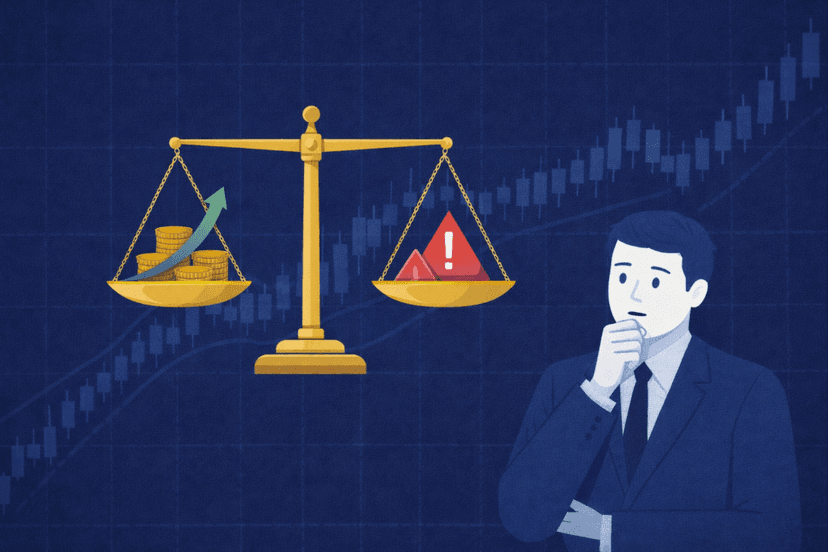
But more platforms means more decisions. Fees vary wildly. Liquidity concentrates in different categories on different exchanges. Some platforms offer robust APIs for automated trading, while others are purely manual. Regulation status matters for tax reporting and banking access.
This guide ranks and compares every major prediction market platform in 2026. We break down fees, liquidity, market coverage, API access, and automation potential so you can pick the right platform for how you actually trade.

How We Ranked These Platforms
Every platform in this guide was evaluated across five criteria:
- Market coverage — breadth of categories (politics, economics, sports, crypto, culture)
- Fees — trading costs, deposit/withdrawal fees, and hidden charges
- Liquidity — depth of order books and volume across active markets
- Regulation and trust — CFTC status, tax reporting, banking rails
- Automation and API access — quality of APIs, WebSocket support, bot-friendliness
Platforms that serve serious traders who want to automate strategies, run bots 24/7, or execute arbitrage across exchanges scored higher than those designed purely for casual users.

1. Kalshi — Best Overall Platform
Kalshi is the most complete prediction market platform available in 2026. Kalshi is fully CFTC-regulated, processes trades in USD with standard bank and debit card funding, and covers the widest range of event categories of any single exchange.
The numbers speak for themselves. Kalshi processed $43.1 billion in volume during 2025 and generated $263.5 million in fee revenue. A Series E funding round valued the company at $11 billion. It now controls roughly 60% of the U.S. prediction market share.
Kalshi Fees
Kalshi uses a formula-based fee model tied to your expected earnings per trade. Fees rarely exceed 2% of maximum profit and drop toward zero on extreme-priced contracts. Debit card deposits carry a 2% fee, and withdrawals cost a flat $2. Bank transfers (ACH) are free.
Kalshi Market Coverage
Kalshi covers politics, economics (Fed rates, CPI, GDP), sports (17 sports including NFL, NBA, MLB, college football), crypto prices, weather, entertainment, and more. It dominates macro-economic markets and has the deepest liquidity for interest rate and inflation contracts.
Kalshi API and Automation
Kalshi offers a full REST API and WebSocket feeds for real-time market data and order execution. The API supports institutional-grade trading with multiple connection options. Rate limits are generous enough for most automated strategies. If you plan to run prediction market bots, Kalshi’s API is production-ready and pairs great with a Kalshi VPS service.
Kalshi also issues 1099 tax forms, which simplifies reporting for U.S. traders significantly.
Best for: Serious traders who want the broadest market coverage, clean regulation, and reliable API access under one roof.

2. Polymarket — Best for Liquidity and Global Events
Polymarket is the largest prediction market by global volume. A Keyrock-Dune analysis pegged its 2025 volume at $21.5 billion. Built on the Polygon blockchain and settled in USDC, Polymarket lists markets aggressively across politics, economics, crypto, culture, and breaking news.
In early 2026, Polymarket completed its transition to a compliant U.S. structure. Polymarket US now operates as a CFTC-regulated Designated Contract Market, backed by a massive investment from the Intercontinental Exchange. The international platform continues to serve global users without KYC requirements.
Polymarket Fees
Polymarket uses a dynamic taker-fee model that varies by market category. As of March 2026, peak effective rates are 0.75% for sports, 1.00% for finance, politics, and tech, and up to 1.80% for crypto markets. Polymarket US charges a separate 0.30% taker fee with a 0.20% maker rebate. For most contracts priced between 30 and 70 cents, Polymarket is cheaper than Kalshi.
Polymarket Market Coverage
Polymarket excels at fast-moving event markets. When major news breaks, Polymarket typically lists relevant contracts within hours. Coverage spans 14 sports, global politics, economic indicators, crypto prices, AI developments, and cultural events. International sports coverage (Premier League, cricket) is stronger than Kalshi’s.
Polymarket API and Automation
Polymarket’s API ecosystem is the most comprehensive in the industry. It offers REST endpoints, WebSocket streams, and a Central Limit Order Book (CLOB) for liquid markets. The open-source Polymarket Agents framework provides a foundation for building autonomous AI trading agents. On-chain settlement means every trade is publicly verifiable.
For bot operators and automated traders, Polymarket’s combination of deep liquidity, zero-friction API access, and a thriving developer ecosystem makes it the top choice for algorithmic strategies.
Best for: Algorithmic traders, bot operators, and anyone who wants the deepest liquidity pool and fastest market listings globally.

3. Robinhood Predictions — Best for Beginners
Robinhood integrated prediction markets in October 2024 and launched a dedicated prediction markets hub in March 2025. The product is powered by Kalshi, which means you get identical markets and liquidity through a more familiar interface.
The appeal is simplicity. If you already have a Robinhood account, you can start trading event contracts with zero additional setup. No new KYC, no crypto wallet, no separate funding. Robinhood covers sports, economics, politics, and culture through its prediction tab.
Robinhood Fees
Robinhood applies fees on prediction market trades, typically mirroring Kalshi’s fee structure. The platform occasionally runs promotions with reduced or zero fees on specific market categories. Deposits from your existing Robinhood balance are instant and free.
Robinhood Limitations
Robinhood does not offer API access for prediction markets. There is no way to run automated strategies or bots through Robinhood’s prediction interface. If you start on Robinhood and want to graduate to algorithmic trading, you will need to move to Kalshi’s native platform or Polymarket.
Best for: Casual traders and beginners who want the lowest friction entry point into prediction markets.
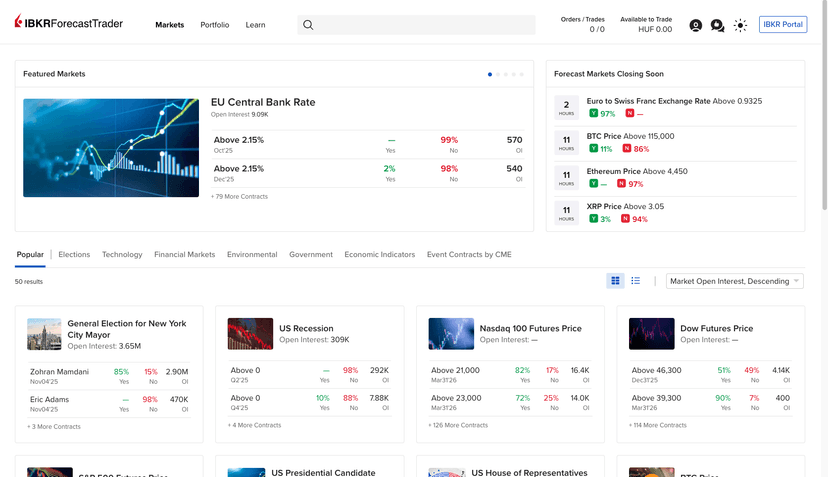
4. Interactive Brokers ForecastTrader — Best for Professional Traders
ForecastEx, accessed through Interactive Brokers’ ForecastTrader interface, takes the institutional approach to prediction markets. It operates inside IBKR’s professional trading environment, meaning you can trade event contracts alongside stocks, options, and futures in a single account.
Interactive Brokers is unique in giving clients access to both ForecastEx and CME Group event contracts, covering a wider range of markets than most competitors. Founder Thomas Peterffy has publicly stated that midterm election trading alone would be enough to accelerate IBKR’s revenue growth in 2026.
ForecastTrader Market Coverage
ForecastEx historically focused on macroeconomic and policy-driven contracts. It only began offering sports contracts at the end of 2025. Combined with CME Group access, IBKR users can trade everything from S&P 500 futures to election outcomes and weather events.
ForecastTrader API and Automation
Interactive Brokers offers one of the most mature trading APIs in the industry. The Trader Workstation (TWS) API, Client Portal API, and FIX protocol all support programmatic access. This infrastructure, originally built for equity and options trading, extends to prediction market contracts. Professional quant teams already using IBKR for other asset classes can add prediction markets with minimal additional setup. For automated strategies, pairing this API with a VPS with API access provides the uptime and low latency that algorithmic trading demands.
Best for: Professional traders and quant desks who want prediction markets integrated with a full-service brokerage and mature API infrastructure.
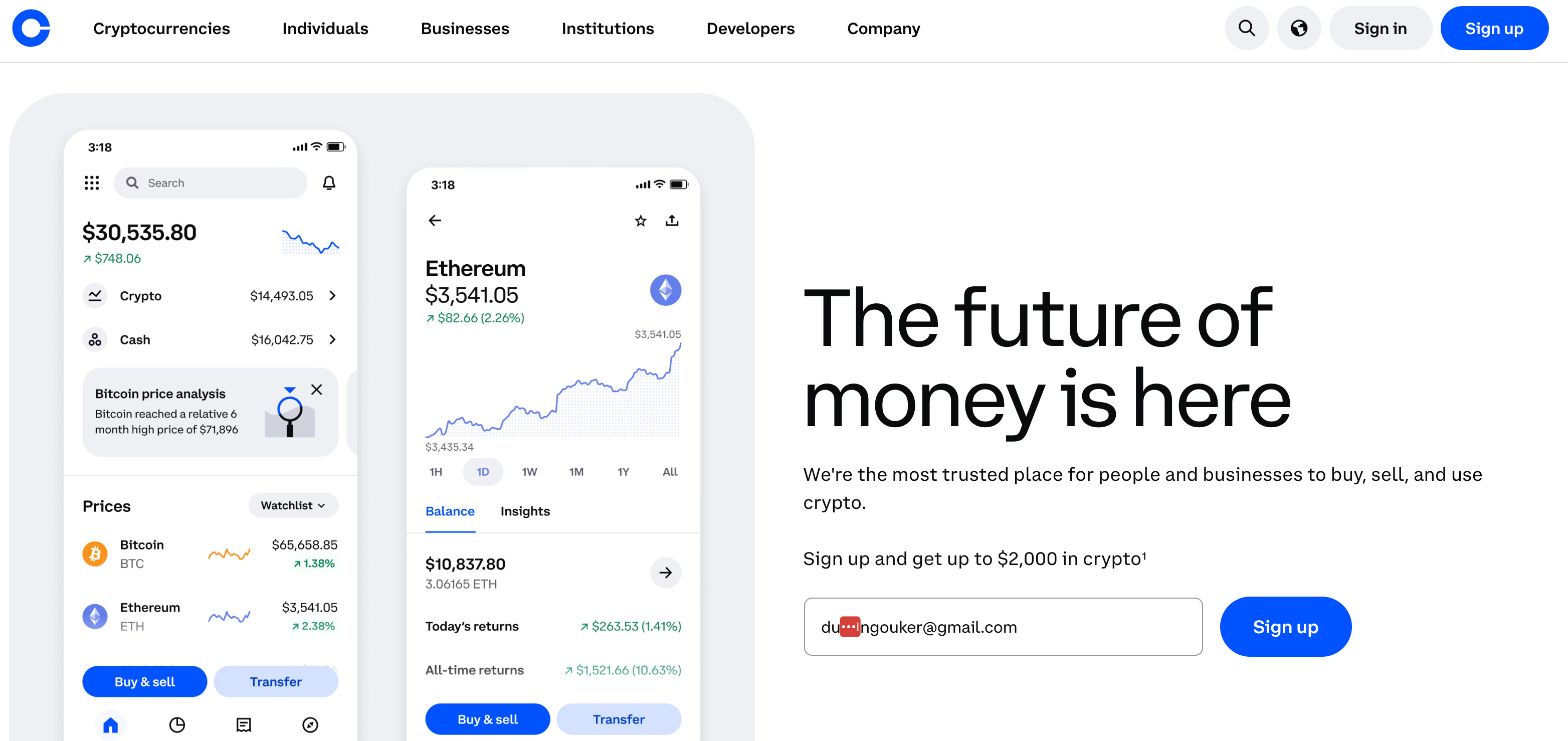
5. Coinbase Prediction Markets — Best Crypto-Native On-Ramp
Coinbase brought prediction markets into its main account flow in 2026, letting users trade event contracts using USD or USDC balances they already hold. The integration is seamless for existing Coinbase users, with simple yes/no contract interfaces and the option to sell positions before resolution.
Coinbase Market Coverage and Fees
Coinbase focuses on a curated selection of markets rather than listing everything. Categories include politics, economics, crypto prices, and major cultural events. Fees are competitive with other regulated platforms. The limitation is market depth — Coinbase’s prediction offering is still relatively new and does not match the breadth of Kalshi or Polymarket.
Best for: Existing Coinbase users who want to try prediction markets without opening a new account or learning a new interface.

6. FanDuel Predicts — Best for Sports Fans
FanDuel Predicts launched through a partnership with CME Group in December 2025, bringing regulated prediction contracts to FanDuel’s massive U.S. retail base. The platform is now available nationwide, including California.
FanDuel Predicts is not as deep as dedicated platforms. You will not find the same market breadth or order book depth as Kalshi or Polymarket. But the reach and ease of use are unmatched. Millions of FanDuel users can access prediction markets without leaving an app they already use daily.
FanDuel Predicts Limitations
There is no API access. Markets are limited compared to full-featured exchanges. The platform targets casual bettors transitioning to event contracts rather than active traders. Odds and market formats are designed to feel intuitive for sportsbook users.
Best for: Sports fans and DFS players who want simplified event contracts in a familiar app.

7. OG.com (by Crypto.com) — Best for Crypto Enthusiasts
OG.com launched in February 2026 as Crypto.com’s dedicated prediction market platform. It has reported roughly 40x weekly growth in its prediction market business over six months, signaling serious momentum in the space.
The platform covers sports, politics, economics, entertainment, and financial indicators including gold prices. For users already in the Crypto.com ecosystem, OG.com provides a natural extension. It supports a wide range of cryptocurrencies for funding and offers a feature-rich trading experience.
Best for: Crypto.com users who want prediction markets integrated with their existing crypto portfolio.
8. PredictIt — Best for Political Forecasters
PredictIt remains the original political prediction market, operating under a CFTC no-action letter for academic research purposes. It skews heavily toward elections, policy outcomes, and geopolitical events rather than sports or finance.
The trade-off is cost. PredictIt charges a 10% fee on profits and a 5% withdrawal fee, making it one of the most expensive prediction markets available. Position limits cap investments at $850 per contract. Estimated 2025 revenue was $5 to $10 million despite these high fees.
PredictIt’s API capabilities are limited compared to modern platforms. If you trade politics seriously, Kalshi and Polymarket both offer political markets with better liquidity, lower fees, and superior API access.
Best for: Political junkies and academic forecasters who value PredictIt’s unique political-only focus and community.
Platform Comparison Table
| Platform | Best For | Regulation | Fees | API Access | Min Deposit |
|---|---|---|---|---|---|
| Kalshi | Overall / Macro | CFTC-regulated | Up to 2% on profit | Full REST + WebSocket | $1 |
| Polymarket | Liquidity / Global | CFTC (US) / Crypto (Intl) | 0.75%–1.80% taker | Full REST + WebSocket + CLOB | $1 USDC |
| Robinhood | Beginners | CFTC (via Kalshi) | ~Kalshi rates | None | $1 |
| IBKR ForecastTrader | Professional traders | CFTC-regulated | Low | TWS API + FIX | $0 |
| Coinbase | Crypto users | CFTC-regulated | Competitive | Limited | $1 |
| FanDuel Predicts | Sports fans | CME Group partnership | Moderate | None | $5 |
| OG.com | Crypto enthusiasts | Varies | Varies | Limited | $1 |
| PredictIt | Political forecasters | CFTC no-action letter | 10% profit + 5% withdrawal | Limited | $5 |
How to Choose the Right Platform
The right platform depends on how you trade. Here is a decision framework:
If You Trade Manually and Casually
Robinhood or FanDuel Predicts gets you in the door with zero friction. You trade through apps you already know, fund with your existing balance, and avoid the complexity of crypto wallets or professional trading interfaces. The downside is limited market access and no ability to automate.
If You Want the Broadest Market Access
Kalshi is the default choice. It covers the widest range of categories, offers the most liquid macro-economic markets, and provides clean USD-based banking. For international events and faster market listings, supplement with a Polymarket account.
If You Run Bots or Automated Strategies
Polymarket and Kalshi both offer production-grade APIs. Polymarket edges ahead for algorithmic traders thanks to deeper open-source tooling, a thriving developer community, and on-chain settlement transparency. Many serious bot operators maintain accounts on both platforms and route trades based on which venue offers better pricing for each specific contract. If you are new to this space, our guide to prediction market strategies for beginners covers the fundamentals before you automate.
Running automated strategies requires 24/7 uptime and low-latency connectivity. A residential internet connection adds 50 to 150 milliseconds of latency compared to a properly located server. Deploying your bots on a trading VPS in a major financial hub cuts latency to single-digit milliseconds and guarantees your strategies execute even when your personal machine is off.
If You Want Professional-Grade Infrastructure
Interactive Brokers ForecastTrader is the answer. You get prediction markets alongside equities, options, and futures in the same account, backed by one of the most mature trading APIs in the industry. The TWS API supports complex order types and portfolio management features that no standalone prediction platform can match.

Prediction Market Regulation in 2026
The regulatory landscape has shifted dramatically. In early 2026, the CFTC officially designated prediction markets as “swaps,” placing them under exclusive federal jurisdiction. This protects regulated platforms from many state-level gambling bans.
However, the picture is not entirely settled. Eleven state governments are attempting to enforce cease-and-desist orders or other legal actions against at least one prediction market operator. Eight more states have pending civil litigation. The tension between state and federal regulators remains a risk factor for the industry.
For traders, the practical takeaway is straightforward: stick to CFTC-regulated platforms if you want clean tax reporting, reliable banking access, and legal certainty. Kalshi, ForecastEx, and the regulated arm of Polymarket US all meet this standard.
Why Multi-Platform Trading Matters
Just like forex traders compare spreads across brokers, prediction market traders should maintain accounts on multiple platforms. Here is why:
- Price differences — the same event can trade at different prices on Kalshi vs. Polymarket, creating arbitrage opportunities
- Category specialization — Kalshi dominates macro markets, Polymarket leads in crypto and global events, FanDuel focuses on sports
- Liquidity fragmentation — some contracts are only available or only liquid on specific platforms
- Fee optimization — different fee structures mean one platform may be cheaper for a specific trade
Cross-platform arbitrage bots like the Polymarket-Kalshi Arbitrage Bot by terauss exploit these differences automatically.
Frequently Asked Questions
Are prediction markets legal in the United States?
Yes. Prediction markets are legal in the U.S. when operated by CFTC-regulated exchanges. Kalshi, ForecastEx, and Polymarket US all hold regulatory approval. The CFTC designated prediction markets as “swaps” in early 2026, placing them under federal jurisdiction and protecting them from most state-level gambling restrictions.
Which prediction market platform has the lowest fees?
For most trades priced between 30 and 70 cents, Polymarket is the cheapest option with its dynamic taker-fee model. Kalshi becomes more competitive on extreme-priced contracts where its formula-based fee approaches zero. PredictIt is the most expensive with a 10% profit fee and 5% withdrawal fee.
Can I use bots to trade on prediction markets?
Yes. Both Kalshi and Polymarket offer official APIs that support programmatic trading. Interactive Brokers ForecastTrader also provides API access through IBKR’s established trading infrastructure. Automated trading is legal on platforms that provide API access, though you should always verify platform terms of service before deploying bots.
Do I need a VPS to run prediction market bots?
A VPS is strongly recommended for any automated trading strategy. Prediction market bots need 24/7 uptime, stable network connectivity, and low latency to execute effectively. Running bots from a home computer introduces risks from power outages, internet drops, and added latency of 50 to 150 milliseconds compared to a server in a financial data center.
What is the difference between Kalshi and Polymarket?
Kalshi is a fully CFTC-regulated U.S. exchange that trades in USD with traditional banking. Polymarket is a crypto-native platform on the Polygon blockchain that settles in USDC. Kalshi dominates macro-economic markets and offers tax reporting. Polymarket leads in global liquidity, faster market listings, and developer tooling. Many traders use both platforms.
How are prediction market winnings taxed?
Kalshi issues 1099 forms to U.S. traders. Polymarket’s global platform does not issue tax documents, so traders must self-report. The IRS treats prediction market profits as taxable income. Consult a tax professional for your specific situation, as formal IRS guidance on event contracts is still developing.
Which prediction market platform is best for sports?
Kalshi has the deepest sports coverage with 17 sports and strong liquidity on NFL, NBA, and MLB contracts. FanDuel Predicts offers the most user-friendly sports experience through its familiar sportsbook interface. Polymarket leads in international sports like Premier League and cricket. For comprehensive sports coverage with API access, Kalshi is the top choice.

About the author
Thomas Vasilyev
Writer & Full Time EA Developer
Tom is our associate writer, and has advanced knowledge with the technical side of things, like VPS management. Additionally Tom is a coder, and develops EAs and algorithms.
Areas of Expertise