

Best Crypto Copy Trading Platforms 2026 Compared
Compare the best crypto copy trading platforms in 2026. Fees, features, risk tools, and execution speed for Bitget, Bybit, Binance, OKX, BingX, and more.

Why Crypto Copy Trading Is Exploding in 2026
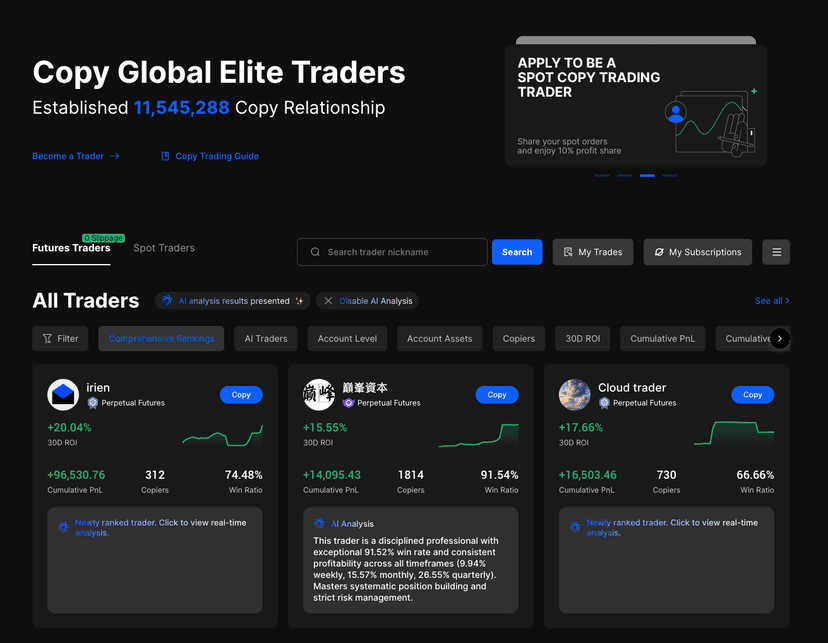
Crypto copy trading lets you mirror the positions of experienced traders automatically. You pick a lead trader, allocate capital, and every trade they open gets replicated in your account — proportionally sized to your balance. No manual entries. No chart watching at 3 AM.
The concept isn’t new, but the infrastructure behind it has matured fast. The global social trading market hit roughly $3.2 billion in 2024 and is projected to reach $6.7 billion by 2034. Exchanges have invested heavily in transparency tools, risk controls, and execution speed. What used to be a niche feature is now a core product on most major crypto exchanges.
But not all copy trading platforms are equal. Fee structures, trader pools, risk management tools, and execution quality vary dramatically. Picking the wrong platform means higher slippage, hidden fees eating your returns, and limited control over your downside.
This guide breaks down the top crypto copy trading platforms in 2026 — covering fees, features, risk tools, and which platform fits different trading styles. We also cover how execution speed and infrastructure affect your copy trading results, something most comparisons overlook.
How Crypto Copy Trading Actually Works
Here’s the basic flow on most platforms:
- Browse lead traders — Filter by ROI, win rate, drawdown, trading style, and asset focus.
- Allocate capital — Choose how much to assign. Most platforms use proportional sizing, so a lead trader risking 10% of their capital means you risk 10% of your allocated amount.
- Trades mirror automatically — When the lead trader opens or closes a position, your account does the same in real time.
- Profit sharing kicks in — If the lead trader profits, they take a cut (typically 10-20%). You keep the rest.
The proportional sizing formula is straightforward:
Your Position Size = (Your Allocated Capital / Lead Trader’s Equity) x Lead Trader’s Position Size
For example, if a lead trader with $50,000 equity opens a $5,000 BTC long, and you’ve allocated $5,000, your position would be $500. Same percentage exposure, scaled to your account.
Spot vs Futures Copy Trading
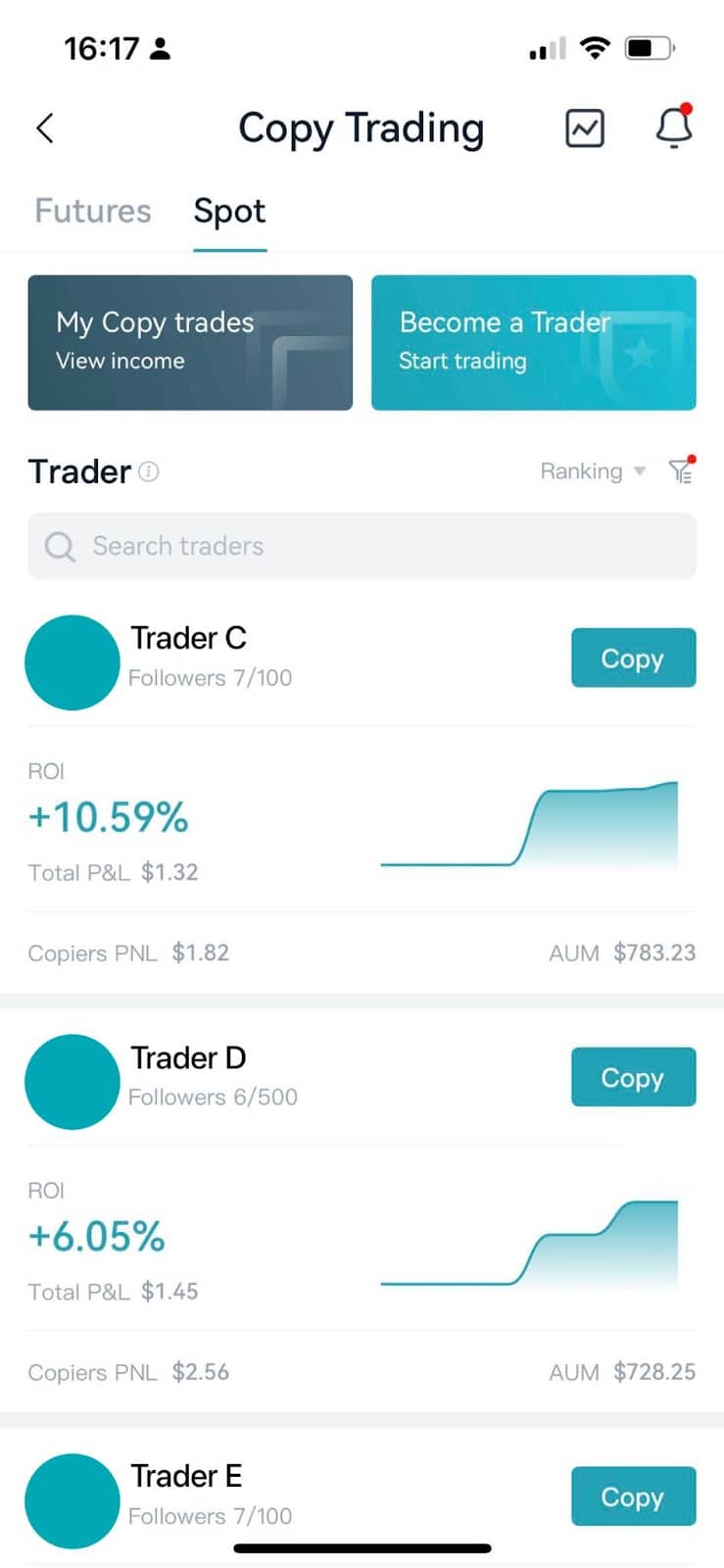
Most platforms now support both spot and futures copy trading. Spot copy trading mirrors buy/sell orders on the spot market — lower risk, no liquidation danger. Futures copy trading replicates leveraged positions on perpetual contracts — higher potential returns, but also higher risk of rapid losses.
If you’re new to copy trading, start with spot. You can’t get liquidated, and the worst outcome is the asset declining in value. Futures copy trading adds leverage into the mix, which amplifies both gains and losses.

Best Crypto Copy Trading Platforms in 2026
We evaluated each platform across five criteria: trader pool quality, fee transparency, risk management tools, execution speed, and supported markets. Here’s how they stack up.

1. Bitget — Best Overall Copy Trading Ecosystem
Bitget has positioned copy trading as a flagship feature, not an afterthought. With over 120,000 elite traders and support for both spot and futures copy trading, the platform offers the deepest trader pool in the industry.
The discovery interface is strong. You can filter traders by ROI, win rate, maximum drawdown, trading frequency, follower count, and asset specialization. Every trader’s historical PnL and open positions are visible before you commit funds.
| Feature | Details |
|---|---|
| Copy Trading Types | Spot + Futures |
| Maker/Taker Fees | 0.02% / 0.06% (futures) |
| Profit Share Cap | Up to 20% |
| Min Investment | $10 |
| Risk Controls | Stop-loss, max drawdown, per-trader allocation limits |
Bitget’s standout advantage is its risk control granularity. You can set per-trader stop-loss thresholds, cap your maximum investment per copied trader, and configure daily loss limits — all without affecting other copied traders in your portfolio.
Best for: Traders who want the largest selection of lead traders with detailed performance analytics and granular risk controls.
2. Bybit — Best for Futures Copy Trading
Bybit dominates derivatives volume globally, and that liquidity advantage carries directly into its copy trading product. With 40+ million registered users and consistently top-3 derivatives volume on CoinGecko, copied futures trades execute with minimal slippage even during volatile markets.
The platform supports both spot and futures copy trading, but its real strength is the futures side. Deep order books mean your copied trades fill closer to the lead trader’s entry price — a critical factor when you’re running leveraged positions where a few basis points of slippage can matter.
| Feature | Details |
|---|---|
| Copy Trading Types | Spot + Futures |
| Maker/Taker Fees | 0.02% / 0.055% (futures) |
| Profit Share Cap | Up to 15% |
| Min Investment | $10 |
| Risk Controls | Global stop-loss, per-trader allocation, leverage caps |
Bybit also offers a “Smart Copy” mode that automatically adjusts your position sizing based on the lead trader’s risk profile. If a lead trader increases their leverage on a particular trade, Smart Copy can cap your exposure at your predefined maximum.
Best for: Experienced traders comfortable with leverage who want deep futures liquidity and advanced post-entry controls.

3. Binance — Best All-Round Platform
Binance brings unmatched liquidity and the broadest asset coverage to its copy trading feature. As the largest crypto exchange by volume, virtually any token or trading pair you’d want to copy trade is available here.
The copy trading interface is clean and integrated directly into the main trading dashboard. You can browse lead traders, review their portfolio composition, and start copying with a few clicks. Binance also runs a “Certified Trader” program where top performers earn verification badges based on sustained performance metrics.
| Feature | Details |
|---|---|
| Copy Trading Types | Spot + Futures |
| Maker/Taker Fees | 0.02% / 0.04% (futures, with BNB discount) |
| Profit Share Cap | Up to 20% |
| Min Investment | $10 |
| Risk Controls | Stop-loss, take-profit, margin mode selection |
Where Binance falls slightly behind Bitget is in copy-trading-specific risk controls. The tools are solid but less granular — you won’t find per-trader daily loss caps or conditional stop-copy triggers. For most users, the standard stop-loss and take-profit settings are sufficient.
Best for: Traders who want copy trading integrated into the most liquid exchange with the widest asset selection.

4. OKX — Best for Trader Filtering and Transparency
OKX takes a data-first approach to copy trading. The trader discovery interface includes filters for AUM capacity, average holding time, preferred trading pairs, and risk score — letting you match traders to your exact preferences.
One unique feature is OKX’s “Smart Portfolio” mode, which lets you allocate across multiple lead traders with auto-rebalancing. If one trader’s allocation grows disproportionately due to profits, OKX can rebalance your exposure automatically.
| Feature | Details |
|---|---|
| Copy Trading Types | Spot + Futures |
| Maker/Taker Fees | 0.02% / 0.05% (futures) |
| Profit Share Cap | Up to 20% |
| Min Investment | $10 |
| Risk Controls | Stop-loss, leverage cap, AUM-based filtering, auto-rebalancing |
OKX also displays each lead trader’s follower capacity — once a trader hits their follower limit, no new users can copy them. This prevents overcrowding, which can cause execution delays and wider slippage when too many accounts try to mirror the same trade simultaneously.
Best for: Data-driven traders who want granular filtering and portfolio-level copy trading management.

5. BingX — Best for Beginners
BingX is purpose-built for new copy traders. The interface is stripped of unnecessary complexity, and the onboarding flow walks you through selecting your first lead trader step by step.
The AI Pro Trader Recommender matches you with traders based on your stated risk tolerance, preferred assets, and investment goals. It’s a guided experience that removes the paralysis of choosing from thousands of available traders.
| Feature | Details |
|---|---|
| Copy Trading Types | Spot + Futures |
| Maker/Taker Fees | 0.02% / 0.05% (futures) |
| Profit Share Cap | Up to 15% |
| Min Investment | $1 |
| Risk Controls | Stop-loss, AI trader matching, demo copy trading |
BingX also offers demo copy trading — you can practice with virtual funds before committing real capital. The $1 minimum investment means you can start extremely small to test the waters. BingX has an active social trading community where traders share analysis and strategies, adding an educational layer on top of the copy trading functionality.
Best for: Complete beginners who want a guided onboarding experience and the ability to start with minimal capital.
6. MEXC — Best for Low-Fee Futures Copy Trading
MEXC stands out on fees. With 0% maker fees on futures, it’s the cheapest platform for frequent copy trading. If you’re copying traders who execute dozens of trades per day, the fee savings compound quickly.
The platform also supports over 2,700 trading pairs — more than any other exchange on this list. That means you can copy traders who specialize in altcoin futures, small-cap opportunities, and niche markets that aren’t available elsewhere. If you’re interested in automated futures strategies beyond copy trading, check out our guide to the best crypto futures trading bots.
| Feature | Details |
|---|---|
| Copy Trading Types | Spot + Futures |
| Maker/Taker Fees | 0% / 0.03% (futures) |
| Profit Share Cap | Up to 15% |
| Min Investment | $5 |
| Risk Controls | Stop-loss, position size limits |
The trade-off is a smaller trader pool compared to Bitget or Bybit, and risk management tools are more basic. MEXC’s copy trading is still relatively new, and the lead trader vetting process isn’t as rigorous. You’ll need to do more due diligence on the traders you choose to follow.
Best for: Active futures copy traders prioritizing the lowest possible fees and broad altcoin coverage.
Crypto Copy Trading Fee Comparison
Fees are the silent killer of copy trading returns. Even if your lead trader generates 30% annual returns, high fees can cut that significantly. Here’s a side-by-side breakdown.
| Platform | Futures Maker Fee | Futures Taker Fee | Max Profit Share | Min Investment |
|---|---|---|---|---|
| Bitget | 0.02% | 0.06% | 20% | $10 |
| Bybit | 0.02% | 0.055% | 15% | $10 |
| Binance | 0.02% | 0.04% | 20% | $10 |
| OKX | 0.02% | 0.05% | 20% | $10 |
| BingX | 0.02% | 0.05% | 15% | $1 |
| MEXC | 0% | 0.03% | 15% | $5 |
A few things to note. “Free copy trading” is misleading — standard trading fees always apply, and the lead trader’s profit share reduces your net returns further. On a $1,000 investment that generates $200 in gross profit with a 20% profit share, you’d net $160 before trading fees. Factor in dozens of trades with taker fees and the real number drops further.
Binance offers the best taker fee rate among the major exchanges (0.04% with BNB discount), while MEXC wins on maker fees at 0%. For high-frequency copy trading strategies, MEXC’s fee structure saves the most over time.
How Execution Speed Affects Copy Trading Results
Most copy trading comparisons focus on fees and trader selection. They ignore execution speed — and that’s a mistake.
When a lead trader opens a position, there’s a delay before your copied trade executes. That delay has three components:
- Platform processing — The exchange’s copy trading engine detecting the lead trader’s order and replicating it to all followers.
- Queue depth — If a popular lead trader has thousands of followers, orders queue up. Traders earlier in the queue get better fills.
- Network latency — The physical distance between you and the exchange’s matching engine affects order delivery speed.
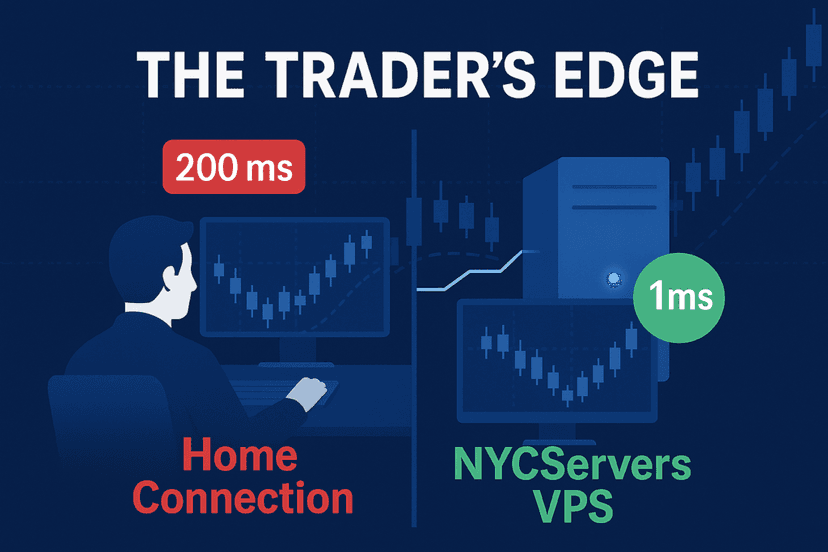
In fast-moving crypto markets, even 200-500ms of additional latency can mean a noticeably different entry price. This is especially true for scalping strategies and breakout trades where price moves quickly after entry.
Why VPS Hosting Improves Copy Trading Execution
If you’re running copy trading through API-connected bots, third-party trade copiers, or managing multiple exchange accounts simultaneously, a trading VPS eliminates the network latency variable. Instead of your orders routing through a home internet connection with 50-100ms+ latency and potential disconnections, a VPS co-located near exchange infrastructure delivers sub-millisecond connectivity.
This matters most when you’re:
- Running crypto bots on a VPS to mirror trades across multiple exchanges
- Using third-party copier software (like 3Commas or CryptoHopper) that connects via API
- Managing multiple copy trading accounts that need 24/7 uptime
- Following scalping or high-frequency lead traders where entry timing is critical
A VPS also guarantees 24/7 uptime. Home internet drops, power outages, and computer restarts don’t interrupt your copy trading. Your bots and connections stay live around the clock.

Risk Management: What to Configure Before You Start Copying
Copy trading isn’t autopilot. You need to set guard rails before allocating capital. Every platform offers different risk tools, but here are the essentials to configure.
Stop-Loss Per Trader
Set a maximum loss threshold for each lead trader you copy. If your allocated capital drops by this percentage, the platform automatically stops copying and closes all positions from that trader. A common starting point is 20-30% — aggressive enough to give strategies room to breathe, tight enough to prevent catastrophic losses.
Maximum Allocation Per Trader
Don’t put all your copy trading capital behind a single lead trader. Spread across 3-5 traders with different styles and asset focuses. Cap each trader at 20-30% of your total copy trading budget. If one trader blows up, you lose a portion, not everything.
Leverage Caps
Some lead traders use 20x or even 50x leverage. Even if their win rate is high, a single bad trade at 50x can wipe a significant chunk of your account. Most platforms let you cap the maximum leverage applied to your copied positions. Start at 5x or lower until you understand a trader’s style.
Daily Loss Limits
Available on Bitget and some other platforms, daily loss limits pause all copy trading if your account loses more than a set amount in a 24-hour period. This prevents cascade losses during flash crashes or extreme market events.
Common Copy Trading Mistakes to Avoid
The statistics aren’t great — research suggests 75-90% of traders face losses, and copy trading followers often underperform their lead traders. Here’s why, and how to avoid the traps.
Chasing High ROI Numbers
A lead trader showing 500% monthly returns is almost certainly using extreme leverage or took one lucky trade. Sort by consistency metrics instead — look for steady 5-15% monthly returns over 6+ months with controlled drawdowns under 20%.
Ignoring Drawdown History
A trader with 200% total returns sounds great until you see they had a 60% drawdown along the way. Would you have held through watching your $10,000 drop to $4,000? Review maximum drawdown and the drawdown recovery timeline before copying.
Over-Allocating to One Trader
Even the best lead traders have losing streaks. Diversify across multiple traders with different strategies — trend followers, mean reversion, swing traders, scalpers. Correlation between their returns should be low.
Not Monitoring Regularly
Copy trading reduces workload, but it’s not set-and-forget. Check your positions weekly. If a lead trader changes their style (suddenly switching from spot to high-leverage futures, for example), that’s a red flag to stop copying.
Underestimating Fee Impact
A lead trader’s published returns don’t account for the profit share and trading fees you’ll pay. A strategy showing 10% monthly returns might net you 6-7% after a 20% profit share and accumulated trading fees. Calculate your expected net return before committing.

How to Pick the Right Lead Trader
The platform you choose matters less than the traders you follow. Here’s a framework for evaluating lead traders beyond surface-level metrics.
Track Record Length
Ignore traders with less than 3 months of history. Look for at least 6 months, ideally across both bull and bear market conditions. A trader who only profited during a bull run may struggle or blow up during a downturn.
Win Rate vs Risk-Reward
A 90% win rate means nothing if the average loss is 10x the average win. Check the profit factor (total gross profit divided by total gross loss). Anything above 1.5 is solid. Above 2.0 is excellent.
Maximum Drawdown
Maximum drawdown tells you the worst peak-to-trough decline the trader has experienced. If you can’t stomach a 30% temporary loss, don’t follow a trader with a 30% historical drawdown — they’ll likely hit it again.
Follower Count and Capacity
Too many followers cause execution problems. When a trader opens a position and thousands of follower accounts try to execute simultaneously, slippage increases. Prefer traders with moderate follower counts relative to their capacity limit.
Asset Focus
Traders who specialize in a few assets usually outperform those who trade everything. A BTC/ETH specialist with deep knowledge of those markets is typically more reliable than someone trading 50 different altcoins.
Crypto Copy Trading vs Forex Copy Trading
If you’ve used copy trading in the forex world, crypto copy trading has some key differences worth noting.
| Factor | Forex Copy Trading | Crypto Copy Trading |
|---|---|---|
| Market Hours | 24/5 (closed weekends) | 24/7 (never closes) |
| Volatility | Lower (major pairs move 0.5-1% daily) | Higher (BTC can move 5-10%+ daily) |
| Leverage Available | Up to 500:1 on some platforms | Typically 1-125x |
| Regulation | Heavily regulated (FCA, ASIC, CySEC) | Less regulated, varies by jurisdiction |
| Execution | Tight spreads on majors | Fee-based (maker/taker) |
| Platform Integration | Often third-party (MT4/MT5) | Native exchange features |
The 24/7 nature of crypto markets makes uptime more critical. In forex, weekend downtime gives you a natural break. Crypto never stops — meaning your copy trading infrastructure needs to be running constantly. This is where a trading VPS with guaranteed uptime becomes essential rather than optional.
Volatility is the other major difference. A lead trader’s style that works in forex (where major pairs rarely move more than 1% daily) might be reckless in crypto where 5-10% daily swings are normal. Make sure any lead trader you copy has experience specifically in crypto markets.
Frequently Asked Questions
Is crypto copy trading profitable?
It can be, but results depend entirely on the lead traders you choose and your risk management settings. Data shows that most copy traders underperform their lead traders due to execution delays, fees, and profit sharing. Focus on consistent traders with moderate returns rather than chasing high-ROI outliers, and always factor fees into your expected net return.
How much money do I need to start crypto copy trading?
Most platforms let you start with $5-$10. BingX allows as little as $1. However, with very small amounts, fees and profit sharing eat a larger percentage of your returns. A practical minimum for copying 2-3 traders simultaneously is $50-$100 to allow meaningful diversification.
Can I lose more than I invest in copy trading?
On spot copy trading, no — the maximum loss is your investment going to zero. On futures copy trading with leverage, it’s possible to lose your entire allocated margin through liquidation, but you cannot lose more than your allocated amount on exchanges with isolated margin mode. Always use isolated margin and set stop-losses.
What’s the difference between copy trading and trading bots?
Copy trading mirrors a human trader’s decisions automatically. Trading bots execute trades based on coded algorithms or strategies. Copy trading relies on someone else’s judgment; bots rely on predefined rules. Some traders combine both — using bots for systematic strategies and copy trading for discretionary approaches.
Do I need a VPS for crypto copy trading?
If you’re using native exchange copy trading features, a VPS isn’t required — the exchange handles execution. However, if you’re running API-connected bots, third-party copier software, or managing multiple accounts across exchanges, a VPS ensures 24/7 uptime, lower latency, and more reliable execution. This matters especially for strategies where entry timing is critical.
How do I stop copy trading if a lead trader starts losing?
All platforms let you stop copying instantly with one click. Stopping copy trading immediately closes all open positions tied to that trader (or you can choose to keep existing positions open and only stop new trades). Set automated stop-loss and max drawdown thresholds so the platform handles this for you if losses reach your limit.
Is crypto copy trading legal?
Copy trading itself is legal in most jurisdictions. However, most major crypto exchanges offering copy trading (Bitget, Bybit, OKX, MEXC) operate offshore and may not be available to users in certain countries. In the US, Binance operates through Binance.US with limited copy trading features. Always check your local regulations before using any platform.
Getting the Infrastructure Right
Choosing the right platform is only half the equation. If you’re serious about copy trading — running bots, managing multiple accounts, or following high-frequency strategies — your infrastructure matters.
A trading VPS gives you 24/7 uptime, consistent low-latency connections, and eliminates the risk of missed trades from internet drops or computer restarts. Check our trading VPS plans to ensure your trading setup never misses a beat.
Start with the platform that matches your experience level and risk tolerance. Configure your risk controls before copying a single trade. And remember — the best copy traders aren’t the ones who find the highest-returning lead traders. They’re the ones who manage risk well enough to stay in the game long term.

About the author
Thomas Vasilyev
Writer & Full Time EA Developer
Tom is our associate writer, and has advanced knowledge with the technical side of things, like VPS management. Additionally Tom is a coder, and develops EAs and algorithms.
Areas of Expertise