

7 Best Forex Brokers for 2026: Compared
Compare the 7 best forex brokers for 2026 on regulation, spreads, platforms, and minimum deposits — picks for beginners, scalpers, and US traders.

The best forex broker depends on where you live and how you trade. IC Markets is our first pick for scalpers and EA users, Pepperstone is the strongest all-rounder, and OANDA or Forex.com are the practical choices for US spot-forex traders.
No broker wins every category. Compare the legal entity that will hold your account, then add the spread and commission together, confirm your platform is supported, and test execution before funding heavily. This 2026 shortlist does that comparison without treating a headline “0.0-pip” spread as the whole cost.
How We Picked the Best Forex Brokers
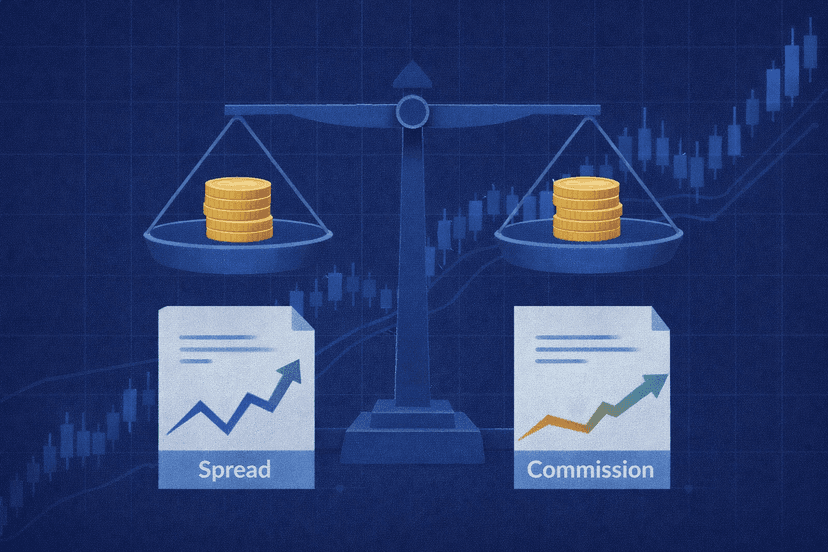
We evaluated these brokers on six practical criteria. Regulation came first because the protection you receive depends on the specific entity, not just the group’s best-known license. Trading cost came next, measured as spread plus commission rather than either number alone.
- Regulation: recognized authorities, clearly identified entities, and regional eligibility
- Total trading cost: variable spread plus any per-side or round-turn commission
- Accessibility: minimum-funding policy, onboarding, and account choice
- Platforms: MetaTrader, cTrader, TradingView, proprietary apps, and automation support
- Execution setup: raw-pricing options, server location, and suitability for EAs or scalping
- Trader fit: beginner usability, active-trader tools, market range, and US availability
Minimum deposits and available accounts can differ by country, payment method, and regulatory entity. Where the reviewed source did not publish a universal figure, the table says to confirm locally instead of presenting a potentially stale number.
7 Best Forex Brokers: Quick Comparison
| Broker | Best for | Key regulators | Minimum deposit | Flagship pricing model | Platforms |
|---|---|---|---|---|---|
| IC Markets | Scalpers and EAs | ASIC, CySEC, Seychelles FSA | Confirm by entity | Raw-spread accounts | MetaTrader and cTrader options |
| Pepperstone | Best all-rounder | ASIC, FCA, others | Confirm locally | Standard or Razor; Razor spreads from 0.0 pips | Pepperstone, MT4, MT5, TradingView, cTrader |
| OANDA | US beginners | NFA/CFTC in the US | No formal minimum | Spread-based FX pricing | OANDA web and mobile tools |
| Forex.com | US market access | NFA/CFTC; FCA in the UK | Confirm by region | Account and pricing vary by region | Forex.com platform options |
| IG | Broad global market range | FCA and other entities | Confirm by region | Spread-based pricing varies by market | IG platforms; tastytrade products in the US |
| Tickmill | Raw-account traders | FCA, CySEC, FSCA, Seychelles FSA | Confirm by entity | Classic or Raw | MT4, MT5, TradingView, Tickmill Trader |
| Exness | Commission-free Standard account | Seychelles FSA and other entities | Not stated on global account page | Standard spreads from 0.2 pips, no commission | MT4, MT5, Exness Terminal, Exness Trade app |
Spreads are variable and can widen with liquidity and volatility. “From” figures describe a possible starting point, not the price you will receive on every order.

1. IC Markets — Best for Scalpers and EAs
IC Markets is the strongest fit here for traders who care most about raw pricing, automation, and server proximity. Its execution setup is built around an order-matching engine hosted in Equinix NY4 in New York, making it a natural candidate for latency-sensitive EAs and scalping systems.
Key Specs
- Pricing model: raw-spread accounts aimed at active traders
- Execution infrastructure: order matching hosted in Equinix NY4
- Regulation: Raw Trading Ltd is regulated by the Seychelles FSA under license SD018; the group also operates ASIC- and CySEC-licensed entities
- Platforms: MetaTrader and cTrader account options
- Availability: does not accept residents of the US, Canada, or New Zealand
Strengths and Caveats
The main strength is alignment between the account model and the needs of frequent traders. A raw spread can make transaction costs easier to audit because the broker separates the market spread from commission. NY4 hosting also gives an EA trader a clear target when choosing where to run an IC Markets VPS.
Raw does not mean free, and ECN-style positioning does not guarantee every fill will match the displayed quote. Compare commission, average spread during your trading session, swap charges, and slippage. Also verify which IC Markets entity will onboard you: group-level ASIC or CySEC licensing does not mean every account sits under those regulators.
The geographic restrictions are decisive. US, Canadian, and New Zealand residents need another option in this list, regardless of how attractive the infrastructure looks.
Before moving an EA, run identical settings on a demo and then at small live size. Review fill prices, rejected orders, and costs in the platform history rather than judging execution from the server address alone. A nearby server can reduce network travel, but liquidity and order handling still determine the final fill. Record results over several sessions so one unusually quiet or volatile period does not decide the broker choice.
Best for: scalpers and EA users who can access IC Markets and want raw pricing with NY4-based execution infrastructure.

2. Pepperstone — Best All-Rounder
Pepperstone combines competitive active-trader pricing with the broadest platform choice in this shortlist. It works for manual chart traders, MetaTrader EA users, cTrader users, and people who prefer TradingView, without forcing every customer into a commission account.
Key Specs
- Accounts: Standard and Razor
- Standard pricing: costs built into the spread, with an approximate one-pip markup and no commission on most markets
- Razor pricing: FX spreads from 0.0 pips and XAU/USD from 0.1 pips; commission from $3.50 per lot per side
- Platforms: Pepperstone platform and app, MT4, MT5, TradingView, and cTrader
- Regulation: ASIC, FCA, and other regional entities
Strengths and Caveats
The platform range is Pepperstone’s clearest advantage. You can choose the interface and automation ecosystem that fits your workflow instead of choosing a broker solely to get a specific platform. The account split is also easy to understand: Standard favors simpler spread-only pricing, while Razor exposes raw spreads and adds commission.
Scale adds some reassurance but should not replace due diligence. Pepperstone reports more than 750,000 traders and roughly US$350 billion in monthly volume. Its account page also displays a warning that 79.6% of retail investor accounts lose money, a useful reminder that tight pricing does not remove leveraged-CFD risk.
The advertised spread is a starting point, not a fixed quote. Calculate the Razor commission on a round-turn basis and test spreads during the sessions and news windows you actually trade. US retail clients cannot use Pepperstone’s international retail offering, and protections vary with the onboarding entity.
Choose Standard or Razor using your expected trade frequency, not the word “commission-free.” A wider spread affects every entry and exit, while a separate Razor commission is easier to calculate. Compare both structures over a representative month of your strategy before deciding which account is cheaper. Include normal and event-driven sessions because spread behavior can change when liquidity thins.
Best for: non-US traders who want a strong balance of account choice, active-trader pricing, and five platform options.
3. OANDA — Best for US Beginners
OANDA is the most approachable US-regulated choice in this group. It combines NFA oversight, a broad set of 68 major and minor FX pairs, and no formal minimum deposit, so a new trader can start by testing the platform and position sizing without meeting a large funding threshold.
Key Specs
- US regulation: NFA-regulated and subject to CFTC retail-forex rules
- Forex range: 68 major and minor currency pairs
- Minimum deposit: no formal minimum
- US leverage limits: up to 50:1 on major pairs and 20:1 on non-majors under CFTC rules
- Positioning: beginner-friendly onboarding and proprietary web/mobile access
Strengths and Caveats
For a beginner, regulatory clarity and sizing flexibility matter more than a promotional leverage number. OANDA lets US residents work within domestic rules, while the absence of a formal deposit minimum reduces pressure to commit more money than a test plan requires. The 68-pair range is ample for traders focused on spot forex rather than a huge multi-asset catalog.
The trade-off is that US rules are intentionally restrictive. The 50:1 and 20:1 forex leverage caps are lower than leverage offered by some offshore entities, but they also limit how quickly an oversized position can consume margin. Traders moving from offshore marketing should treat that difference as a risk control, not a missing feature.
No formal minimum does not mean you should trade an underfunded account. Your deposit still needs to support sensible position sizes, drawdown, and margin requirements. Check live spreads on the pairs and hours you trade before choosing OANDA purely for accessibility.
Begin with one or two liquid pairs rather than using all 68 immediately. That keeps spread behavior, position sizing, and scheduled-event risk easier to observe. Once the process is consistent, add pairs only when they serve a defined strategy rather than because they appear in the catalog. This narrower scope also makes journaling cleaner and exposes whether execution remains consistent.
Best for: US beginners who want domestic regulatory oversight, flexible initial funding, and a focused forex offering.

4. Forex.com — Best Established US Forex Brand
Forex.com is the other direct US-focused choice on this list. The brand launched in 2004 and is operated by GAIN Capital, a subsidiary of publicly traded StoneX Group. That structure suits traders who value an established US business and access through a company tied to a listed financial-services group.
Key Specs
- Operator: GAIN Capital, part of StoneX Group
- Public company: StoneX Group trades on Nasdaq under SNEX
- History: Forex.com launched in 2004
- US base: headquartered in Warren, New Jersey
- Regulation: NFA/CFTC in the US, with an FCA-regulated UK presence
Strengths and Caveats
The strongest case for Forex.com is straightforward: it is a recognizable spot-forex broker available to US retail traders. Its StoneX ownership gives you a clear corporate parent, and its history is longer than many online-only brands. That makes it a sensible benchmark when comparing domestic account terms.
Corporate scale does not decide whether the account is economical for your strategy. Compare live spread, any commission-bearing account, financing charges, data or platform terms, and order quality using the exact US or UK entity you will join. Product ranges and protections are not interchangeable across regions.
US traders also face the same CFTC leverage framework discussed above. If your strategy was designed around much higher offshore leverage, reduce position assumptions rather than forcing the model onto a domestic account. Beginners should use a demo and small live trades to evaluate the platform before scaling.
The useful comparison is against another US account under the same rules. Price the same pair, trade size, and holding period at Forex.com and OANDA, then compare platform workflow and live fills. This controls for jurisdiction and shows whether the StoneX-backed option actually suits your routine. Repeat the sample across normal and volatile sessions before drawing a conclusion.
Best for: US forex traders who want an established domestic brand backed by a publicly traded financial-services group.
5. IG — Best for Broad Global Market Access
IG stands out for scale and market breadth rather than a single raw-spread account. Founded in 1974, the London-headquartered group is FCA-regulated, listed on the London Stock Exchange, and part of the FTSE 100. It is the most established listed company in this comparison.
Key Specs
- Founded: 1974
- Headquarters: London
- Regulation and listing: FCA-regulated, LSE-listed, and a FTSE 100 constituent
- Market range: approximately 19,000 markets
- Scale: approximately 820,000 active clients at the end of FY2025, including Freetrade
Strengths and Caveats
IG makes sense when forex is one part of a broader multi-market workflow. Its roughly 19,000-market catalog gives eligible clients room to trade beyond currency pairs without opening a separate platform for every asset class. Long operating history, FCA oversight, and public reporting also make the corporate structure easier to examine.
That breadth can be unnecessary if you only run a few currency-pair EAs and care primarily about raw commission pricing. Compare the exact FX account available in your country rather than assuming the full group catalog applies to you. Account terms, leverage, and instruments change by entity.
US access needs careful wording. IG’s US subsidiary is tastytrade, whose offering centers on options, futures, and crypto rather than the same retail spot-forex or CFD service available in other countries. US readers seeking direct spot forex should compare OANDA and Forex.com first.
Market breadth is useful only if your account setup remains manageable. Build focused watchlists, confirm the trading hours and cost model for each instrument, and avoid assuming that conditions on a currency pair carry over to an index or share. IG rewards traders who value one broad ecosystem more than raw-FX specialization. That discipline keeps a large catalog from becoming an excuse for unfocused trading.
Best for: eligible non-US traders who want an established, FCA-regulated group with access to a very broad range of markets.
6. Tickmill — Best Low-Cost Raw Account Alternative
Tickmill is a practical alternative to IC Markets and Pepperstone for traders who want a simple Classic-versus-Raw account choice. Its platform lineup now spans MetaTrader, TradingView, and Tickmill’s own trader interface, while its multi-entity structure gives eligible clients several regulatory jurisdictions.
Key Specs
- Accounts: Classic and Raw
- Platforms: MT4, MT5, TradingView, and Tickmill Trader
- UK entity: Tickmill UK is FCA-regulated
- Other entities: Tickmill Europe is CySEC-regulated, Tickmill South Africa is FSCA-regulated, and Tickmill Ltd is regulated by the Seychelles FSA
- Automation support: Tickmill offers a VPS option
Strengths and Caveats
The Raw account gives frequent traders the pricing structure they expect, while the Classic account keeps the choice simpler for less active users. TradingView support broadens the manual-charting workflow, and MT4/MT5 preserve compatibility for traders already using MetaTrader indicators or EAs.
The regulation list is meaningful only after you identify your contracting company. An FCA-regulated UK entity and a Seychelles FSA entity do not provide identical leverage rules or client protections. Confirm the legal entity on the application and verify its license in the regulator’s register before depositing.
Tickmill is not a US retail option. Active traders should also obtain current Raw commission and average-spread data for their account currency rather than relying on the word “Raw.” If you run an EA, test the broker’s live execution and compare the server location with your hosting location.
Platform choice should follow the strategy. TradingView suits chart-led manual workflows, while MT4 or MT5 is the relevant path for MetaTrader automation. Tickmill’s VPS offering is worth comparing, but confirm location, resource limits, and qualification terms independently from the trading account. Test the chosen stack on demo first, then reproduce it at small live size before migrating production EAs. Document terminal stability and reconnect behavior during the trial as well.
Best for: non-US MetaTrader or TradingView users who want a straightforward Raw account and multiple regulated entities to evaluate.
7. Exness — Best Commission-Free Standard Account
Exness replaces XM in this roundup because XM’s official pages could not be verified from our research environment. Exness’s live global account and regulation pages were accessible, allowing its current Standard pricing and operating entity to be checked directly instead of repeating third-party numbers.
Key Specs
- Standard account: spreads from 0.2 pips
- Commission: no commission on the Standard account
- Platforms: MT4, MT5, Exness Terminal, MetaTrader WebTerminal, and the Exness Trade app
- Global entity: Exness (SC) Ltd is authorized by the Seychelles FSA under license SD025
- Minimum deposit: no universal figure was displayed on the verified global Standard account page
Strengths and Caveats
The Standard account is easy to cost at a glance because there is no separate commission and the published spread starts from 0.2 pips. The mix of desktop, web, and mobile platforms also works for traders who want MetaTrader compatibility without giving up a browser terminal or broker app.
The caveat is regulatory and regional. The verified global page identifies Exness (SC) Ltd under Seychelles FSA license SD025 and says that entity serves selected jurisdictions outside the European Economic Area. Offshore oversight is not equivalent to an FCA-, ASIC-, or US-regulated retail account, so confirm your entity and available protections.
Do not treat the 0.2-pip figure as a constant spread, and do not rely on an unverified low-deposit claim. Exness states that spreads can widen with volatility, liquidity, news, and market openings or closings. Check the minimum for your payment method and country during registration. It is not a direct US retail-forex choice.
A commission-free account still embeds trading cost in the spread. Compare the Standard account’s observed spread with raw-plus-commission alternatives at the same time of day. That test is more useful than comparing each broker’s best advertised starting figure. Use several sessions so a single tight quote does not skew the result.
Best for: eligible non-US traders who want a verified commission-free Standard account with MetaTrader, web, and mobile access.
How to Choose the Right Forex Broker for You
Start with jurisdiction, then narrow the list by trading style. A broker you cannot legally use is not a candidate, and a famous group license is irrelevant if your account is opened under a different entity.
- For a beginner: OANDA is the clearest US pick because it has no formal minimum and works under domestic rules. Outside the US, compare Pepperstone’s Standard account and Exness’s commission-free Standard account, then choose the stronger local entity.
- For scalping or EAs: start with IC Markets, Pepperstone Razor, or Tickmill Raw. Add average spread and round-turn commission, then test slippage and execution during your real trading hours.
- For a US resident: compare OANDA and Forex.com for direct retail spot forex. Treat tastytrade as a different US product route, not a substitute for IG’s international spot-FX or CFD account.
- For broad market access: IG is the standout with approximately 19,000 markets, provided its local product set includes what you need.
- For limited starting capital: do not choose by deposit minimum alone. OANDA has no formal minimum; elsewhere, verify the local requirement and make sure your balance supports conservative sizing.
A forex VPS becomes relevant when an EA must run continuously or when latency to the broker’s server affects execution. Match the VPS location to the broker’s infrastructure, measure the connection, and keep platform restarts and updates controlled. Hosting improves availability and routing; it cannot repair a strategy that loses after spreads, commission, and slippage.
Forex Broker FAQ
Which is the best forex broker overall?
Pepperstone is the best all-rounder because it combines Standard and Razor pricing with five platform options. IC Markets is the stronger specialist for eligible scalpers and EA users, while OANDA or Forex.com make more sense for US spot-forex traders.
How do I check whether a forex broker is regulated?
Find the legal company name and license number in the account agreement or website footer, then search that exact company in the regulator’s official register. Do not stop at a group-level claim such as “FCA regulated” if your contract names an offshore subsidiary.
Does a 0.0-pip spread mean a broker is cheapest?
No. A raw account may add commission on each side of the trade, and spreads are variable. Compare the average spread plus round-turn commission, then include financing charges and observed slippage for your strategy.
Which forex brokers accept US retail traders?
OANDA and Forex.com are the direct US retail spot-forex choices in this comparison. IC Markets, Pepperstone, Tickmill, and Exness are not US retail options. IG’s US subsidiary tastytrade offers a different mix centered on options, futures, and crypto rather than IG’s international retail spot-forex or CFD service.
Do I need a VPS to trade forex?
Not for occasional manual trading. A VPS is useful when you run an EA around the clock, need the platform online while your computer is off, or want to place the terminal closer to the broker’s server. Measure latency and reliability before assuming a VPS will improve fills.

About the author
Matthew Hinkle
Lead Writer & Full Time Retail Trader
Matthew is NYCServers' lead writer. In addition to being passionate about forex trading, he is also an active trader himself. Matt has advanced knowledge of useful indicators, trading systems, and analysis.
Areas of Expertise