
AI Agents in Prediction Markets: How Bots Beat Humans
AI agents now dominate prediction markets. Learn how trading bots outperform humans on Polymarket and Kalshi using arbitrage, LLMs, and 24/7 automation.
AI Agents Are Taking Over Prediction Markets
Prediction markets processed over $44 billion in trading volume in 2025. That number alone tells you the space has matured beyond niche speculation. But a deeper look at the data reveals something more telling: the traders making money aren’t humans.
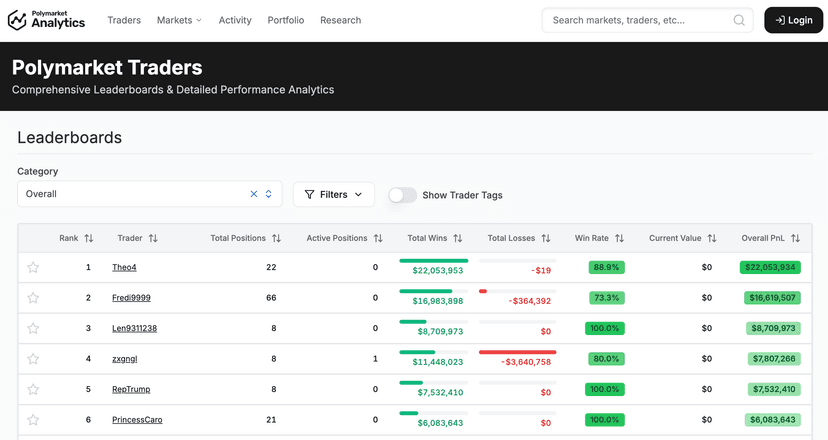
A review of Polymarket’s public leaderboard found that 14 of the 20 most profitable wallets are bots. AI agents now represent over 30% of wallet activity on the platform, and more than 37% of those agents report positive profit and loss. Compare that to human traders, where only 7% to 13% consistently turn a profit.
The gap isn’t subtle. It’s structural. And it’s widening every month as autonomous agents get faster, smarter, and cheaper to deploy.
This article breaks down exactly how AI agents are reshaping prediction market trading in 2026, the strategies they use, the platforms they operate on, and what human traders can do to stay competitive.
What Are AI Agents in Prediction Markets?
An AI agent in the prediction market context is an autonomous software system that analyzes data, forms probability estimates about real-world events, and executes trades without human intervention. Unlike traditional trading bots that follow rigid if-then rules, AI agents use machine learning models, large language models (LLMs), and natural language processing to interpret complex information streams and adapt their strategies in real time.
Think of the difference this way: a traditional bot might buy “Yes” on a contract whenever the price drops below $0.40. An AI agent reads breaking news about a Federal Reserve announcement, cross-references it with economic data from multiple sources, estimates the probability shift for related markets, and places trades across several contracts simultaneously — all within seconds.
The architecture of a typical prediction market AI agent includes four layers:
- Data ingestion — Pulls from news APIs, social media feeds, polling databases, economic calendars, and live market data from platforms like Polymarket and Kalshi.
- Inference — Runs probability models using LLMs, Bayesian networks, or ensemble methods to estimate true outcome likelihoods.
- Decision logic — Compares estimated probabilities against current market prices and determines position sizing based on edge and risk parameters.
- Execution — Places orders through platform APIs, manages positions, and handles settlement automatically.
The most advanced agents combine all four layers into a continuous loop, running 24/7 and monitoring hundreds of markets simultaneously.
How Bots Are Outperforming Humans
The data is clear: AI agents hold a measurable edge over human traders in prediction markets. But the reasons behind that edge might surprise you. Most bots don’t win by making better predictions. They win by exploiting market structure.
Speed and Latency Arbitrage
The most profitable bot strategy in prediction markets is latency arbitrage. When news breaks or prices shift on external exchanges, there’s a brief window — sometimes just milliseconds — before prediction market prices update. Bots that react faster capture the spread.
One well-documented example: wallet 0x8dxd reportedly turned roughly $300 into more than $400,000 within a single month by trading ultra-short 15-minute BTC, ETH, and SOL prediction contracts. The bot didn’t forecast price movements better than humans. It simply reacted faster, exploiting latency between Polymarket’s order book and real-time prices on exchanges like Binance and Coinbase.
Research from IMDEA Networks Institute estimates that arbitrage traders extracted roughly $40 million from Polymarket between April 2024 and April 2025. The advantage was pure execution speed, not predictive accuracy.
Structural Arbitrage Across Platforms
Prediction markets often price the same event differently across platforms. A political outcome might trade at $0.62 on Polymarket and $0.55 on Kalshi. Bots monitor these discrepancies continuously and execute trades on both sides when the gap exceeds transaction costs, locking in risk-free profit regardless of the actual outcome.
Cross-platform arbitrage also works within a single platform. If “Yes” and “No” contracts on the same event briefly sum to less than $1.00, a bot can buy both sides and guarantee a profit at settlement. These windows exist for fractions of a second — far too brief for manual trading.
24/7 Market Coverage
Prediction markets never close. Events resolve around the clock — economic data releases at 8:30 AM ET, political developments at midnight, sports results on weekends. Human traders sleep. Bots don’t.
This constant coverage matters most for breaking news events. When unexpected developments hit, the first traders to react capture the largest price movements. An AI agent monitoring news feeds at 3 AM will trade an overnight development before any human trader even sees the headline.
Emotion-Free Execution
Human traders panic sell during volatility, hold losing positions too long, and chase winners after the edge has disappeared. AI agents follow their programmed risk parameters without deviation. They take every trade that meets their criteria and skip every trade that doesn’t, regardless of recent results or market sentiment.
This consistency compounds over thousands of trades. Even a small edge — a 2% to 3% advantage per trade — generates substantial returns when executed reliably across 8,000 or more transactions. If you’re still getting started, our prediction market strategies guide for beginners walks through the fundamentals before diving into automation.
Types of AI Agents in Prediction Markets
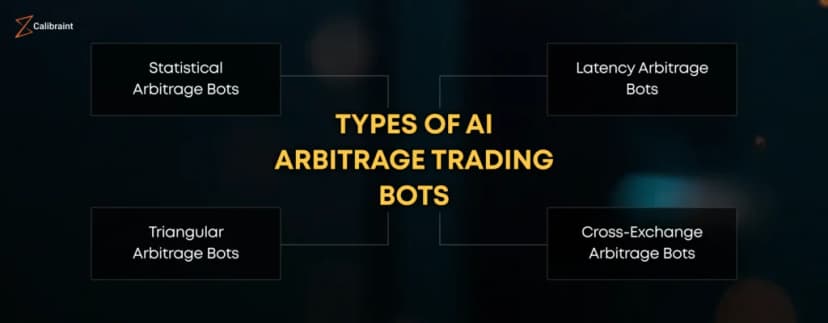
Not all prediction market bots work the same way. The ecosystem has developed distinct agent categories, each targeting different profit opportunities.
Arbitrage Bots
These agents scan prices across Polymarket, Kalshi, and other platforms continuously. When pricing inconsistencies exceed fees, they execute offsetting trades on both venues. Arbitrage bots help keep prices aligned across platforms while extracting profit from temporary discrepancies. They require minimal prediction capability but demand extremely low latency and reliable connectivity.
News-Reactive Agents
News-reactive agents monitor live data streams — news APIs, social media feeds, government press releases, and economic data services. When relevant information breaks, they estimate the impact on specific prediction markets and trade before manual participants can react. A well-built news agent might process an FOMC rate decision and trade related Fed rate contracts within seconds of the announcement.
LLM-Powered Prediction Agents
The newest category uses large language models as the core intelligence layer. These agents prompt frontier LLMs like GPT-4, Claude, or Grok with market context, news summaries, and historical data to generate probability estimates. Some architectures use multi-model ensembles — multiple LLMs debate each trade, and the system only enters when they reach consensus.
One notable example: a Kalshi AI trading bot on GitHub uses Grok-4 integration with five frontier LLMs debating every trade through a multi-agent decision-making framework. The system only enters positions when the models agree, adding a layer of consensus-based risk management.
David Minarsch, CEO of Valory AG (the team behind the Olas protocol), notes that “simply prompting off-the-shelf models with markets usually results in outcomes no better than a coin-flip.” But state-of-the-art models wrapped in custom workflows have shown predictive accuracy up to 70% and higher.
Market-Making Bots
Market makers provide liquidity by continuously quoting bids and asks across multiple prediction markets. They profit from the spread between buy and sell prices. AI helps these bots adjust quotes dynamically based on order flow patterns, breaking news, and cross-market signals. Market makers don’t need to predict outcomes — they need to manage inventory risk and maintain balanced exposure on both sides of every contract.
Sentiment Analysis Agents
These bots analyze social media, Reddit, and X (formerly Twitter) for sentiment shifts related to specific prediction markets. They trade on crowd psychology before sentiment changes are reflected in market prices. While less reliable than arbitrage strategies, sentiment agents can capture significant moves during viral news events or social media-driven speculation.
Real-World AI Agents: Who’s Leading
Several platforms and agents have emerged as leaders in the AI prediction market space during 2026.
Polystrat by Olas
Polystrat is an autonomous trading agent built on the Olas protocol, launched on Polymarket in early 2026. Unlike script-based bots, Polystrat uses natural language processing to let users set high-level goals in plain text. The agent then autonomously selects markets across sports, politics, and economics using live data and on-chain liquidity.
Within its first month, Polystrat executed over 4,200 trades with single-trade returns as high as 376%. Its agents achieve win rates between 59% and 64% in technology-specific markets. Across the fleet, over 37% of Polystrat agents report positive P&L — roughly two to three times the success rate of human traders on the same platform.
Polystrat runs locally via Pearl using self-custodial Safe accounts, meaning users retain full control of their funds while the agent operates autonomously within user-granted permissions.
Polymarket Agents Framework
Polymarket’s official AI agent toolkit provides the foundation for building autonomous trading agents. The framework handles infrastructure — API connections, order management, and position tracking — so developers can focus on the intelligence layer. It’s open-source and designed for customization, making it the starting point for many custom agent builds.
Predly.ai
Predly uses artificial intelligence to identify mispriced markets on both Polymarket and Kalshi. The platform claims 89% accuracy on its alerts, serving traders who prefer AI-assisted decision-making over fully autonomous execution. It bridges the gap between manual trading and full automation.
ArbBets
ArbBets focuses specifically on arbitrage opportunities. Its tools include an Arbitrage Finder that scans for price discrepancies across prediction markets and traditional sportsbooks, plus a Positive Expected Value Locator that highlights opportunities where true outcome probability exceeds implied market odds.
What Human Traders Can Still Do
The rise of AI agents doesn’t mean human traders are finished. But competing successfully requires understanding where humans still hold an advantage.
Long-Dated Markets
Bot dominance is concentrated in short-duration contracts — 15-minute crypto price predictions, same-day resolutions, and high-frequency arbitrage opportunities. Longer-dated markets like elections, policy decisions, and multi-month outcomes still reward patient analysis and domain expertise over raw speed.
Domain Expertise and Local Knowledge
AI agents excel at processing publicly available data. They struggle with information that hasn’t been digitized or widely reported. A human trader with deep expertise in a specific niche — local politics, niche sports, specialized industries — can identify mispricings that AI models miss because the relevant data doesn’t exist in their training sets or live feeds.
Novel Information Sources
On-the-ground observations, professional networks, and primary research remain human advantages. If you attend a campaign rally and observe unexpectedly low turnout, that information reaches you before any news API captures it. Prediction markets are ultimately about information asymmetry, and humans can still generate unique insights through direct experience.
Contrarian Positioning
When AI agents converge on the same data and models, they tend to push prices in the same direction simultaneously. This creates overcrowding in popular trades and potential mispricings in the opposite direction. Humans who recognize AI-driven momentum can take contrarian positions that exploit algorithmic herding behavior.

The VPS Advantage: Running AI Agents Around the Clock
Whether you’re deploying a custom AI agent, running an arbitrage bot, or using a framework like Polymarket Agents, one thing is non-negotiable: your system needs to run 24/7 with minimal latency and zero downtime.
Home internet connections introduce unacceptable risks for automated trading. A dropped WiFi connection during a critical news event, a power outage during overnight trading, or a routine ISP maintenance window can all translate directly into missed opportunities or, worse, unmanaged open positions.
Running your prediction market AI agent on a cloud virtual private server service, like a Polymarket VPS solves these problems. A VPS hosted in a data center provides:
- 100% uptime during trading hours — Enterprise-grade power and networking redundancy
- Low-latency connections — Data center proximity to exchange servers means faster order execution
- Scalable resources — Start with 2 CPU cores and 2GB RAM for a single bot, scale up as you add agents
- Remote monitoring — Check and manage your agents from anywhere via remote desktop
AI agents that use LLM inference layers are particularly resource-intensive. They need consistent CPU and RAM availability for model queries, stable network connections for API calls to both AI services and prediction market platforms, and reliable storage for trade logs and model data. A VPS provides all of this without the variability of residential hardware.
For traders running arbitrage strategies, latency matters even more. The difference between executing an arbitrage trade in 50 milliseconds versus 500 milliseconds can determine whether you capture the spread or miss it entirely. Data center networking delivers the consistent, low-latency performance these strategies demand.
The Future of AI in Prediction Markets
The trajectory is clear: AI agents will continue to claim a larger share of prediction market volume. Several trends are already shaping the next phase of this evolution.
The ecosystem around AI agents is maturing rapidly. Whale-tracking tools, mispricing detection platforms, arbitrage scanners, and institutional-style trading terminals are emerging — essentially replicating the algorithmic trading infrastructure that already underpins forex and crypto markets.
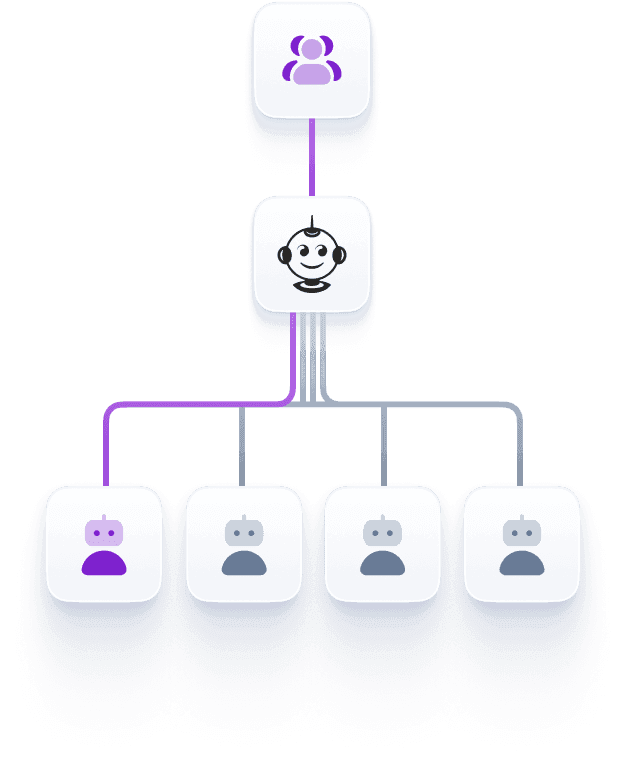
Multi-agent systems represent the next frontier. Rather than a single bot trading independently, teams of specialized agents can collaborate — one monitoring news, another tracking sentiment, a third managing execution, and a fourth handling risk. The Olas protocol is already building this kind of cooperative agent architecture.
Regulatory attention is inevitable. The CFTC is already reviewing prediction market frameworks, and the growing presence of automated trading will likely accelerate regulatory scrutiny. Kalshi’s status as the only CFTC-regulated prediction market exchange gives it a structural advantage as compliance requirements tighten.
For individual traders, the message is straightforward: the prediction market landscape increasingly favors those who combine analytical skill with reliable infrastructure and automation tools. Whether you build your own agent, deploy an existing framework, or use AI-assisted tools to inform manual trades, the edge belongs to traders who treat prediction markets as a serious technical discipline. Explore our trading VPS plans to run your AI agents with the uptime and latency they need.
Frequently Asked Questions
What is an AI agent in prediction markets?
An AI agent is an autonomous software system that analyzes data, forms probability estimates about real-world events, and executes trades on prediction market platforms like Polymarket and Kalshi without human intervention. Unlike rule-based bots, AI agents use machine learning and large language models to adapt their strategies based on new information.
Are bots actually allowed on prediction markets?
Yes. Both Polymarket and Kalshi provide official APIs specifically designed for programmatic trading. Polymarket even offers an open-source AI agent framework. Automated trading is not only permitted but actively facilitated by these platforms, as bots provide liquidity and help keep prices efficient.
How much money are AI agents making on prediction markets?
Results vary significantly by strategy and implementation. Arbitrage traders extracted an estimated $40 million from Polymarket structural inefficiencies between April 2024 and April 2025. Individual examples include a wallet that turned $300 into $400,000 in one month through latency arbitrage on short-duration crypto contracts. However, not all agents are profitable — about 37% of AI agents report positive P&L versus 7% to 13% for human traders.
Do I need to code to use prediction market AI agents?
Not necessarily. Platforms like Polystrat by Olas offer no-code autonomous agents that you can configure using natural language through the Pearl application. For more control, tools like Predly.ai provide AI-generated alerts without requiring you to build or run your own bot. Custom agent development does require programming skills, typically Python.
Can human traders still compete with AI agents?
Yes, but the playing field has shifted. Humans maintain advantages in longer-dated markets where domain expertise matters, in niche markets where relevant data hasn’t been digitized, and in contrarian positioning when AI agents converge on crowded trades. Short-duration and high-frequency markets are increasingly dominated by automated systems.
What hardware do I need to run a prediction market AI agent?
At minimum, you need a system with 2 CPU cores, 2GB of RAM, and a stable internet connection. More sophisticated agents using LLM inference or monitoring multiple markets simultaneously may need 4+ CPU cores and 8GB+ RAM. A dedicated VPS is strongly recommended over home hardware for the 24/7 uptime, low latency, and reliability that automated trading demands.
What’s the difference between a trading bot and an AI agent?
A traditional trading bot follows predefined rules — buy when price drops below X, sell when it rises above Y. An AI agent uses machine learning models to make autonomous decisions based on complex data analysis. AI agents can interpret news, adjust probability estimates, and adapt strategies dynamically, while traditional bots execute the same logic regardless of changing market conditions.

About the author
Matthew Hinkle
Lead Writer & Full Time Retail Trader
Matthew is NYCServers' lead writer. In addition to being passionate about forex trading, he is also an active trader himself. Matt has advanced knowledge of useful indicators, trading systems, and analysis.
Areas of Expertise