
A-Book vs B-Book Forex Brokers: How Execution Affects Fills
A-Book vs B-Book forex brokers explained: how STP/ECN and dealing-desk models route orders, affect slippage and your fills, and how to identify each one.
A-Book vs B-Book Brokers at a Glance
When traders compare A-Book vs B-Book brokers, they are really asking one question: does my broker want me to win or lose? The answer is more nuanced than most forums suggest. The A-Book and B-Book labels describe how a broker handles your order once you click buy or sell — whether it passes your trade out to the wider market or takes the other side of it in-house. That single routing decision shapes your spreads, your commission, your slippage, and even how your fills behave during high-impact news.
Quick verdict: neither model is inherently honest or dishonest. An A-Book broker routes your orders to external liquidity providers and earns from commission or a small spread markup, which broadly aligns its incentives with yours. A B-Book broker internalizes your trade and becomes your direct counterparty, which creates a potential conflict of interest but is also a legitimate, widely used, and often necessary way to fill retail-sized orders. The bottom line is that the model matters less than the broker’s regulation, transparency, and how well its execution holds up under pressure. This guide explains both models fairly, shows how each one affects your fills, and gives you a practical way to tell which one you are actually trading with.
What an A-Book Broker Is (STP, ECN, DMA)
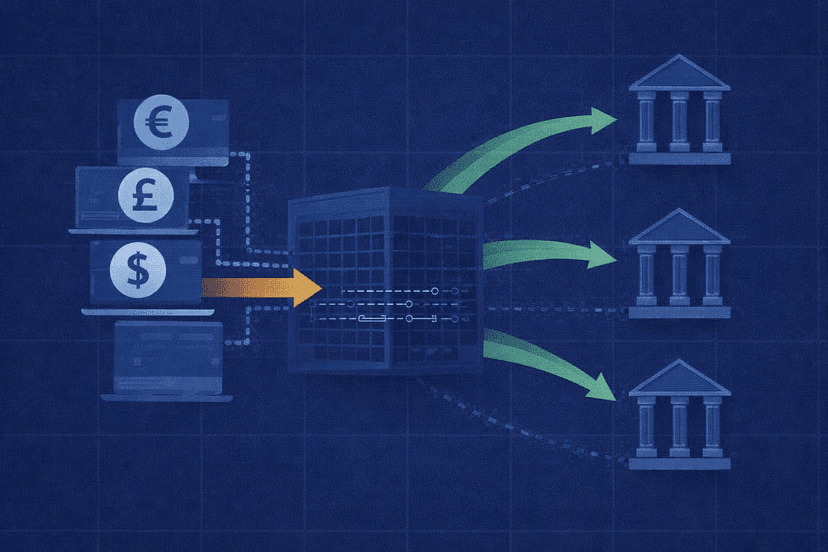
An A-Book broker passes your orders through to the real market. When you open a position, the broker offsets it with one of its liquidity providers — typically banks, non-bank market makers, or an aggregated liquidity pool. Your broker is not on the other side of your trade; it is a conduit between you and the people actually quoting prices. Because the broker profits whether you win or lose, its revenue comes from a transparent commission per lot or a small markup added to the raw spread, not from your losses.
You will usually see A-Book execution marketed under three overlapping acronyms:
- STP (Straight Through Processing): orders are routed automatically to one or more liquidity providers without a dealing desk intervening.
- ECN (Electronic Communication Network): orders interact within a shared network of participants, so you can sometimes trade against other clients’ resting orders and see genuine depth-of-market.
- DMA (Direct Market Access): your order is placed directly onto a liquidity provider’s book at the price they are quoting, with the broker adding a commission on top.
The practical hallmark of an A-Book account is the pricing structure: raw or near-raw spreads that can touch 0.0 pips on major pairs, paired with a fixed commission such as a few dollars per lot per side. That commission is the tell. A broker only charges an explicit commission when it is not relying on the spread — or your losses — to make money. If you want to dig into how raw-spread pricing compares across firms, our roundup of the best forex ECN brokers breaks down the commission-plus-raw-spread model in detail.
What a B-Book Broker Is (Dealing Desk / Market Maker)
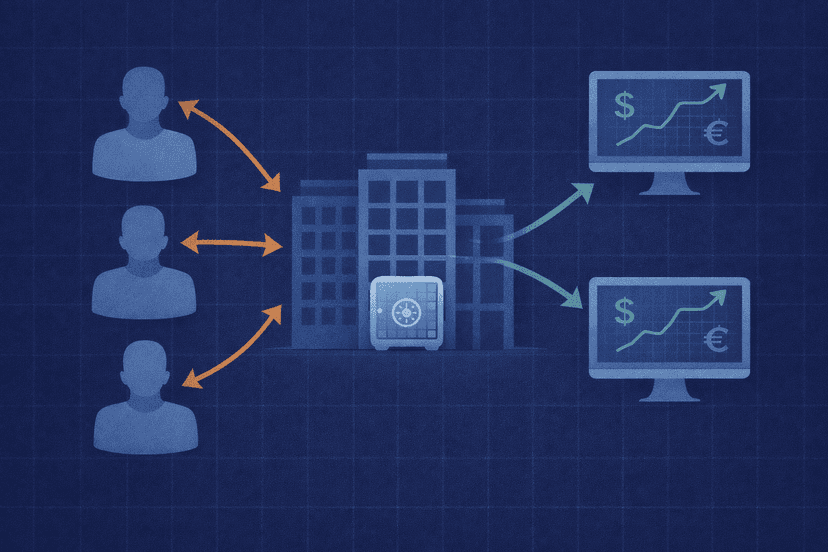
A B-Book broker keeps your trade in-house. Instead of passing your order to an external provider, the broker takes the opposite side itself — you buy, it sells; you sell, it buys. In industry terms this is a dealing desk or market maker model, and the broker quotes you a price it is willing to trade at rather than simply relaying an external one. Its profit and loss is the mirror image of yours: when the pool of B-Book clients loses, the broker gains, and when they win, the broker pays out from its own book.
This is where the conflict-of-interest reputation comes from, and it is a fair concern to name. But it is important to be accurate rather than alarmist. Market making is a legitimate and heavily regulated business model used by some of the largest brokers in the world. Retail order flow is small, frequent, and often uncorrelated, so a well-run B-Book desk can net client positions against each other and hedge the residual exposure in the real market. For tiny orders that no bank wants to quote individually, internalization is frequently the only way to deliver an instant fill at a tight spread.
B-Book brokers typically make money from the spread they quote rather than a separate commission, which is why their accounts often advertise “zero commission” with slightly wider spreads. That is not a trick — it is simply a different way of packaging the cost. The legitimate risk to watch for is not that a B-Book exists, but that a poorly regulated one has an incentive to worsen your execution. That is a real distinction, and the sections below show you how to evaluate it factually.
Hybrid A/B Routing and Client Segmentation
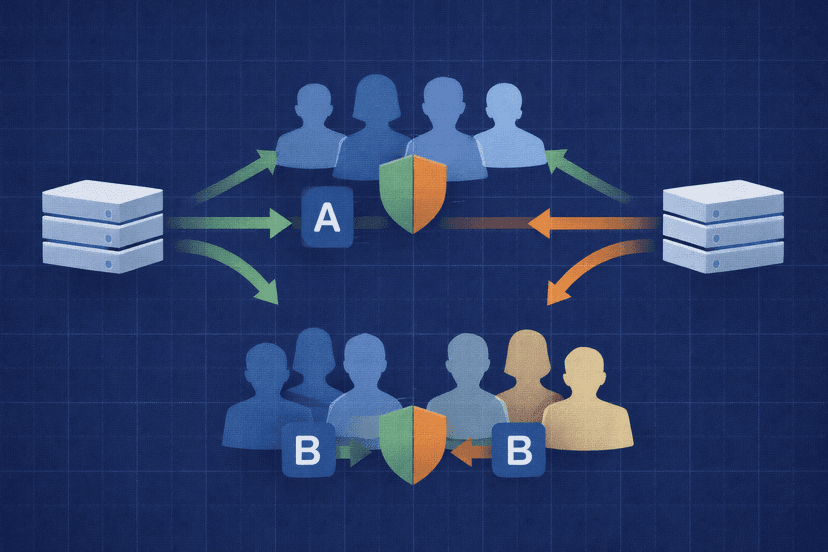
In practice, the pure A-Book versus pure B-Book split is a simplification. Most sizeable brokers run a hybrid model, routing different clients — and even different trades from the same client — down different paths based on risk. This is called client segmentation, and it is a normal part of risk management rather than a scandal.
The logic is straightforward. Consistently profitable, high-skill traders are expensive to keep on the B-Book because the broker is paying their winnings out of its own pocket, so those clients get A-Booked and routed to real liquidity. Clients who tend to lose over time — statistically the majority of short-term retail traders — may be internalized on the B-Book, where the broker keeps the spread and absorbs the net position. A broker’s risk engine can move an account between books automatically as its trading behavior changes.
Segmentation is legal and disclosed in the fine print of most regulated brokers’ terms. What matters to you is the execution you actually receive, not which internal bucket you sit in. A broker that segments intelligently can still deliver excellent fills to every client; the danger only appears when internalization is paired with weak oversight and manipulative practices, which regulation is designed to prevent.
The Comparison Criteria That Actually Matter
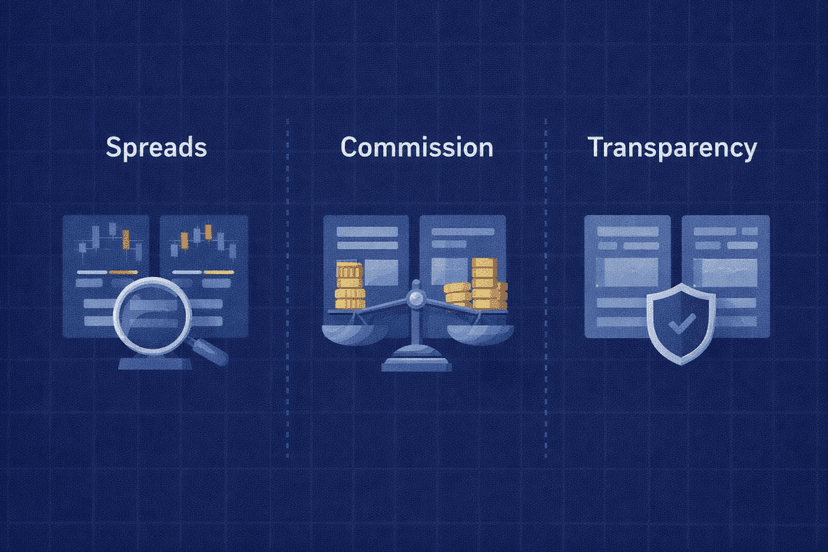
To compare the two execution models fairly, you need to look past the marketing and focus on the dimensions that change your bottom line. Here are the criteria that separate an A-Book setup from a B-Book one:
- Order routing: is your trade passed to external liquidity or filled internally?
- Counterparty: are you trading against the market, or against the broker itself?
- Conflict of interest: does the broker profit when you lose, or only from fees and spread?
- Typical spreads and commission: raw spreads plus a visible commission, or wider all-in spreads with none?
- Slippage and requote behavior: how do fills behave in fast markets and around news?
- Transparency: how clearly does the broker disclose its model, regulation, and execution statistics?
- Best-fit trader: which style of trader is each model actually built for?
Spread cost is where many traders start, so if you are weighing all-in pricing across accounts it is worth reading our guide to the lowest-spread forex brokers alongside this comparison, and our primer on understanding forex spreads if the raw-versus-marked-up distinction is new to you.
A-Book vs B-Book: Side-by-Side Comparison
The table below puts both execution models next to each other across the criteria that affect your fills. Read it as a description of tendencies, not absolutes — a well-run broker of either type can outperform a poorly run one.
| Criteria | A-Book (STP / ECN / DMA) | B-Book (Dealing Desk / Market Maker) |
|---|---|---|
| Order routing | Passed through to external liquidity providers | Internalized; filled on the broker’s own book |
| Counterparty | The market / liquidity providers | The broker itself |
| Conflict of interest | Low; broker earns regardless of your result | Present; broker gains when clients net lose, mitigated by regulation and hedging |
| Revenue model | Commission per lot plus small spread markup | Mostly the spread it quotes; often “zero commission” |
| Typical spreads | Raw, from 0.0 pips, plus commission | Wider all-in spreads, no separate commission |
| Slippage / requotes | Real market slippage (both directions); requotes rare | Fills can be smoother in calm markets; execution quality depends on the desk |
| Transparency | Often publishes depth-of-market and execution stats | Pricing is broker-quoted; disclosure varies |
| Best-fit trader | Scalpers, high-volume, news and algo traders | Beginners and low-frequency traders wanting simple, commission-free pricing |

How Each Model Affects Your Fills (and the Stop-Hunting Question)
This is the part most traders care about, because it shows up in the account statement. The execution model influences four things directly: spread stability, slippage, requotes, and behavior around news.
On an A-Book account, your prices come from live external liquidity, so spreads float with real market conditions. In quiet sessions they are razor thin; during high-impact news they widen and you can experience genuine slippage in either direction — sometimes worse than quoted, sometimes better (positive slippage). Requotes are rare because the order is filled at whatever the market shows. This is honest but occasionally uncomfortable execution: you get the real market, warts and all. If slippage is eating into your results, our breakdown of forex slippage and how to reduce it covers the mechanics in depth.
On a B-Book account, the broker quotes the price, so in calm conditions fills can feel smooth and predictable, and spreads may look stable. The trade-off is that execution quality is entirely dependent on how the desk is run. A reputable, regulated B-Book delivers clean fills; a poorly regulated one has the technical ability to add asymmetric slippage, delay fills, or issue requotes that quietly favor the house.
That brings us to “stop hunting,” a phrase that generates more heat than light. Factually: price naturally gravitates toward clusters of stop-loss and liquidity, and large players do target those zones — this happens in the open market regardless of your broker. A separate, narrower claim is that a specific broker deliberately spikes its own quoted price to trigger your stops. On a properly regulated broker that behavior is prohibited and auditable, and accusing a named firm of it without evidence is unfair. The reasonable takeaway is not paranoia but diligence: choose a well-regulated broker, and if execution matters to you, favor a transparent A-Book/ECN account where the price is not the broker’s to set.

How to Identify Your Broker’s Execution Model
Brokers rarely put “we B-Book you” on the homepage, but the model is easy to infer once you know the signals. Work through this checklist:
- Look at the pricing structure. An explicit per-lot commission alongside raw spreads from 0.0 pips almost always means A-Book/ECN execution. “Zero commission” with wider spreads usually indicates a B-Book or a marked-up STP account.
- Read the account types. Brokers that offer a dedicated “Raw,” “ECN,” or “Zero” account are signaling genuine A-Book routing on that tier, while their “Standard” commission-free account is often B-Booked.
- Check the regulation. Tier-one regulators such as the UK’s FCA, plus ASIC, CySEC, or the NFA, require order-execution disclosures, best-execution policies, and segregated client funds. Regulation does not force a broker to be A-Book, but it constrains how a B-Book can behave.
- Read the execution policy. Most regulated brokers publish an order-execution or conflicts-of-interest document that states whether they act as principal (B-Book) or agent (A-Book), and whether they use hedging or internalization.
- Test the behavior. Consistent requotes, suspiciously stable spreads that never reflect news, or one-directional slippage are worth investigating. Fills that mirror real market volatility point to A-Book routing.
None of these signals is proof on its own, but together they give you a confident read. And remember: a disclosed B-Book from a tier-one-regulated broker can be a perfectly good place to trade, especially for a lower-frequency style.
Which Model Should You Choose? By Trader Type
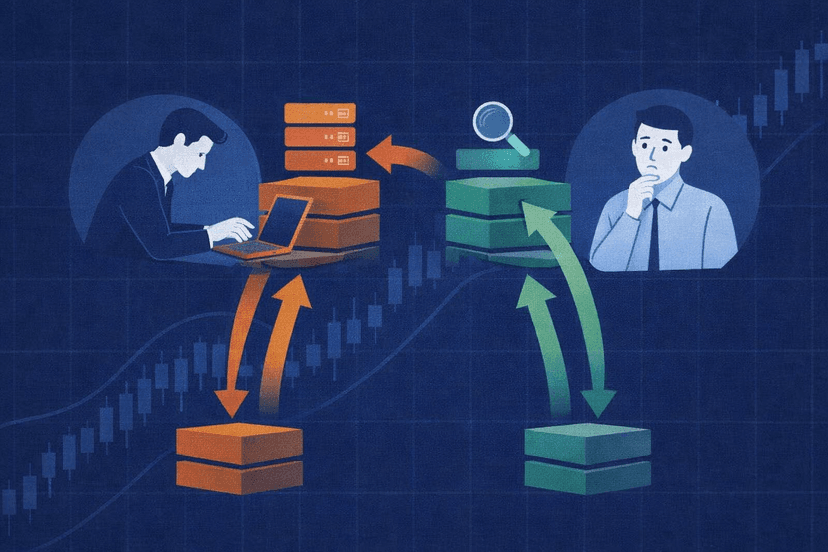
The right model depends on how you trade, not on which one sounds more virtuous. Match yourself to the profile below.
Scalpers and high-frequency traders: choose A-Book/ECN. When you are in and out for a few pips hundreds of times a month, raw spreads plus commission almost always beat a wider all-in spread, and you want a counterparty with no incentive to slow your fills. Execution speed and slippage control are decisive here.
News and algorithmic traders: choose A-Book. Automated strategies and event-driven trades depend on getting the real market price without requotes or artificial delay. If your edge is thin and mechanical, you cannot afford a counterparty that profits from your losses. Our guide to why EAs win in backtest but lose live shows how much execution realism affects automated results.
Beginners and casual traders: a regulated B-Book account is often the friendliest starting point. Commission-free pricing is simpler to understand, spreads on majors are still competitive, and for a handful of trades a week the theoretical conflict of interest has little practical impact. Prioritize regulation and reputation over the label.
High-volume or professional traders: A-Book, without much debate. Your cost per trade and execution quality compound quickly at size, and transparency becomes non-negotiable.
Where a VPS Fits Into Execution Quality
Choosing the right execution model gets you honest prices; getting to those prices quickly is a separate problem, and it is where your infrastructure matters. Latency is most consequential on A-Book/ECN raw-spread accounts and for always-on automated trading, precisely the setups where fills are decided in milliseconds. If your order has to travel from a home connection across the country to the broker’s servers, you have added delay that shows up as slippage no execution model can fix.
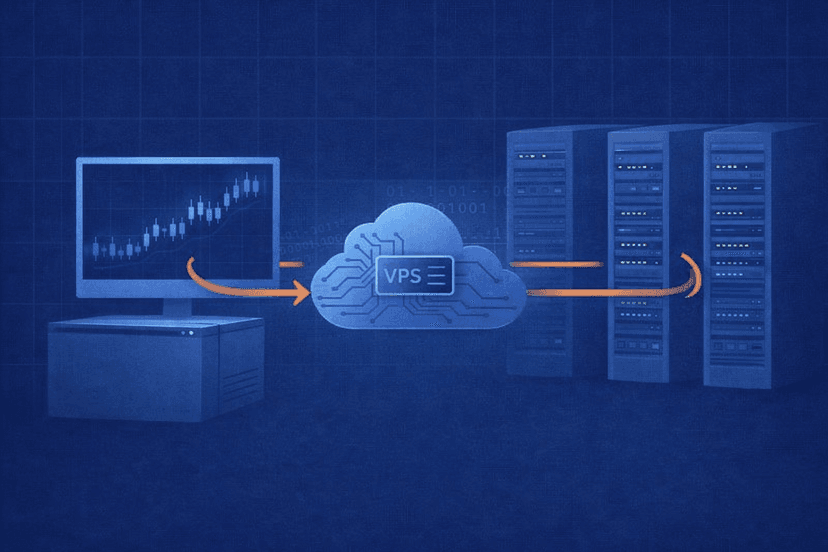
That is the case for a trading VPS. Hosting your platform in the same data center region as your broker — for many firms that means Equinix NY4, LD4, or TY3 — cuts round-trip time to as little as 1ms and keeps your EAs running 24/7 without depending on your home PC or internet. NYCServers places VPS instances in exactly those financial hubs with pre-installed MT4, MT5, and cTrader, so a raw-spread account can actually deliver the execution its pricing promises. You can measure the difference yourself with our broker latency checker, and if you are ready to remove connection delay from the equation, our Forex VPS plans start at $25/month with a 100% uptime guarantee during trading hours. Fast, reliable execution is the one variable you control regardless of whether your broker runs an A-Book or B-Book desk. For more on why the milliseconds add up, see our explainer on why latency is important for forex trading.
Frequently Asked Questions
Is a B-Book broker a scam?
No. B-Book (market making) is a legitimate, widely used, and heavily regulated business model, and many large, reputable brokers internalize retail order flow. The conflict of interest is real but is constrained by tier-one regulation, best-execution obligations, and hedging. The problem is not the model itself but a poorly regulated broker that has both the incentive and the ability to worsen your execution. Judge a broker by its regulation, transparency, and fills — not by the label alone.
How can I tell if my broker is A-Book or B-Book?
Look at the pricing and account types first: raw spreads from 0.0 pips with an explicit per-lot commission signal A-Book/ECN routing, while “zero commission” accounts with wider spreads usually indicate a B-Book. Then check the broker’s regulation and its published order-execution or conflicts-of-interest policy, which often states whether it acts as principal or agent. Many brokers run a hybrid model and route different clients differently, so the account tier you choose matters as much as the broker.
Does the execution model cause slippage?
Slippage is primarily caused by market volatility and the speed your order reaches the venue, not by the A-Book or B-Book label itself. A-Book accounts pass through real market slippage in both directions, including positive slippage. A well-run B-Book can look smoother in calm markets, but a poorly run one can add asymmetric slippage. Reducing your own latency with a low-latency VPS is the most reliable way to cut avoidable slippage on any model.
Which is better for scalping and EAs, A-Book or B-Book?
A-Book/ECN is generally better for scalping, news trading, and expert advisors. High-frequency and automated strategies need raw spreads, real market pricing, and a counterparty with no incentive to delay fills or issue requotes. For those styles, the raw-spread-plus-commission structure of an A-Book account almost always produces a lower total cost and cleaner execution than a wider all-in B-Book spread.

About the author
Matthew Hinkle
Lead Writer & Full Time Retail Trader
Matthew is NYCServers' lead writer. In addition to being passionate about forex trading, he is also an active trader himself. Matt has advanced knowledge of useful indicators, trading systems, and analysis.
Areas of Expertise