
How to Spot Forex EA Scams: 10 Red Flags Before You Buy
Learn how to spot forex EA scams with our complete red flag checklist. Avoid robot trading scams with expert advice on verification, testing, and legitimate EAs.
The promise is tempting: install a trading robot, press a button, and watch profits roll in while you sleep. But here’s the reality—the vast majority of forex expert advisors sold online are either underperforming or outright fraudulent.
According to the CFTC’s 2025 advisory, scammers are robbing billions from Americans through automated trading scams. In 2023 alone, people reported losing $4.6 billion to investment scams—more than any other fraud category.
You’re not looking at a harmless gamble. You’re looking at an industry where 97% of scam tactics succeed because victims simply accept they’ve been duped.
This guide walks you through 10 concrete red flags that separate legitimate EAs from scams—complete with verification tools, real-world examples, and specific tactics scammers use to manipulate results.

Red Flag #1: Guaranteed Profit Claims
“100% win rate.” “Never lose a trade.” “Guaranteed 500% monthly returns.”
If you see these phrases, close the browser tab.
No legitimate trading system—automated or manual—can guarantee profits. The forex market is volatile by nature. According to CFTC data, 50.96% to 74% of retail forex accounts lose money over any given quarter.
What legitimate EAs say instead:
- “Average monthly return: 3.2% (verified on Myfxbook)”
- “Maximum historical drawdown: 18%”
- “60% winning trades over 24 months”
Notice the difference? Real performance includes losses, drawdowns, and timeframes. Scams only show the upside.
Real-World Example
A user on Forex Factory reported losing $15,000 over five years testing EAs that promised “consistent profits.” Every single one eventually failed. The pattern? They all made unrealistic claims upfront.
Red Flag #2: Unrealistic Returns (500%+ Monthly vs. Legitimate 5-20%)
Here’s what separates fantasy from reality:
| Claim Type | Scam | Legitimate |
|---|---|---|
| Monthly Returns | 50-500%+ | 2-5% (conservative) 8-15% (aggressive) |
| Risk Disclosure | None or buried in fine print | Clear drawdown stats shown |
| Verification | Screenshots only | Live Myfxbook/FXBlue links |
| Timeframe | “Make millions in weeks!” | 6-24+ months of history |
According to industry data, realistic returns for forex trades are 1-10% monthly. And that’s before accounting for the fact that many traders lose money.
One verified EA, Forex Flex Robot, shows a monthly return of +3.85% on Myfxbook. Not exciting. But sustainable.
Another legitimate example: an account running since June 2020 turned $45,103 into $72,872—a 61% gain over multiple years, averaging 3.29% monthly. That’s what real performance looks like.
Red Flag #3: Emotional Manipulation (“Escape the Rat Race!”)
Scammers don’t sell EAs. They sell dreams.
Watch for these psychological triggers:
- “Print money while you sleep”
- “Escape the 9-to-5 grind”
- “Financial freedom in 30 days”
- “My secret system the banks don’t want you to know”
According to ACY Securities, these phrases have “no place in professional finance.” They’re psychological manipulation tactics designed to bypass your critical thinking.
Scammers often feature “confident gurus leaning against rented Lamborghinis, holding phones displaying charts with dizzying upward curves.”
What legitimate vendors focus on instead:
- Strategy logic and risk parameters
- Drawdown management
- Platform compatibility
- Transparent performance metrics
If the marketing feels like a motivational seminar instead of a trading tool, walk away.

Red Flag #4: Dangerous Hidden Strategies (Martingale, Grid Trading, No Stop Loss)
Some EAs look profitable for weeks or months—then suddenly blow up your entire account overnight.
The culprit? Dangerous hidden strategies:
Martingale Systems
This strategy doubles or quadruples your position size after each loss. On paper, it “guarantees” eventual profit. In reality, it guarantees account destruction.
Example from Forex Factory: 0.2 lots → 0.8 → 3.2 → 12.8. Every loss increases position size by 4x. One extended losing streak wipes out your account.
As one analysis notes: “The unfinished cycle is always unprofitable and its loss overlaps all profit earned during cycles that worked to the end.”
Another trader shared their experience: “I left a Grid EA running overnight on EU and it made about $300. Unfortunately, in the morning London session it hit max drawdown and lost $540.”
Grid Trading Without Hedging
Grid systems open multiple positions at set intervals. They can show impressive results—until a strong trend blows through all grid levels.
One expert conclusion: “The grid-martingale methodology will create more harm than anything else, the reward is only one side of the story and should always be compared against the risk.”
No Stop Loss
EAs that don’t use stop losses rely on position averaging or hedging to avoid closing losing trades. This creates massive floating losses that eventually become unrecoverable.
How to check: Look at the EA’s Myfxbook account. If “Open Positions” is hidden, that’s a red flag. Scammers hide hedges and massive drawdowns this way.
Red Flag #5: Unverifiable Results (Screenshots, Demo Accounts, No Myfxbook Link)
Screenshots can be Photoshopped in 60 seconds.
Demo accounts run on delayed price feeds or manipulated spreads.
Backtests can be curve-fitted to show perfect historical performance.
None of these prove the EA works in live trading.
The Myfxbook Verification Standard
A legitimate Myfxbook profile must show:
- “Track Record Verified” (green badge) — confirms trading history matches broker’s server
- “Trading Privileges Verified” (green badge) — proves the vendor owns the account
- Visible metrics — Balance, Equity, Drawdown, Lots, and Open Positions all displayed
- Active trading — Last trade within the past few weeks (not months ago)
- Gain = Absolute Gain — If these don’t match, the account had withdrawals/deposits that distort results
According to EA-Coder, scammers commonly hide drawdown, balance, and lot sizes to conceal high-risk strategies.
Red flags to watch for:
- Non-clickable screenshots instead of live links
- Account hasn’t been updated in weeks/months
- Trading ended months ago but account still displayed
- Critical data fields hidden
- Backtest results presented as live trading
- Broker server shows as “Other MT4” (fake broker)
If the vendor refuses to provide a verified Myfxbook link, they’re hiding something.
Red Flag #6: Fake Reviews & Testimonials
Scammers have weaponized social proof.
According to recent reports, scammers now use deepfakes and paid reviews on YouTube, Trustpilot, and TikTok to create false credibility.
How to Spot Fake Reviews
Look for these patterns:
- Generic language (“This EA changed my life!”)
- Stock photos or AI-generated faces
- Multiple reviews posted on the same day
- Reviewers with no other review history
- Suspiciously perfect 5-star ratings with no criticism
- Reviews that focus on lifestyle (“I bought a new car!”) instead of trading metrics
One Trustpilot reviewer of a scam EA noted: “Forex Fury won 100% of trades in demo mode and made almost 10 trades in the first day. However, when switched to a real money account, it was idle for three days. After 2 weeks of being idle, in about three trades it burned through nearly $1,000.”
Where to Find Legitimate Reviews
- Forex Factory forums — Long-form discussions with experienced traders
- Forex Peace Army — User-submitted reviews (note: the platform itself faces some controversy, so cross-reference)
- BabyPips forums — Active trading community
- Reddit r/forex — Unfiltered user experiences
Real traders discuss drawdowns, losing streaks, and strategy adjustments. Fake reviews only show profits.
Red Flag #7: High-Pressure Sales Tactics
“Only 10 spots left!”
“Price doubles in 24 hours!”
“Limited lifetime access—act now!”
This is FOMO (Fear of Missing Out) manipulation, and it’s a hallmark of scams.
According to industry analysis, “scammers use FOMO tactics to pressure traders into quick purchases. Take your time to research.”
Other pressure tactics:
- Countdown timers on sales pages
- Frequent phone calls or WhatsApp messages
- “Exclusive” membership claims
- Upsells to “VIP” versions after purchase
- Requests to deposit more money to “unlock full features”
Legitimate vendors don’t use artificial urgency. They’re confident their product speaks for itself.
A real EA developer will give you time to:
- Test on demo accounts
- Review verified results
- Read the strategy documentation
- Contact support with questions
If you’re being rushed into a purchase decision, you’re being scammed.

Red Flag #8: Offshore Broker Requirements
This is one of the clearest scam indicators.
“A scam EA is almost always promoted in conjunction with a specific unregulated, offshore broker,” according to ACY Securities. “This is how the vendor ensures they get their commission kickbacks.”
Why scammers push offshore brokers:
- Affiliate commissions — Scammers earn 20-50% of your deposit
- Withdrawal blocks — Unregulated brokers can refuse to process withdrawals
- Price manipulation — Offshore brokers can adjust spreads and slippage to make EAs appear profitable on demo but fail on live accounts
- No legal recourse — If the broker disappears with your funds, international enforcement is nearly impossible
How to Protect Yourself
Only use EAs compatible with Tier-1 regulated brokers:
- FCA (UK Financial Conduct Authority)
- ASIC (Australian Securities and Investments Commission)
- CySEC (Cyprus Securities and Exchange Commission)
- CFTC (US Commodity Futures Trading Commission)
Legitimate EA vendors support multiple regulated brokers and let you choose your own.
If a vendor insists you must use their recommended offshore broker—or the EA “only works” with one specific unregulated broker—run.
Red Flag #9: No Refund Policy (Or Impossible Conditions)
Scam refund policies come in two flavors:
Type 1: No Refund Policy at All
“All sales final.” “Digital products are non-refundable.”
Legitimate software vendors offer 30-60 day money-back guarantees because they’re confident in their product.
Type 2: Impossible Refund Conditions
“You can get a refund if the EA doesn’t make profit—but you must trade exactly 0.01 lots, on currency pairs X, Y, and Z, during the London session, with spread below 1.5 pips, and you must forward us all trading logs within 14 days.”
These conditions are designed to be impossible to meet.
One user reported: “I followed exact settings from the website, calling them ‘outdated garbage, completely disconnected from real market conditions.’ Despite providing 30 days of real and demo account data, ‘everything blew up.’ They also reported the company refused to honor the refund policy.”
What Legitimate Refund Policies Look Like
- Clear timeframe (30-60 days)
- Simple process (email request, brief explanation)
- No performance requirements
- Processed within 7-14 business days
Before purchasing, read the refund policy carefully. If it’s missing or filled with unreasonable conditions, that’s your cue to walk away.

Red Flag #10: Anonymous Developers (No Company Info, Support Disappears)
You’re about to trust someone with your trading capital. You should know who they are.
Red flags for anonymity:
- No company name or registration details
- No physical address (or just a PO Box)
- Gmail/Hotmail email instead of company domain
- No phone number, only contact forms
- Domain registered within the last 6-12 months despite “10 years of experience” claims
- No identifiable developers or team members
- Support tickets go unanswered after purchase
According to trader education resources, you should ask: “Does the vendor have a phone number and a physical address? Do they offer real customer support? A legitimate business is accessible.”
Pro tip: Check the domain age using a WHOIS lookup. “If they claim 10 years of experience but their domain was registered six weeks ago, you’ve found a scam.”
What Legitimate Vendors Provide
- Registered company name and number
- Physical business address
- Professional email domain
- Multiple support channels (email, phone, live chat)
- Identifiable team members with LinkedIn profiles
- Active social media presence
- Responsive customer support that answers pre-sale questions
Test the support before you buy. Send a technical question. If you get a generic copy-paste response—or no response at all—that’s a warning sign.
Your EA Verification Toolkit: 6 Essential Resources
Before you spend a dollar on any EA, run it through this verification checklist:
1. Myfxbook (myfxbook.com)
The gold standard for verifying live trading results. Look for:
- Both verification badges (Track Record + Trading Privileges)
- At least 6 months of active trading
- All metrics visible (no hidden data)
- Reasonable drawdown (under 30%)
2. FXBlue (fxblue.com)
Alternative verification platform with similar features to Myfxbook. Cross-reference results on both platforms.
3. Forex Peace Army (forexpeacearmy.com)
User-submitted reviews and scam reports. While the platform itself has faced some controversy, it can provide useful warning signs about specific vendors. Cross-reference with other sources.
4. Forex Factory Forums (forexfactory.com)
Active trader community discussing EAs, strategies, and scams. Search for the EA name and read long-form discussions from experienced traders.
5. BabyPips Forums (babypips.com/forums)
Beginner-friendly community with honest discussions about automated trading. Good for getting multiple perspectives.
6. WHOIS Lookup (whois.com)
Check the domain registration date and ownership details. Compare claimed “years of experience” against actual domain age.
The Hard Truth About Forex EAs
Here’s what no scammer will tell you:
Most retail traders lose money. According to CFTC data, 50-74% of retail forex accounts are unprofitable over any given quarter.
EAs don’t eliminate risk. They automate execution, but they can’t predict the future or guarantee profits.
Market conditions change. An EA that performed well for 6 months can fail when volatility spikes or trends reverse.
If the EA were truly profitable, the creator wouldn’t need to sell it. Think about it: why sell a money-printing machine for $299?
The answer: because the real profit is in selling the EA, not trading with it.
Legitimate Use Cases for Forex EAs
Not all EAs are scams. Legitimate use cases exist:
Trade Execution Automation
You have a profitable manual strategy but want to remove emotional decision-making. An EA can execute your rules consistently.
Specific Strategy Implementation
You’ve backtested a mean reversion or breakout strategy and want to automate it. You understand the logic and risk parameters.
Portfolio Diversification
You run multiple strategies across different currency pairs and timeframes. EAs help manage complexity.
The key difference: You’re not buying a “get rich quick” system. You’re automating a strategy you already understand and have tested.
If You’ve Already Been Scammed: Next Steps
If you’ve lost money to an EA scam, act immediately:
- Stop all payments — Cancel subscriptions, block the vendor
- Gather evidence — Save all emails, transaction records, screenshots, and trading logs
- Report to regulators:
- FTC: ReportFraud.ftc.gov
- CFTC: 866-FON-CFTC (866-366-2382)
- SEC: Investor.gov
- Alert your bank/credit card provider — Request a chargeback if the purchase was recent
- Post warnings — Share your experience on Forex Factory, Reddit, and review sites to warn others
- Seek legal advice — Consumer protection agencies may assist with recovery
According to the CFTC, “avoiding fraud may be your best resolution” for 2025. Prevention is far easier than recovery.
Running Legitimate EAs: The VPS Advantage
If you do find a legitimate EA—one with verified results, transparent strategies, and realistic returns—you’ll need reliable infrastructure to run it.
That’s where a forex VPS comes in.
Here’s why:
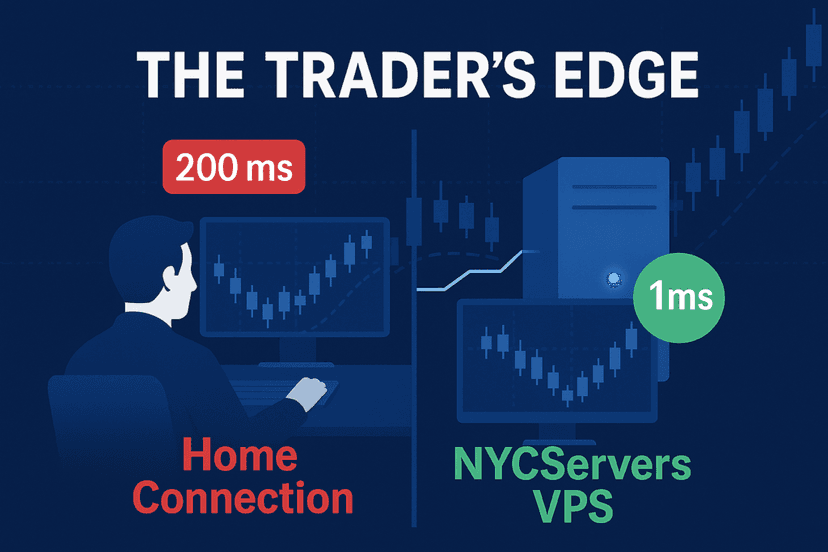
- 24/7 uptime — Your EA keeps running even when your home computer is off
- Ultra-low latency — 1ms or less to major broker servers reduces slippage
- No interruptions — Power outages and internet failures don’t stop your trades
- Secure environment — Isolated server protects your trading accounts
We run servers in Equinix data centers (NY4, LD4, TY3) with direct connectivity to major broker infrastructure. Your EA executes at the speed it was designed for—without the delays of home internet connections.
Learn more: Top VPS Benefits for Forex Expert Advisors
Final Checklist: Before You Buy Any EA
Run through this checklist. If any answer is “no,” walk away:
- ✓ Does the vendor provide a verified Myfxbook link with at least 6 months of live trading?
- ✓ Are both “Track Record Verified” and “Trading Privileges Verified” badges present?
- ✓ Are all account metrics visible (balance, equity, drawdown, lots, open positions)?
- ✓ Are monthly returns realistic (under 20%)?
- ✓ Is the maximum drawdown reasonable (under 30%)?
- ✓ Does the EA work with regulated brokers (FCA, ASIC, CySEC, CFTC)?
- ✓ Is there a clear refund policy with reasonable terms?
- ✓ Can you identify the company, developers, and physical address?
- ✓ Does customer support respond to pre-sale questions?
- ✓ Are there independent reviews on Forex Factory or BabyPips?
- ✓ Does the domain age match the claimed “years of experience”?
- ✓ Is the marketing focused on strategy details rather than lifestyle promises?
If all boxes are checked, you might have found a legitimate tool. If several are unchecked, you’re looking at a scam.
Frequently Asked Questions
What is a realistic monthly return for a legitimate forex EA?
Realistic monthly returns for legitimate forex EAs typically range from 2-5% for conservative strategies. Some higher-risk strategies may achieve 8-15% monthly, but with larger drawdowns. Any EA claiming 20%+ monthly returns or “guaranteed profits” should be viewed with extreme skepticism.
How can I verify if an EA’s trading results are real?
Check for verified Myfxbook or FXBlue accounts with both “Track Record Verified” and “Trading Privileges Verified” badges. The account should show at least 6 months of live trading (not demo or backtest), display all metrics including drawdown and lot sizes, and have recent activity with no long gaps in trading.
Why do scam EAs often require specific offshore brokers?
Scam EAs are typically promoted with specific unregulated, offshore brokers so the vendor receives commission kickbacks on your deposits. These unregulated brokers expose you to severe counterparty risk—they can refuse withdrawals or disappear with your funds entirely.
What are martingale and grid trading strategies, and why are they dangerous?
Martingale strategies double or multiply position sizes after each loss, attempting to recover all losses with one winning trade. Grid trading opens multiple positions at set intervals. Both strategies can show impressive short-term results but inevitably lead to account blowouts during extended losing streaks or strong trending markets.
Can I get my money back if I’ve been scammed by an EA vendor?
Recovery varies widely depending on how quickly you act and the jurisdiction involved. Immediately stop all payments, gather all correspondence and transaction records, report to the FTC and SEC, alert your bank or credit card provider, and seek legal advice. While many victims never recover full losses, partial recovery is sometimes possible if authorities can freeze assets.
Should I trust EA reviews on YouTube and Trustpilot?
Many EA scammers use paid reviews, fake testimonials, and even deepfakes on platforms like YouTube, Trustpilot, and TikTok. Instead, look for independent verification on Forex Factory forums, Forex Peace Army reviews (though be aware of potential bias), and verified third-party trading accounts on Myfxbook.
What’s the difference between backtesting and forward testing for EAs?
Backtesting runs an EA against historical price data and can be easily manipulated or curve-fitted to show perfect results. Forward testing runs the EA on live market data (on demo or real accounts) and provides much more reliable performance indicators. Never buy an EA based solely on backtest results.
The Bottom Line
Forex EA scams thrive on one thing: the dream of effortless profit.
They exploit your desire for financial freedom, automate the grind, and “beat the market.” But here’s the reality: there is no shortcut.
The traders who succeed with EAs are the same traders who would succeed manually. They understand market dynamics, risk management, and strategy development. They use EAs to automate execution—not to replace trading knowledge.
Before you buy any EA, ask yourself: Would I risk money on this strategy if I had to execute it manually?
If the answer is no, the EA won’t magically make it profitable.
Use this red flag checklist. Verify everything. Test on demo accounts. And remember: if it sounds too good to be true, it is.
Your capital—and your trading future—deserve better than scams.
Related: Top Forex Scams to Watch Out For | What Are Forex Expert Advisors? | Discover the Best Expert Advisor for MT4

About the author
Matthew Hinkle
Lead Writer & Full Time Retail Trader
Matthew is NYCServers' lead writer. In addition to being passionate about forex trading, he is also an active trader himself. Matt has advanced knowledge of useful indicators, trading systems, and analysis.
Areas of Expertise