
Market Making on Prediction Markets: Complete 2026 Guide
Learn how to become a market maker on Polymarket and Kalshi. Covers strategies, APIs, risk management, capital requirements, and VPS infrastructure.
What Is Market Making on Prediction Markets?
Market making on prediction markets involves providing liquidity by continuously quoting both buy and sell prices for event contracts. You profit from the difference between your bid and ask prices—the spread—while helping other traders enter and exit positions efficiently.
Unlike regular trading where you bet on outcomes, market makers remain relatively neutral. Your goal is capturing small spreads repeatedly rather than predicting whether an event will happen. On platforms like Polymarket and Kalshi, this means placing simultaneous orders on both YES and NO sides of a contract.
The prediction market industry has exploded. In November 2025 alone, Kalshi processed around $5.8 billion in volume while Polymarket hit $3.74 billion—bringing their combined monthly activity close to $10 billion. This liquidity surge creates substantial opportunities for market makers who can provide tight spreads and consistent quotes.
How Prediction Market Making Differs from Traditional Market Making
Traditional market making on stocks or forex involves assets that exist indefinitely. You buy at $100.00, sell at $100.02, and repeat. The underlying asset continues trading tomorrow.
Prediction markets are fundamentally different. Every contract has a settlement date when it resolves to either $1 (YES wins) or $0 (NO wins). This creates unique challenges:
- Binary outcomes — Unlike stocks that can move anywhere, prediction contracts snap to 0 or 1 at settlement
- Event risk — News can instantly move prices from 0.50 to 0.10 or 0.90 within seconds
- Finite duration — You cannot hold inventory indefinitely waiting for mean reversion
- Information asymmetry — Some traders may have faster access to news or better analytical models
The Yes + No = 1 formula in prediction markets means that ultimately only one contract becomes worth $1 while the other becomes worthless. This guarantees a one-sided market develops as resolution approaches, forcing market makers to manage inventory more aggressively than in traditional markets.
Speed of Price Discovery
Price fluctuations in prediction markets are often driven by discrete real-world events. One second the price may sit at 0.50, and the next second breaking news can push it directly to 0.10 or 0.90. Market makers have minimal reaction time compared to forex or equity markets where price movements are more continuous.
This is where infrastructure becomes critical. Professional traders running algorithmic trading strategies need systems that can process news feeds, update quotes, and cancel stale orders within milliseconds—not seconds.
Platforms That Support Market Making
Polymarket — CLOB-Based Decentralized Exchange
Polymarket operates a Central Limit Order Book (CLOB) on Polygon, giving traders full API access for automated market making. Unlike AMM-based prediction markets, Polymarket’s order book model lets you place specific limit orders at exact prices.
Key features for market makers:
- Full API access — REST and WebSocket endpoints for order management and market data
- Python client — Official py-clob-client library for rapid development
- Market maker keeper — Open-source reference implementation available on GitHub
- Liquidity subsidies — Platform rewards for providing liquidity in certain markets
Polymarket’s WebSocket connection provides order book updates with latency under 50ms, but that advantage is wasted if your trading system cannot respond equally fast. The platform processes thousands of active markets, with liquidity concentrating around political events, macroeconomic releases like CPI and Fed decisions, and crypto narratives.

Kalshi — Regulated US Exchange
Kalshi is a CFTC-regulated exchange designed specifically for event contracts. It achieved $50 billion in annualized volume in 2025—up from just $300 million the prior year—capturing over 60% of global market share.
Market making advantages on Kalshi:
- Regulatory clarity — CFTC-designated contract market status provides legal certainty
- API tiers — Scaled access with higher rate limits for active market makers
- WebSocket streaming — Real-time order book data and trade notifications
- Demo environment — Test your strategies without risking real capital
Kalshi closed a $1 billion funding round at an $11 billion valuation in December 2025, signaling serious institutional interest in regulated prediction markets. The platform focuses on macro, political, and economic markets where liquidity tends to be deepest.

Core Market Making Strategies
Successful prediction market making requires a systematic approach to quoting, inventory management, and risk control. Here are the primary strategies:
1. Bid-Ask Spread Capture
The foundational strategy is earning the spread between your buy and sell quotes. If you bid 0.48 and offer 0.52 on a YES contract, you earn $0.04 profit each time you complete both sides of the trade.
Optimal spread width depends on:
- Market volatility — Wider spreads during uncertain periods, tighter during stable conditions
- Competition — Other market makers force you to tighten spreads
- Event timing — Spreads typically widen as resolution approaches
- Inventory position — Skew quotes to reduce unwanted inventory
The Stoikov model, widely used in traditional market making, calculates optimal bid and ask prices by balancing expected profit against inventory risk. For prediction markets, you need to adapt this model to account for binary settlement and event-driven price jumps.
2. Inventory Management
Inventory risk is the biggest threat to prediction market makers. Unlike stocks where you can hold positions indefinitely, prediction contracts settle at 0 or 1. Holding too much inventory on the losing side means total loss of that position.
Effective inventory management techniques:
- Quote skewing — Shift your mid-price to encourage trades that reduce inventory
- Position limits — Set maximum inventory thresholds per market
- Dynamic hedging — Offset inventory across correlated markets when possible
- Time-based reduction — Aggressively reduce inventory as settlement approaches
One-sided markets are particularly dangerous. When news breaks and everyone wants to buy YES, you may find yourself accumulating NO inventory with no buyers. Fast cancellation of stale orders is essential.
3. Cross-Market Arbitrage
When the same event trades on multiple platforms, price discrepancies create arbitrage opportunities. You might find Polymarket pricing an outcome at 0.55 while Kalshi shows 0.52. Buying on Kalshi and selling on Polymarket locks in profit regardless of outcome.
Arbitrage opportunities in prediction markets typically offer returns between 0.5% and 3%, with many closing within seconds. This demands the kind of infrastructure that automated trading systems typically use—low latency connections, multiple exchange APIs, and fast execution logic.

Technical Requirements for Automated Market Making
Manual market making on prediction markets is impractical. You need automated systems that can monitor order books, adjust quotes, and manage inventory in real-time. Here is what the tech stack looks like:
API Integration
Polymarket CLOB API:
- REST API at clob.polymarket.com for order management
- WebSocket streams for real-time market data
- L2 authentication using your private key for trading operations
- Support for GTC (Good Till Cancelled) and FOK (Fill or Kill) orders
Kalshi API:
- Official documentation at docs.kalshi.com
- RSA-PSS signed authentication for secure API calls
- Tiered rate limits scaling with trading volume
- Token refresh every 30 minutes requires session management
Trading Bot Architecture
A production market making system typically includes these components:
- Market data handler — Processes order book updates and trade feeds
- Pricing engine — Calculates fair value and optimal quotes
- Order manager — Places, modifies, and cancels orders
- Risk controller — Monitors inventory, P&L, and position limits
- Event processor — Incorporates news and external data
The official Polymarket market maker keeper on GitHub provides a reference implementation. Community projects like polymarket-market-maker-bot offer production-ready systems with features like batch order cancellations, gas optimization, and automated inventory balancing.
Development Languages
Python is the most common choice thanks to official client libraries. For lower latency, some traders use Rust or C++. Key libraries include:
- py-clob-client — Official Polymarket Python client
- websockets — Async WebSocket handling
- pandas/numpy — Data analysis and signal processing
- asyncio — Concurrent order management
Risk Management for Market Makers
Prediction market making carries risks that differ from traditional market making. Understanding and controlling these risks determines whether you profit or blow up.
Event Risk
News events can instantly move markets 40-50 points in prediction markets. If you are quoting 0.50/0.52 and suddenly the market should be at 0.90, you will get filled on your 0.52 offers before you can cancel—locking in massive losses.
Mitigation strategies:
- News monitoring — Integrate news feeds to pause quoting during announcements
- Wide spreads around events — Increase spread width before scheduled news
- Position limits — Reduce maximum inventory in high-event-risk markets
- Circuit breakers — Automatically cancel all orders on rapid price movement
Liquidity Risk
Thin markets can move dramatically on small trade sizes. A $1,000 order in an illiquid market might move the price 10 points, exposing market makers to adverse selection.
Signs of liquidity risk:
- Wide bid-ask spreads from competitors
- Large gaps in the order book
- Low historical trading volume
- Few active participants
The best practice is focusing on liquid markets with consistent trading activity. Political markets during election cycles, major economic events, and high-profile crypto predictions typically offer the deepest liquidity.
Technical Risk
System failures can be catastrophic for market makers. If your bot crashes while you have open positions, you cannot adjust quotes as markets move. If your internet connection drops, stale orders sit exposed to adverse fills.
This is why professional market makers run their systems on dedicated VPS infrastructure rather than home computers. A trading VPS provides guaranteed uptime, fast connectivity, and isolation from local hardware issues.
Profitability and Capital Requirements
How much can you realistically make as a prediction market maker? And how much capital do you need?
Revenue Sources
Market maker income comes from several sources:
- Bid-ask spread — Primary revenue from completing round trips
- Platform subsidies — Polymarket offers liquidity rewards for some markets
- Rebates — Some platforms offer maker rebates for adding liquidity
- Arbitrage profits — Capturing pricing discrepancies across venues
Realistic Return Expectations
Professional market makers in traditional finance target 15-30% annual returns with relatively low volatility. Prediction market making is higher risk and potentially higher reward due to less competition and wider spreads.
Factors affecting returns:
- Capital deployed — Larger capital means more positions and spread captures
- Strategy sophistication — Better pricing models and faster systems outperform
- Market selection — Liquid markets offer more opportunities
- Risk management — Surviving drawdowns preserves capital for future gains
Capital Requirements
You can start market making with as little as $1,000-5,000 on either platform. However, meaningful income requires more capital:
| Capital Level | Typical Approach | Monthly Potential |
|---|---|---|
| $1,000-5,000 | Single market focus, learning stage | $50-200 |
| $5,000-25,000 | Multiple markets, semi-automated | $200-1,000 |
| $25,000-100,000 | Full automation, diverse portfolio | $1,000-5,000 |
| $100,000+ | Professional operation, cross-platform | $5,000-20,000+ |
These figures assume competent execution and reasonable market conditions. Losses during adverse events or poor strategy can easily result in negative months.
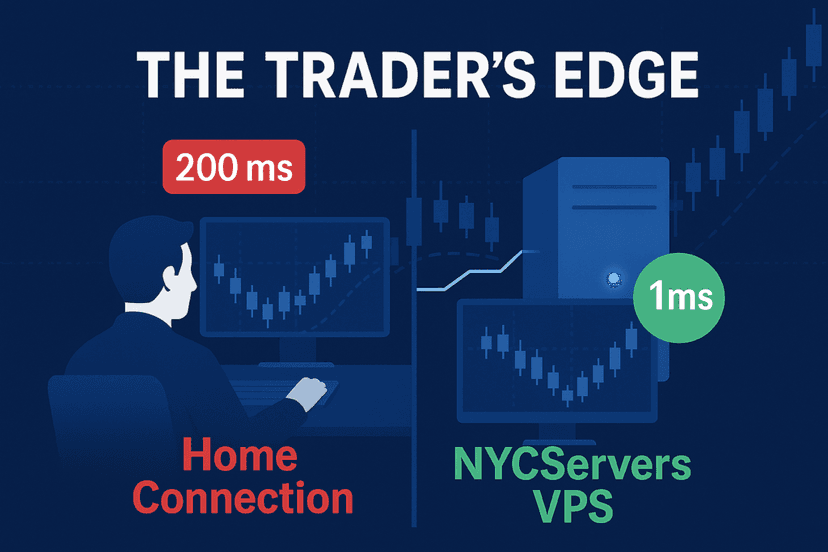
Infrastructure Needs: Why Low Latency Matters
Speed is essential for prediction market making. The trader who can cancel stale orders fastest when news breaks suffers fewer adverse fills. The market maker with tighter latency captures more spread when competing for fills.
Latency Benchmarks
Polymarket’s WebSocket provides updates with latency under 50ms from their servers. But that is only part of the equation. Total round-trip latency includes:
- Market data reception (platform to your server)
- Strategy computation (pricing, risk checks)
- Order transmission (your server to platform)
- Order acknowledgment (confirmation of placement)
Professional market makers target sub-10ms total latency for the components they control. This requires colocated or nearby servers, optimized code, and direct network connections.
VPS vs Home Computer
Running market making systems from home introduces multiple failure points:
- ISP outages — Residential internet is not guaranteed
- Power failures — UPS systems have limited runtime
- Latency variance — Home connections have unpredictable jitter
- Hardware failures — Consumer hardware lacks enterprise reliability
A dedicated VPS solves these problems. Servers in major data centers offer 99.9%+ uptime guarantees, consistent low-latency connections, and hardware redundancy. For prediction markets specifically, servers in New York provide optimal connectivity to both Polymarket’s infrastructure and Kalshi’s regulated exchange.
Recommended Specifications
For automated prediction market making, consider these minimum specifications:
| Component | Minimum | Recommended |
|---|---|---|
| CPU | 2 cores | 4+ cores (AMD EPYC/Ryzen) |
| RAM | 4GB | 8-16GB |
| Storage | 50GB SSD | 100GB+ NVMe |
| Network | 1Gbps | 1Gbps+ with low latency routing |
| Location | US East Coast | New York area data center |
VPS Services For Polymarket And Kalshi
NYCServers offers VPS services optimized for both Polymarket and Kalshi algo traders.

Polymarket VPS
By using NYCServers’ Polymarket VPS, your market-making algorithms run in a true 24/7 cloud environment engineered for uninterrupted execution and institutional-grade reliability. With sub-1ms latency to Polymarket’s API endpoints, your strategies can react instantly to order book changes, ensuring tighter spreads, faster fills, and a decisive edge in prediction market trading.

Kalshi VPS
For NYCServers’ Kalshi VPS, your trading infrastructure is optimized for continuous, low-latency execution in a dedicated cloud environment built for regulated prediction markets. With ultra-low latency connectivity to Kalshi’s trading APIs, your strategies can respond faster to market shifts, manage risk in real time, and maintain consistent performance throughout all trading sessions.
Getting Started: Step-by-Step Guide
Ready to start market making on prediction markets? Here is the practical path forward:
Step 1: Choose Your Platform
For US-based traders, Kalshi offers regulatory clarity and a straightforward onboarding process. International traders often prefer Polymarket for its larger market variety and crypto-native infrastructure.
Consider starting with one platform to master its API and market dynamics before expanding to multi-platform strategies.
Step 2: Set Up API Access
Both platforms require API credentials for automated trading:
- Kalshi — Generate API keys in Settings after account verification
- Polymarket — Configure your wallet and generate L2 credentials
Start in demo/testnet environments before risking real capital. Kalshi provides a sandbox environment specifically for testing.
Step 3: Build or Deploy Your System
You have three options:
- Open source — Use existing GitHub projects like poly-market-maker as a starting point
- Custom development — Build from scratch using official API clients
- Commercial solutions — Purchase or license existing market making software
Most traders start with open-source implementations, modifying them to add their own pricing logic and risk controls.
Step 4: Provision Infrastructure
Deploy your system on a VPS rather than running locally. Key requirements:
- Low-latency connectivity to your target platforms
- Reliable uptime (99.9%+ SLA)
- Sufficient resources for your strategy complexity
- Easy deployment and monitoring access
Step 5: Start Small and Scale
Begin with minimal capital in a single liquid market. Monitor performance closely, identify issues, and refine your strategy before scaling up. Many new market makers lose money initially due to bugs, poor risk controls, or underestimating event risk.
Common Mistakes to Avoid
Learning from others’ failures saves capital. Here are the most common prediction market making mistakes:
1. Ignoring Event Risk
New market makers often quote tight spreads without considering what happens when news breaks. A single adverse event can wipe out months of spread profits. Always have circuit breakers and event monitoring in place.
2. Over-leveraging
Deploying too much capital per market increases losses when things go wrong. Start conservative and scale up only after proving your strategy works.
3. Poor Inventory Management
Allowing inventory to accumulate on one side without adjustment is a recipe for losses. Implement automatic quote skewing and position limits from day one.
4. Ignoring Technical Reliability
Running bots on unstable infrastructure leads to missed opportunities and uncontrolled exposure. Invest in proper VPS hosting with monitoring and alerting.
5. Underestimating Competition
As prediction markets grow, more sophisticated players enter. Strategies that worked when markets were thin may fail as competition tightens spreads and speeds improve.
The Future of Prediction Market Making
The prediction market industry is experiencing rapid growth. Kalshi and Polymarket have grown to process billions of dollars in monthly volume, facing increasing competition from Gemini, Crypto.com, and DraftKings.
For market makers, this growth means:
- More opportunities — Higher volume creates more spread-capture potential
- Tighter competition — More participants will compress spreads
- Better infrastructure — Platforms are improving APIs and connectivity
- Regulatory evolution — Clearer rules benefit professional participants
The traders who succeed will be those who combine solid technical infrastructure, disciplined risk management, and continuous strategy improvement.
Frequently Asked Questions
How much money do I need to start market making on prediction markets?
You can technically start with a few hundred dollars, but meaningful market making typically requires $5,000-25,000 to generate worthwhile returns while maintaining proper position limits and diversification across markets.
Is prediction market making profitable?
It can be profitable for traders with proper infrastructure, risk management, and strategy. However, many new market makers lose money initially due to event risk, technical issues, or poor inventory management. Expect a learning curve before achieving consistent profitability.
Do I need programming skills for automated market making?
Yes, practical market making requires automation. You need Python or another language to interact with APIs, manage orders, and implement your strategy. Open-source projects can help, but you will need programming ability to customize and maintain your system.
What is the difference between Polymarket and Kalshi for market makers?
Polymarket operates on Polygon blockchain with crypto settlement and no US restrictions for non-US traders. Kalshi is CFTC-regulated, uses USD settlement, and is designed for US participants. Polymarket typically offers more markets while Kalshi provides regulatory certainty.
How important is low latency for prediction market making?
Very important. When news breaks and prices move rapidly, the market maker with faster systems can cancel stale orders before getting adversely filled. Sub-10ms latency is ideal, which typically requires VPS hosting in appropriate data centers rather than trading from home.
What are the biggest risks in prediction market making?
Event risk (sudden price moves from news), inventory risk (accumulating one-sided positions), technical risk (system failures), and competition risk (other market makers offering tighter spreads). Proper risk management addresses each of these.
Can I market make on multiple platforms simultaneously?
Yes, and this enables cross-platform arbitrage opportunities. However, it also increases complexity and capital requirements. Most traders start with one platform before expanding to multi-venue strategies.
Next Steps for Aspiring Market Makers
Prediction market making offers genuine opportunities for traders who combine technical skills with disciplined risk management. The market is growing rapidly, infrastructure is improving, and the early movers who establish reliable systems now will have advantages as the space matures.
Start by studying the official API documentation for your chosen platform. Set up a development environment and experiment with paper trading. When ready to go live, deploy on proper infrastructure with a VPS that offers the latency and reliability your strategy requires.
The combination of growing prediction market volumes, accessible APIs, and proven market making strategies makes this an attractive opportunity for technically-minded traders looking beyond traditional forex and crypto markets.

About the Author
Matthew Hinkle
Lead Writer & Full Time Retail Trader
Matthew is NYCServers' lead writer. In addition to being passionate about forex trading, he is also an active trader himself. Matt has advanced knowledge of useful indicators, trading systems, and analysis.